653 Featured Specimen
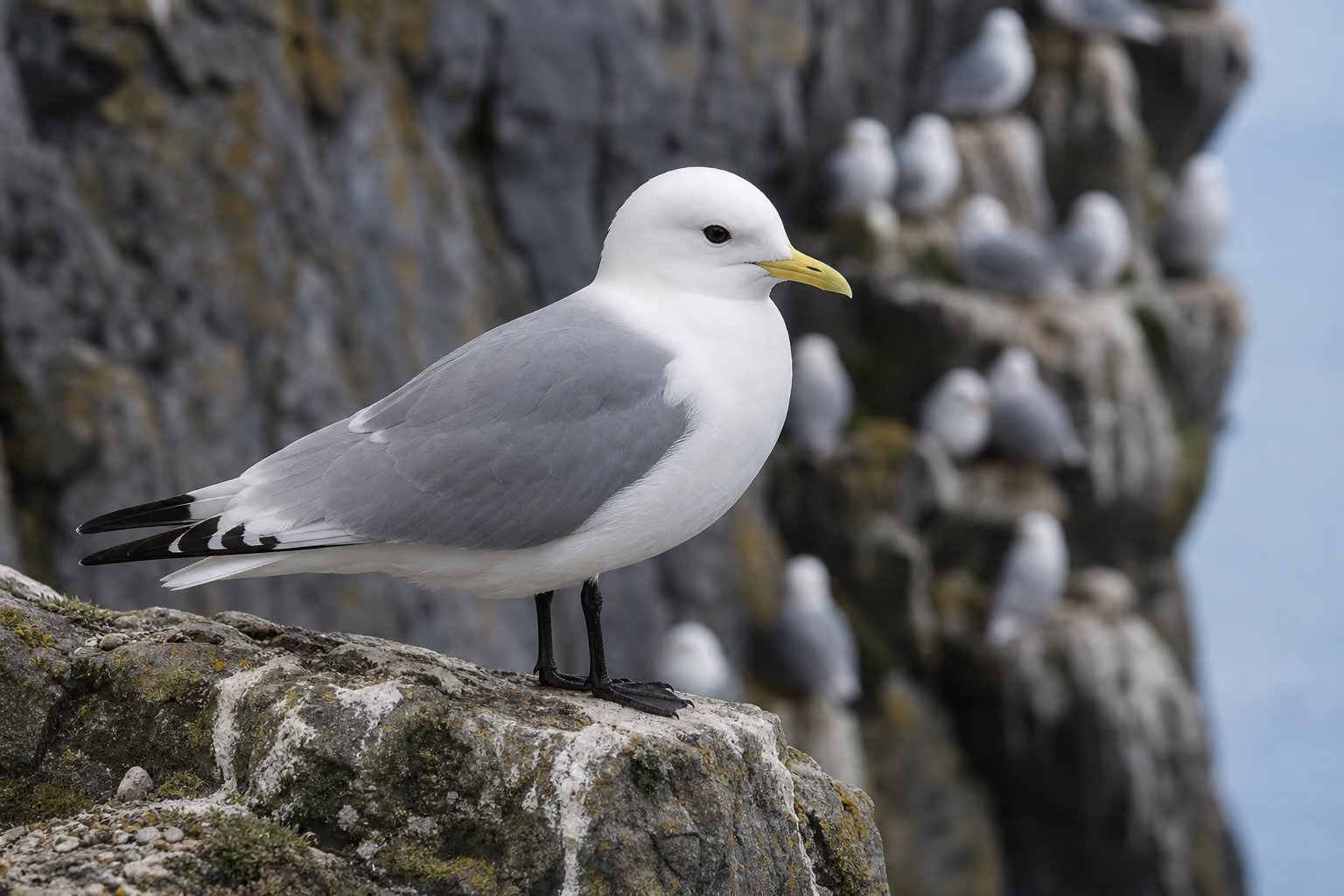
Black-legged kittiwake

Details

Black-legged kittiwake

Rissa tridactyla

Size
37–41 cm · 305–525 g
Diet
Carnivore
Activity
Diurnal
Sociality
Herd
Lifespan

A small cliff-nesting gull of the North Pacific and North Atlantic, with black legs, a yellow bill, and oceanic habits.
Range

Habitat range map
Native range Occasional / Transient
Pacific OceanPacific OceanPacific OceanAtlantic OceanAtlantic OceanAtlantic OceanAtlantic OceanAtlantic OceanArctic OceanArctic OceanArctic OceanPalearcticPalearcticPalearcticPalearcticPalearcticPalearcticPalearcticPalearcticPalearcticPalearcticPalearcticPalearcticPalearcticPalearcticPalearcticPalearcticPalearcticPalearcticPalearcticPalearcticPalearcticPalearcticPalearcticPalearcticNearcticNearcticNearcticNearcticNearcticNearcticNearcticNearcticNearcticNearcticNearcticNearcticNearcticNearcticNearcticNearcticNearcticNearcticNearcticNearcticNearcticNearcticNearcticNearcticNearcticNearcticNearcticNearcticNearcticNearcticNearcticNearcticNearcticNearcticNearcticNearcticNearcticNearcticNearcticNearcticNearctic

Map: Ecoregions 2017 © RESOLVE (CC BY 4.0) · Natural Earth (PD)

Details

Habitat

Spends much of the year offshore, returning to coastal cliffs, buildings, and ledges on artificial structures to breed.

Appearance

The body is white with a pale gray back and upper wings. Wingtips are black, and the legs are black.

Behavior

It gathers over open water and flies lightly on wind. Breeding colonies are noisy with repeated calls.

Feeding

Small fish, crustaceans, squid, and surface zooplankton are taken, often picked from the sea surface.

Reproduction

Nests of mud and seaweed are built on narrow cliff ledges. Chicks stay tightly on the nest ledge.

Notes

Declines are linked to reduced forage fish and changing marine conditions, making the species globally vulnerable.