765 Featured Specimen
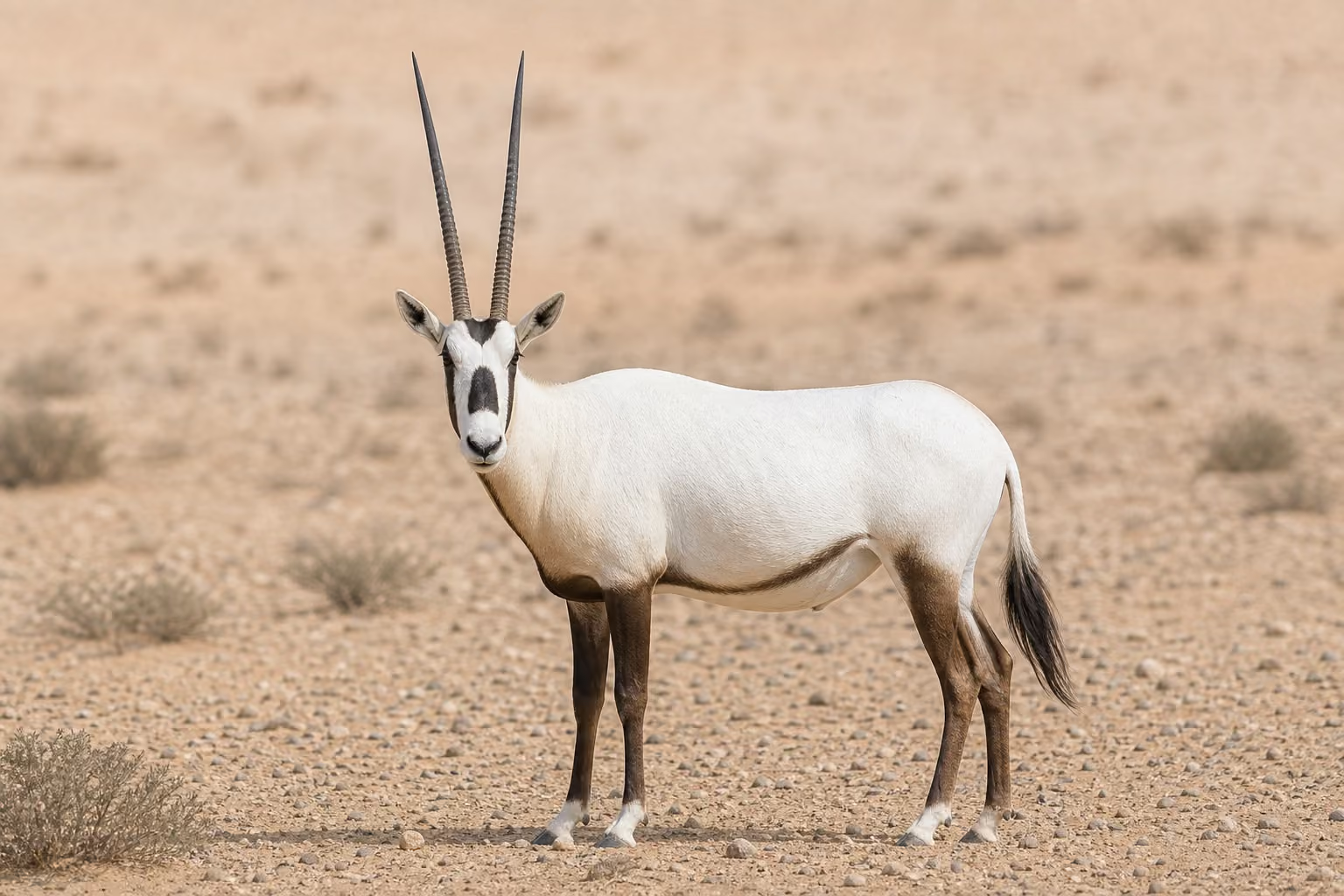
Arabian oryx

Details

Arabian oryx

Oryx leucoryx

Size
1.6–2.4 m · 65–90 kg
Diet
Herbivore
Activity
Crepuscular
Sociality
Herd
Lifespan

A pale desert oryx of the Arabian Peninsula, with long straight horns. It is famous for recovering in the wild after captive breeding and reintroduction.
Range

Habitat range map
Native range Occasional / Transient
PalearcticPalearcticPalearcticPalearcticPalearcticPalearcticPalearcticPalearcticPalearcticPalearcticPalearcticPalearcticPalearcticPalearcticPalearcticPalearcticPalearcticPalearcticPalearcticPalearcticPalearcticPalearcticPalearcticPalearctic

Map: Ecoregions 2017 © RESOLVE (CC BY 4.0) · Natural Earth (PD)

Details

Habitat

Arabian oryx use deserts, gravel plains, dry grasslands, and wadis. Herds move widely after rain to find fresh grasses and shrubs.

Appearance

They have a white body, dark facial and leg markings, and long straight horns in both sexes. The pale coat suits intense desert sunlight.

Behavior

Small herds rest in shade or shallow scrapes during hot periods. Movements track rainfall and new plant growth across sparse landscapes.

Feeding

They feed on grasses, shrub leaves, shoots, roots, and bulbs. Moisture from plants helps them tolerate areas with little free water.

Reproduction

Breeding occurs when conditions allow, and females usually bear a single calf. Reintroduced populations rely on protected areas and monitoring.

Notes

Once classified as extinct in the wild, the Arabian oryx became a landmark conservation recovery through captive breeding and reintroduction.