Woolly rhinoceros

Details

Woolly rhinoceros

Coelodonta antiquitatis

Size
3–3.8 m · 1.8–2.7 t
Diet
Herbivore
Activity
Diurnal
Sociality
Solitary
Lifespan

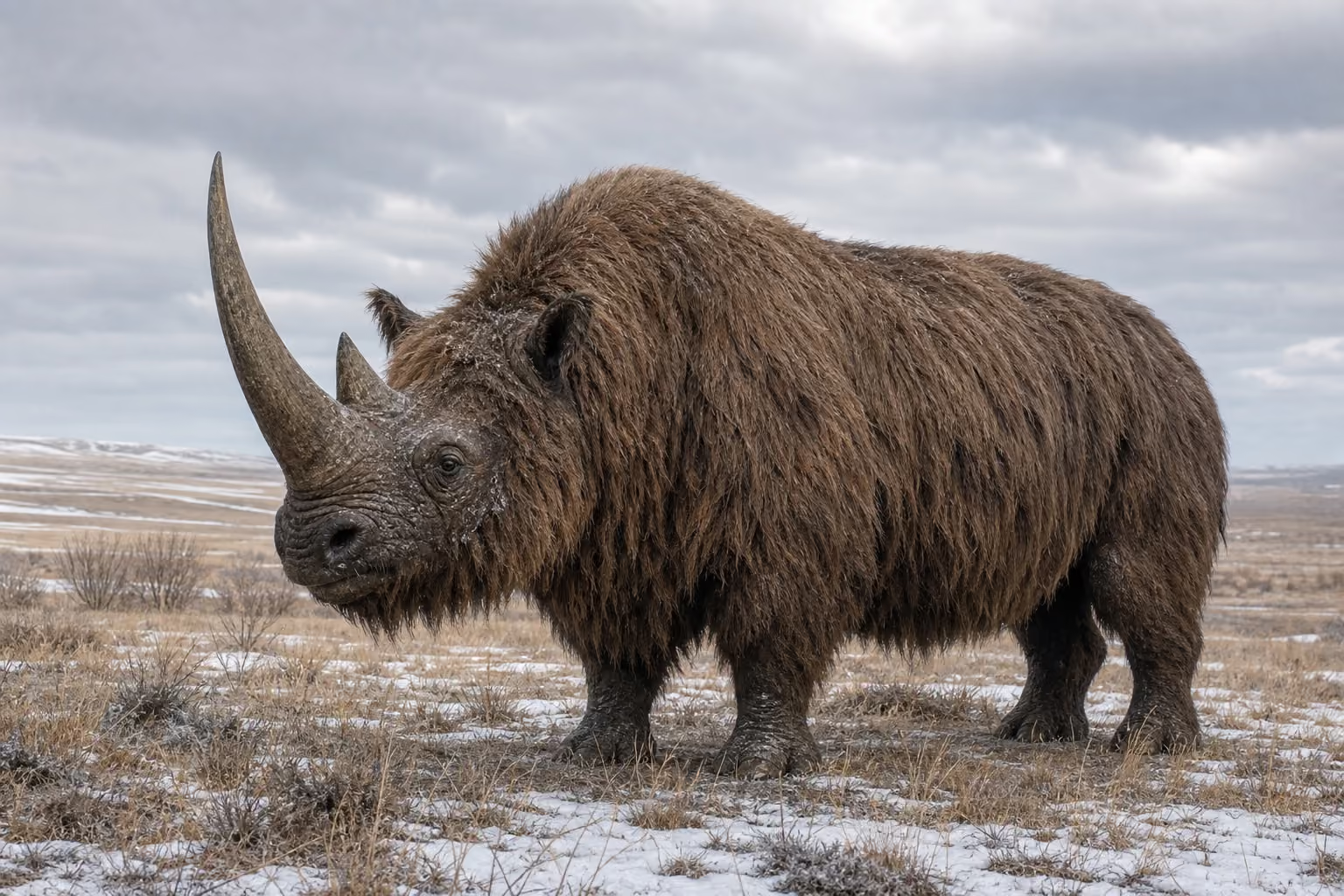
Woolly rhinoceros is an extinct Ice Age rhinoceros of Eurasian steppe, equipped with thick hair and large horns. Cave art, frozen remains, and horn analyses help reconstruct its appearance and ecology.

View in catalog
Key facts

  • Woolly rhinoceros (Coelodonta antiquitatis) is a herbivore animal classified as Mammal · Perissodactyla · Rhinocerotidae.
  • Primary habitats are grassland · polar, with a range across Palearctic.
  • Activity is diurnal, sociality is solitary, and conservation status is EX (Extinct).
  • Woolly rhinoceros is an extinct Ice Age rhinoceros of Eurasian steppe, equipped with thick hair and large horns.
  • It lived in cold grassland, tundra, and open lowlands from Pleistocene Europe to Siberia.

Range

Habitat range map
Native rangeOccasional / Transient
PalearcticPalearcticPalearcticPalearcticPalearcticPalearcticPalearcticPalearcticPalearcticPalearcticPalearcticPalearcticPalearcticPalearcticPalearcticPalearcticPalearcticPalearcticPalearcticPalearcticPalearcticPalearcticPalearcticPalearctic

Map: Ecoregions 2017 © RESOLVE (CC BY 4.0) · Natural Earth (PD)

Details

Habitat

It lived in cold grassland, tundra, and open lowlands from Pleistocene Europe to Siberia. Main habitat types in this guide are grassland, polar.

Appearance

Typical length 300-380 cm, weight 1.8 t-2.7 t. A long front horn, smaller rear horn, dense coat, and stocky body suited cold open habitats.

Behavior

It is diurnal and usually solitary. It likely swept snow aside with the horn and moved across steppe alone or in small numbers.

Feeding

It is herbivorous. Dry grasses, sedges, and low herbs formed the diet of this large grazer.

Reproduction

Like living rhinos, it likely produced single calves with prolonged care.

Notes

It is extinct, so ecology is reconstructed from specimens and historical records. Cave art, frozen remains, and horn analyses help reconstruct its appearance and ecology.