Willow ptarmigan

Details

Willow ptarmigan

Lagopus lagopus

Size
35–44 cm · 430–810 g
Diet
Herbivore
Activity
Diurnal
Sociality
Loose group
Lifespan

A northern ptarmigan of tundra and shrublands, changing plumage with the seasons and turning white in winter.

View in catalog
Key facts

  • Willow ptarmigan (Lagopus lagopus) is a herbivore animal classified as Bird · Galliformes · Phasianidae.
  • Primary habitats are polar · grassland · mountains, with a range across Palearctic · Nearctic.
  • Activity is diurnal, sociality is loose group, and conservation status is LC (Least Concern).
  • A northern ptarmigan of tundra and shrublands, changing plumage with the seasons and turning white in winter.
  • Lives in tundra, willow scrub, damp grassland, and mountain shrub zones across Arctic and subarctic regions.

Range

Habitat range map
Native rangeOccasional / Transient
PalearcticPalearcticPalearcticPalearcticPalearcticPalearcticPalearcticPalearcticPalearcticPalearcticPalearcticPalearcticPalearcticPalearcticPalearcticPalearcticPalearcticPalearcticPalearcticPalearcticPalearcticPalearcticPalearcticPalearcticNearcticNearcticNearcticNearcticNearcticNearcticNearcticNearcticNearcticNearcticNearcticNearcticNearcticNearcticNearcticNearcticNearcticNearcticNearcticNearcticNearcticNearcticNearcticNearcticNearcticNearcticNearcticNearcticNearcticNearcticNearcticNearcticNearcticNearcticNearcticNearcticNearcticNearcticNearcticNearcticNearctic

Map: Ecoregions 2017 © RESOLVE (CC BY 4.0) · Natural Earth (PD)

Details

Habitat

Lives in tundra, willow scrub, damp grassland, and mountain shrub zones across Arctic and subarctic regions.

Appearance

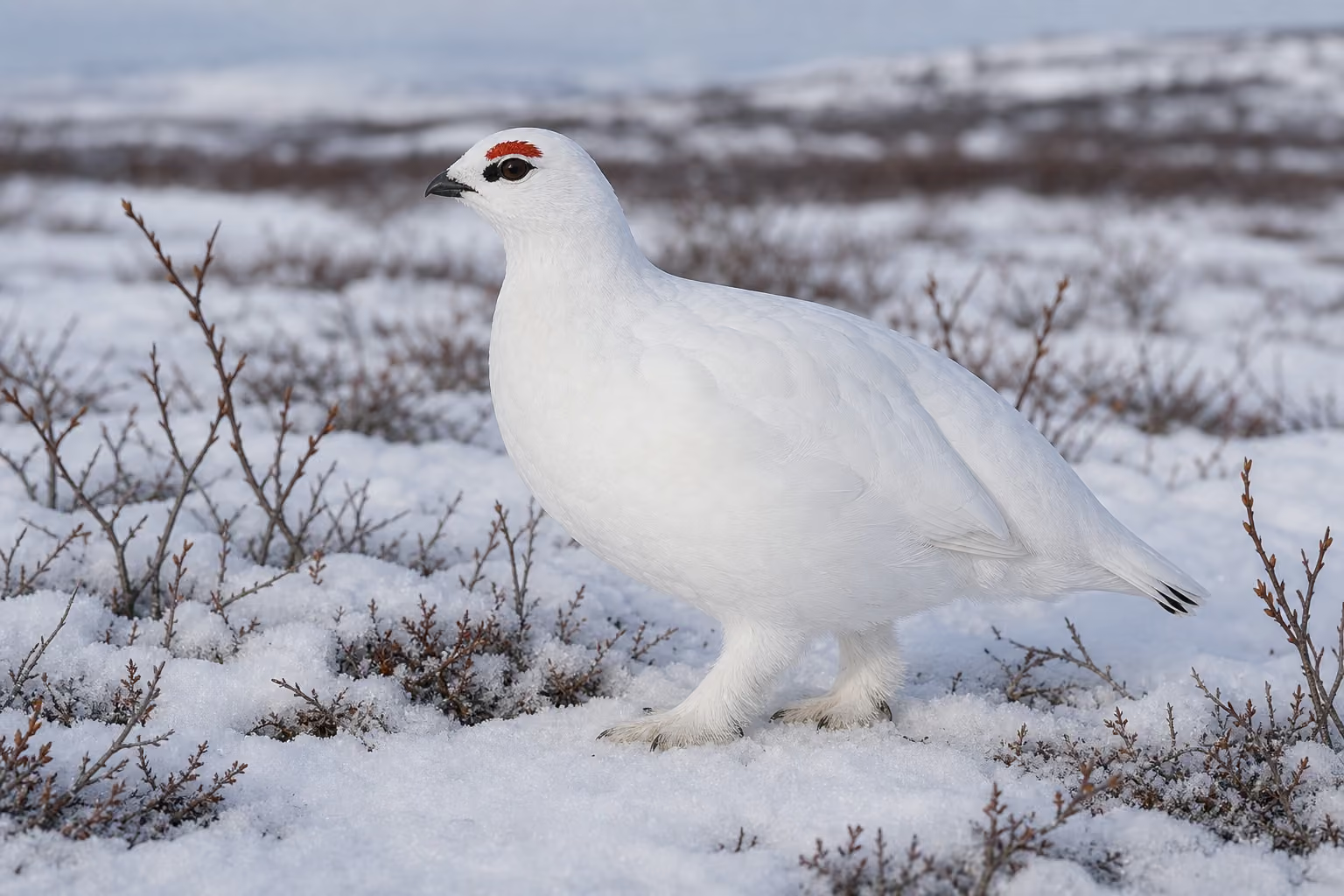
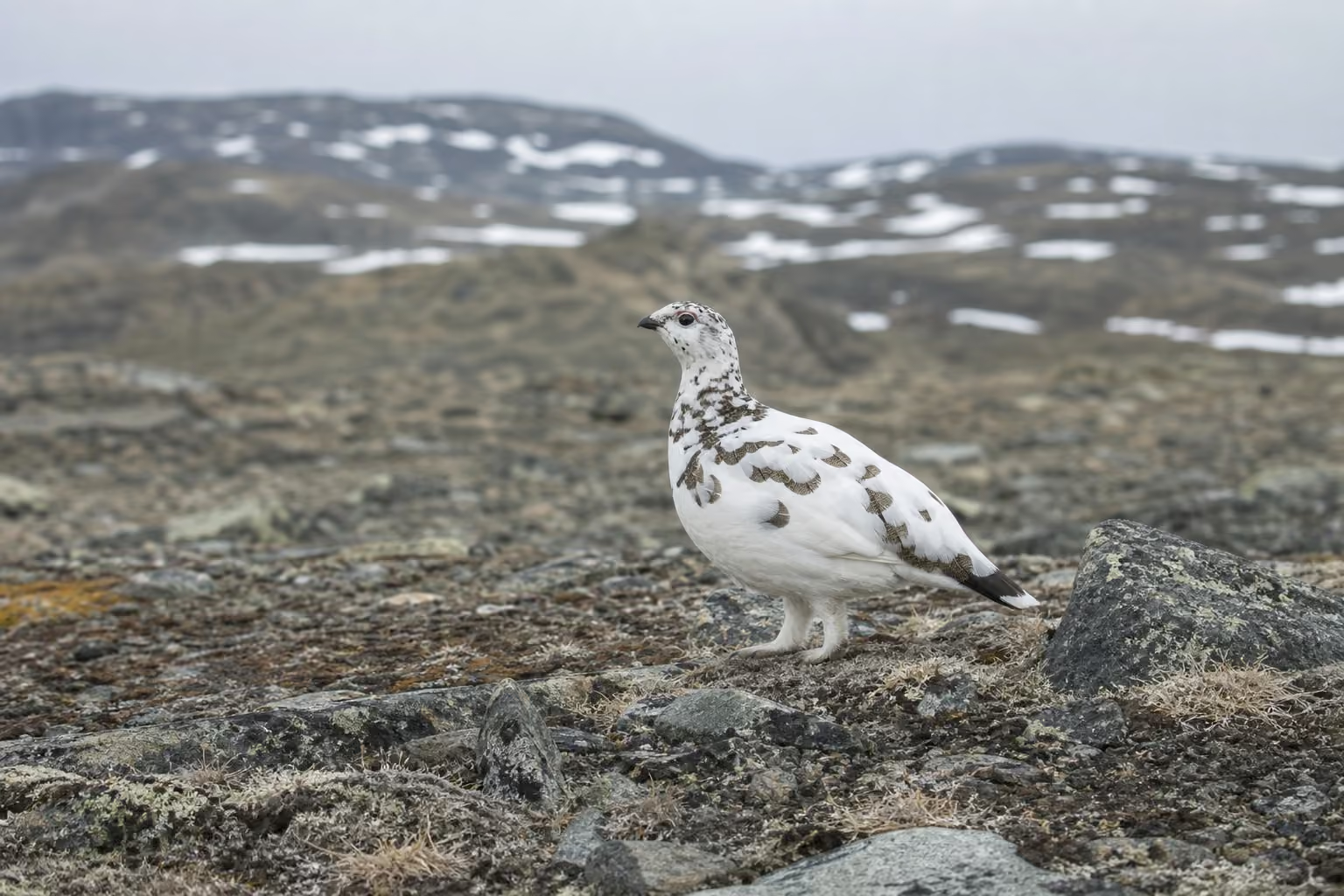
Summer plumage is brown, while winter plumage is mostly white. Breeding males have red eye combs; females are strongly mottled.

Behavior

It walks and feeds on the ground, forming flocks in winter. White winter plumage camouflages birds on snow.

Feeding

Willow and birch buds, leaves, berries, and seeds are eaten, while chicks take many insects.

Reproduction

Ground nests are hidden in low vegetation. Females incubate, and chicks walk and forage soon after hatching.

Notes

Some populations fluctuate strongly in cycles, and changing snow seasons are an important concern.