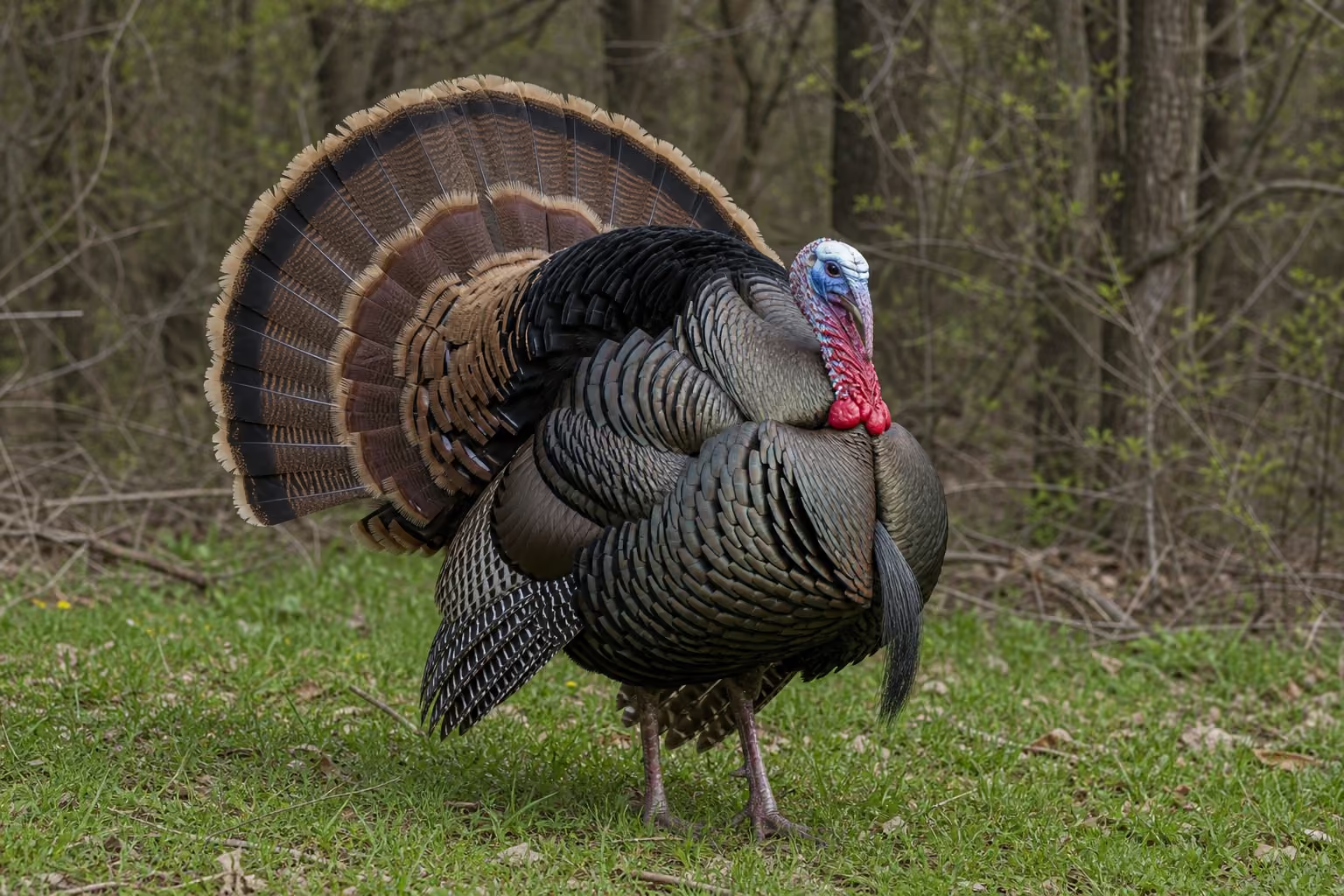
Wild turkey

Details

Wild turkey

Meleagris gallopavo

Size
0.9–1.3 m · 2.5–11 kg
Diet
Omnivore
Activity
Diurnal
Sociality
Loose group
Lifespan

A large North American galliform of forests and grasslands, ancestor of the domestic turkey and famous for the male's fanned tail.

View in catalog
Key facts

  • Wild turkey (Meleagris gallopavo) is an omnivore animal classified as Bird · Galliformes · Phasianidae.
  • Primary habitats are forest · grassland, with a range across Nearctic.
  • Activity is diurnal, sociality is loose group, and conservation status is LC (Least Concern).
  • A large North American galliform of forests and grasslands, ancestor of the domestic turkey and famous for the male's fanned tail.
  • Lives in mosaics of deciduous forest, woodland edge, grassland, farmland, and shrubland, roosting in trees at night.

Range

Habitat range map
Native rangeOccasional / Transient
NearcticNearcticNearcticNearcticNearcticNearcticNearcticNearcticNearcticNearcticNearcticNearcticNearcticNearcticNearcticNearcticNearcticNearcticNearcticNearcticNearcticNearcticNearcticNearcticNearcticNearcticNearcticNearcticNearcticNearcticNearcticNearcticNearcticNearcticNearcticNearcticNearcticNearcticNearcticNearcticNearctic

Map: Ecoregions 2017 © RESOLVE (CC BY 4.0) · Natural Earth (PD)

Details

Habitat

Lives in mosaics of deciduous forest, woodland edge, grassland, farmland, and shrubland, roosting in trees at night.

Appearance

Males are large with iridescent dark plumage, bare heads, wattles, and broad fan tails. Females are smaller and duller.

Behavior

It forages on foot by day, while males court in spring with gobbling calls and tail-fanning displays.

Feeding

Acorns, seeds, fruit, leaves, insects, and small reptiles are eaten, often scratched from the ground.

Reproduction

Females lay eggs in shallow ground nests and incubate alone. Chicks walk soon after hatching and follow the hen while feeding.

Notes

Once reduced in many areas, it rebounded through reintroductions and hunting management across much of North America.