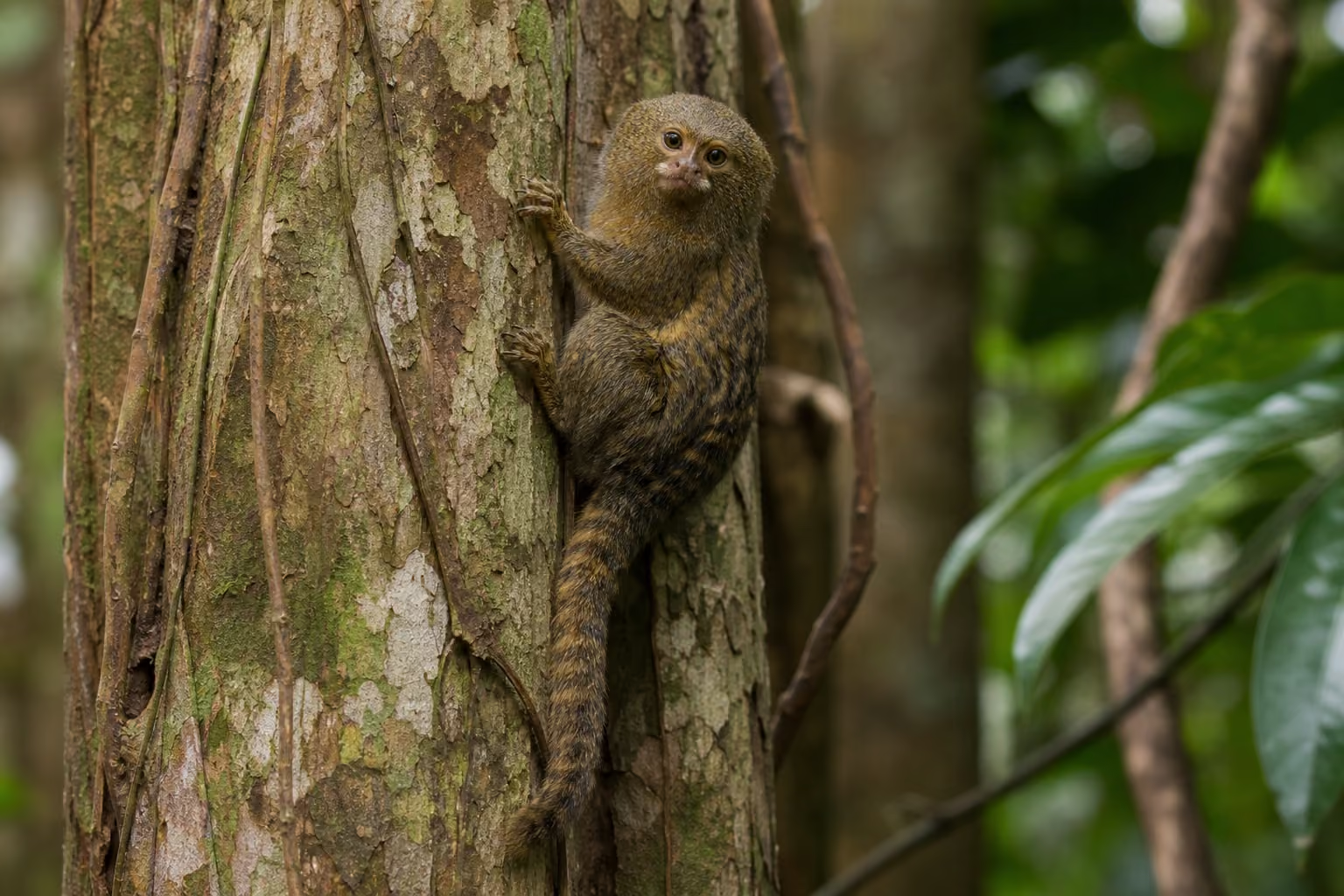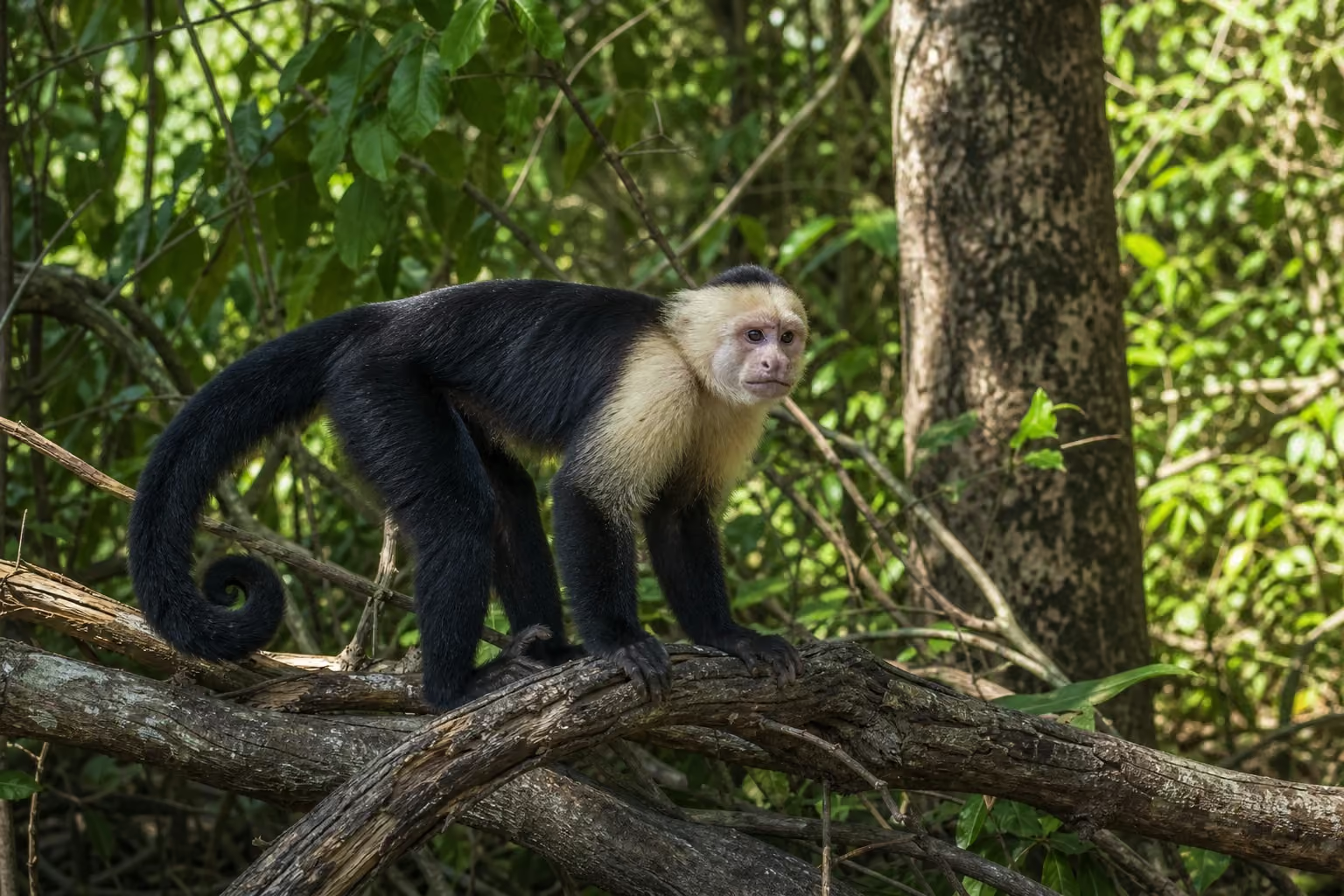
White-faced capuchin

Details

White-faced capuchin

Cebus capucinus

Size
33–46 cm · 2.5–3.9 kg
Diet
Omnivore
Activity
Diurnal
Sociality
Social
Lifespan
30–40 years

The white-faced capuchin is a clever Neotropical monkey with a pale face and dark body. Dexterous hands let it exploit many foods in the forest.

View in catalog
Key facts

  • White-faced capuchin (Cebus capucinus) is an omnivore animal classified as Mammal · Primates · Cebidae.
  • Primary habitats are forest, with a range across Neotropical.
  • Activity is diurnal, sociality is social, and conservation status is VU (Vulnerable).
  • The white-faced capuchin is a clever Neotropical monkey with a pale face and dark body.
  • It lives in Neotropical forest, including lowland forest, dry forest, secondary growth, and riparian woodland.
  • Typical lifespan: 30–40 years

Range

Habitat range map
Native rangeOccasional / Transient
NeotropicalNeotropicalNeotropicalNeotropicalNeotropicalNeotropicalNeotropicalNeotropical

Map: Ecoregions 2017 © RESOLVE (CC BY 4.0) · Natural Earth (PD)

Details

Habitat

It lives in Neotropical forest, including lowland forest, dry forest, secondary growth, and riparian woodland. It moves from canopy to lower layers.

Appearance

Length 33-46 cm; weight 2.5-3.9 kg. A white face, throat, and shoulders contrast strongly with the dark body. The long tail helps with balance in branches.

Behavior

Diurnal and social, it travels in groups. Capuchins show flexible problem-solving and complex relationships, and alarm calls warn group mates of danger.

Feeding

An omnivore, it eats fruit, insects, eggs, small vertebrates, and young leaves. It probes bark and hard fruits with its hands to extract hidden food.

Reproduction

Females usually bear a single infant within the group. Infants cling to the mother and also gain social contact from other group members.

Notes

It is listed as Vulnerable. Forest loss and pet trade are important threats, and habitat connections outside reserves matter.