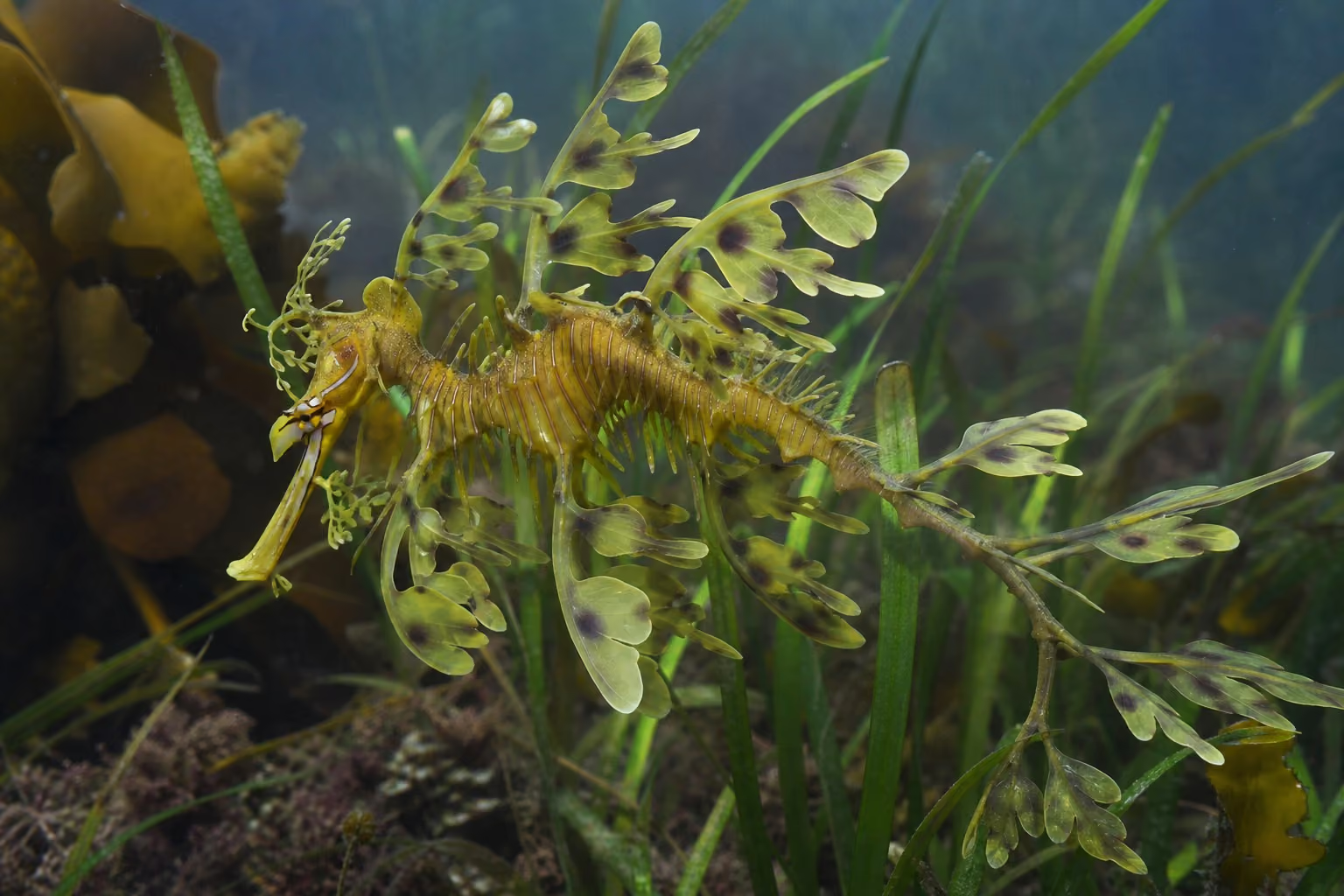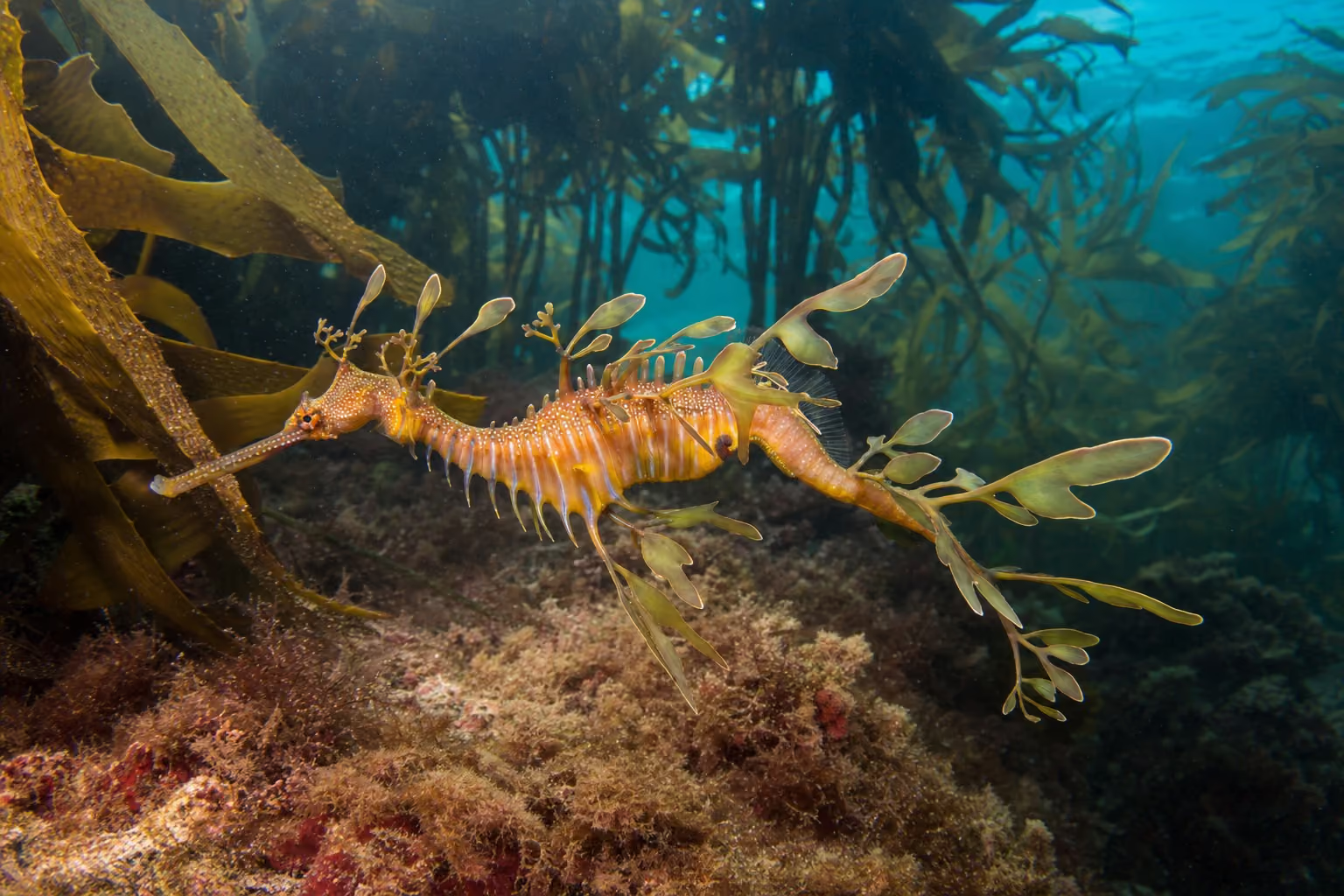
Weedy seadragon

Details

Weedy seadragon

Phyllopteryx taeniolatus

Size
30–46 cm · 60–120 g
Diet
Carnivore
Activity
Diurnal
Sociality
Solitary
Lifespan
6–10 years

The weedy seadragon is an Australian coastal fish fringed with seaweed-like appendages. It drifts slowly through algae and seagrass while sucking in tiny prey.

View in catalog
Key facts

  • Weedy seadragon (Phyllopteryx taeniolatus) is a carnivore animal classified as Fish · Syngnathiformes · Syngnathidae.
  • Primary habitats are coral reef · coast, with a range across Australasian · Pacific Ocean.
  • Activity is diurnal, sociality is solitary, and conservation status is LC (Least Concern).
  • The weedy seadragon is an Australian coastal fish fringed with seaweed-like appendages.
  • It lives on temperate southern coasts of Australasia, the Pacific, using rocky reefs, kelp beds, and seagrass.
  • Typical lifespan: 6–10 years

Range

Habitat range map
Native rangeOccasional / Transient
Pacific OceanPacific OceanPacific OceanAustralasianAustralasianAustralasianAustralasianAustralasianAustralasianAustralasianAustralasianAustralasianAustralasianAustralasianAustralasianAustralasianAustralasianAustralasianAustralasianAustralasian

Map: Ecoregions 2017 © RESOLVE (CC BY 4.0) · Natural Earth (PD)

Details

Habitat

It lives on temperate southern coasts of Australasia, the Pacific, using rocky reefs, kelp beds, and seagrass. Sheltered shallow shores are important habitat.

Appearance

Length 30-46 cm; weight 60 g-120 g. A slender body carries leaflike projections and mottled red, yellow, and brown colors that blend with algae. The tubular mouth works like a pipette for small prey.

Behavior

Diurnal and mostly solitary, it is a weak swimmer. It holds the body upright and moves quietly with small pectoral and dorsal fins.

Feeding

A carnivore, it eats tiny crustaceans and zooplankton. Rather than chasing prey, it snaps up animals that drift within reach.

Reproduction

The male carries eggs attached to the underside of his tail until they hatch. Young are independent at hatching and feed on small plankton.

Notes

It is listed as Least Concern, though local populations can still be affected by habitat change, collection, or pollution.