Thylacine

Details

Thylacine

Thylacinus cynocephalus

Size
1–1.3 m · 15–30 kg
Diet
Carnivore
Activity
Nocturnal
Sociality
Solitary
Lifespan

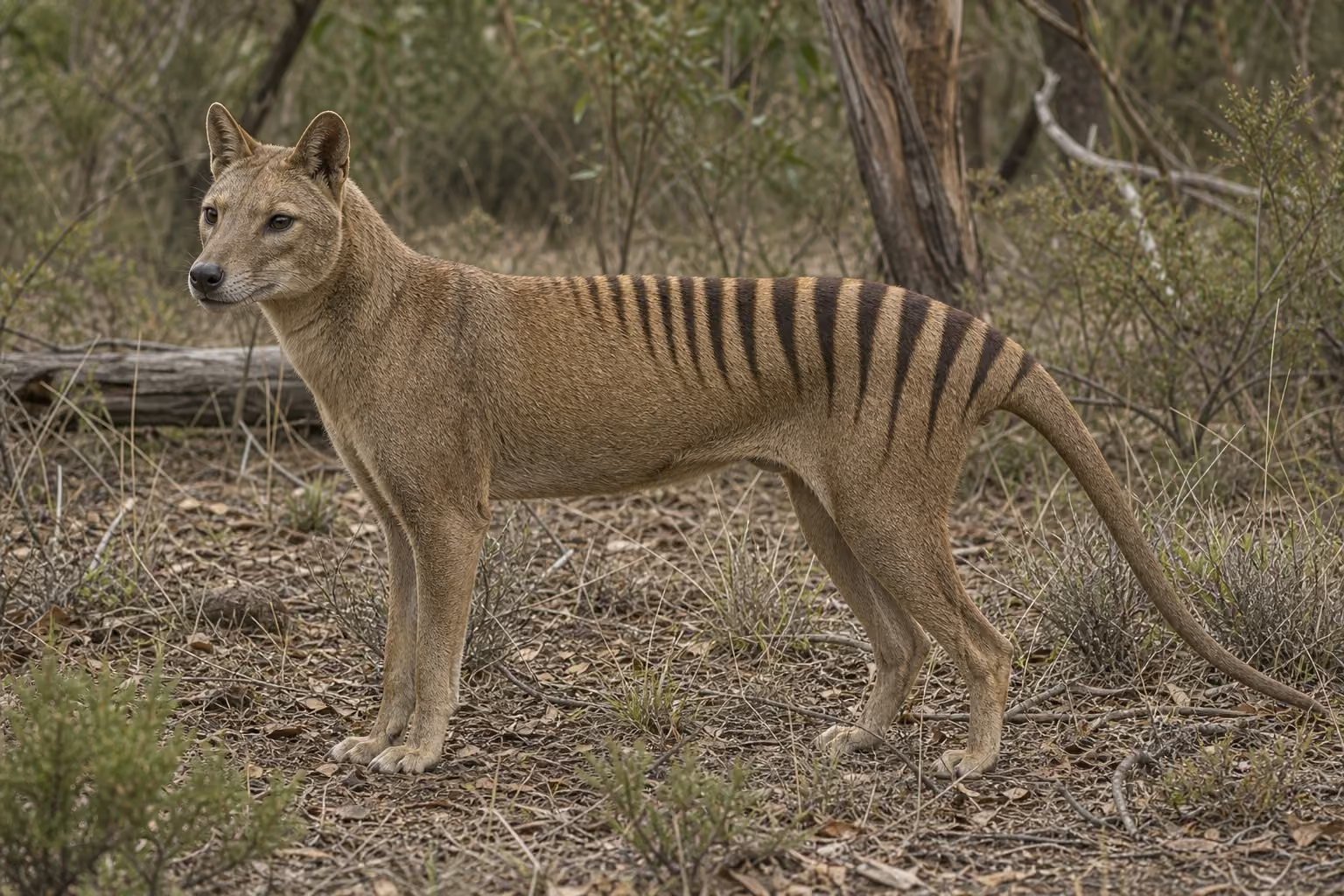
A carnivorous marsupial that survived into modern times in Tasmania. Its striped back and wide gape made it one of the most recognizable extinct mammals.

View in catalog
Key facts

  • Thylacine (Thylacinus cynocephalus) is a carnivore animal classified as Mammal · Dasyuromorphia · Thylacinidae.
  • Primary habitats are forest · grassland · savanna, with a range across Australasian.
  • Activity is nocturnal, sociality is solitary, and conservation status is EX (Extinct).
  • A carnivorous marsupial that survived into modern times in Tasmania.
  • The species once occurred on mainland Australia and New Guinea, but persisted recently in Tasmania, using forest, grassland, and scrub.

Range

Habitat range map
Native rangeOccasional / Transient

Map: Ecoregions 2017 © RESOLVE (CC BY 4.0) · Natural Earth (PD)

Details

Habitat

The species once occurred on mainland Australia and New Guinea, but persisted recently in Tasmania, using forest, grassland, and scrub.

Appearance

It had a doglike body, stiff tail, and dark stripes across the back and rump. As a marsupial, females carried young in a pouch.

Behavior

It was probably nocturnal and moved alone or in small groups. Its gait looked stiff, but it could travel long distances.

Feeding

Wallabies, small mammals, and birds were likely prey. Claims of heavy livestock predation probably exaggerated its actual impact.

Reproduction

Females gave birth to small young that developed in the pouch. Older young likely stayed near dens before becoming independent.

Notes

The last known captive individual died in 1936. Hunting, bounties, disease, and habitat change all contributed to extinction.