Sugar glider

Details

Sugar glider

Petaurus breviceps

Size
16–21 cm · 90–160 g
Diet
Omnivore
Activity
Nocturnal
Sociality
Colony
Lifespan
9–12 years

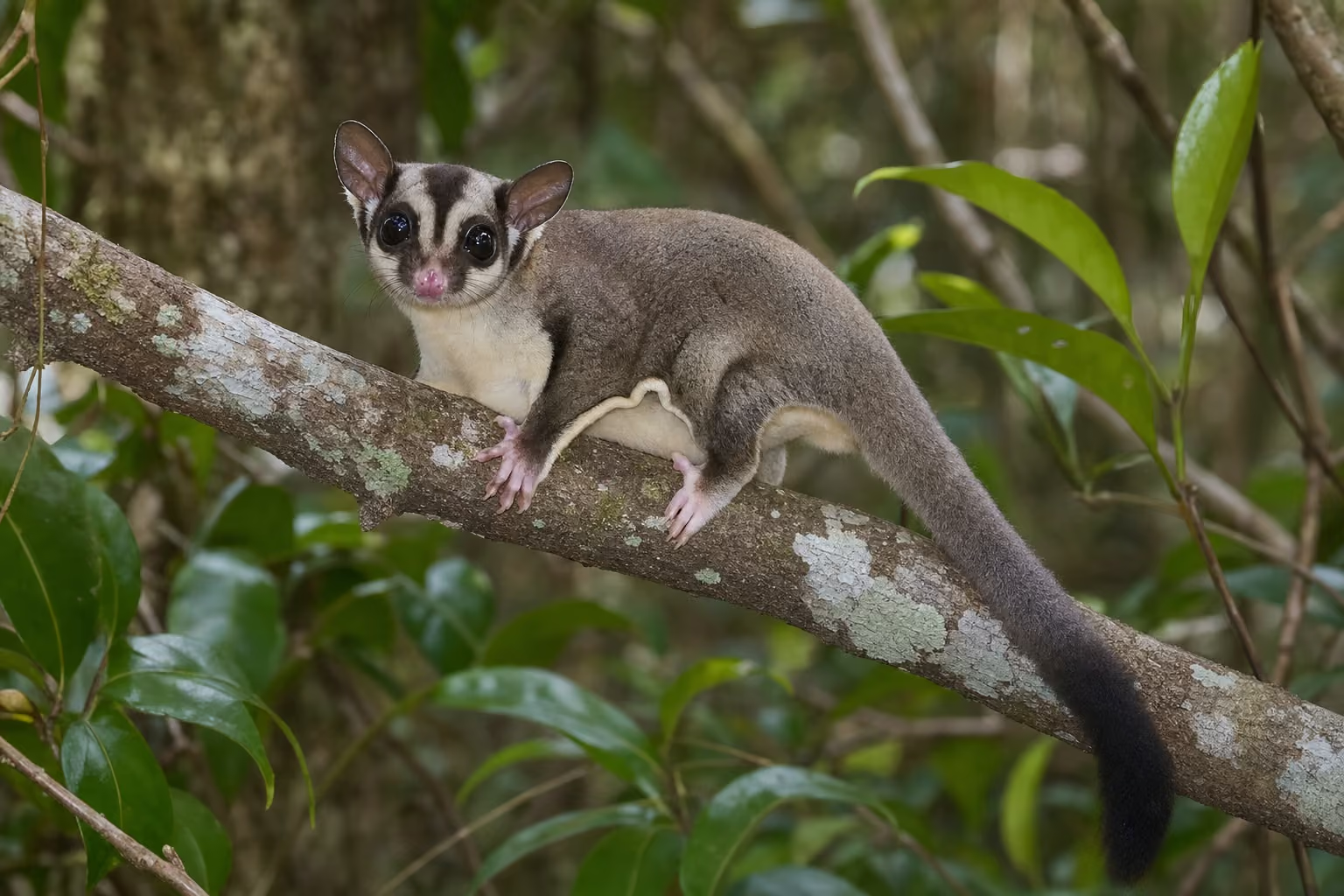
The sugar glider is a small marsupial that glides between trees on a membrane of skin. At night it searches forest canopies for sap, insects, and nectar.

View in catalog
Key facts

  • Sugar glider (Petaurus breviceps) is an omnivore animal classified as Mammal · Diprotodontia · Petauridae.
  • Primary habitats are forest, with a range across Australasian.
  • Activity is nocturnal, sociality is colony, and conservation status is LC (Least Concern).
  • The sugar glider is a small marsupial that glides between trees on a membrane of skin.
  • It inhabits Australasian forest, including eucalypt woodland with tree hollows.
  • Typical lifespan: 9–12 years

Range

Habitat range map
Native rangeOccasional / Transient
AustralasianAustralasianAustralasianAustralasianAustralasianAustralasianAustralasianAustralasianAustralasianAustralasianAustralasianAustralasianAustralasianAustralasianAustralasianAustralasianAustralasian

Map: Ecoregions 2017 © RESOLVE (CC BY 4.0) · Natural Earth (PD)

Details

Habitat

It inhabits Australasian forest, including eucalypt woodland with tree hollows. Connected canopy is important for movement and gliding.

Appearance

Length 16-21 cm; weight 90-160 g. A gliding membrane stretches from forelimb to hindlimb, and the long tail helps steer. Grey fur is marked by a dark dorsal stripe.

Behavior

Nocturnal and colonial, it shelters with group members in tree hollows. It launches from branches and glides with the membrane spread.

Feeding

An omnivore, it eats sap, nectar, pollen, insects, and small animals. It may chew bark to release tree sap.

Reproduction

Females give birth to tiny young that develop in the pouch. Older young remain in the nest and learn within the group.

Notes

It is listed as Least Concern. Loss of old hollow-bearing trees and breaks in canopy can affect local populations.