Staghorn coral

Details

Staghorn coral

Acropora cervicornis

Size
0.5–2 m · 0.5–20 kg
Diet
Filter Feeder
Activity
Cathemeral
Sociality
Colony
Lifespan
10–50 years

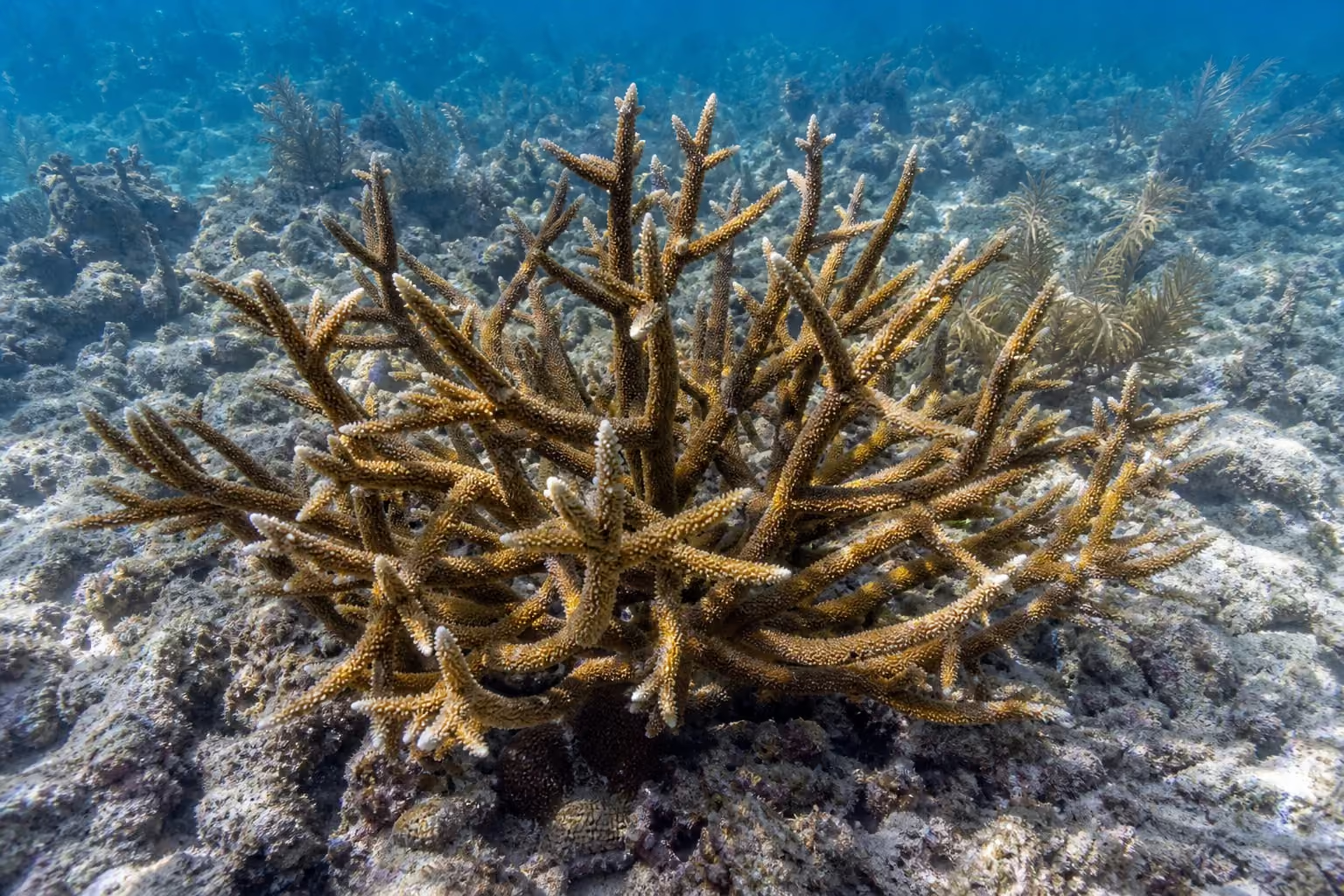
Staghorn coral is a branching Atlantic reef-building coral. Its antlerlike colonies create three-dimensional shelter for many reef animals.

View in catalog
Key facts

  • Staghorn coral (Acropora cervicornis) is a filter feeder animal classified as Invertebrate · Scleractinia · Acroporidae.
  • Primary habitats are coral reef · open ocean, with a range across Atlantic Ocean.
  • Activity is cathemeral, sociality is colony, and conservation status is CR (Critically Endangered).
  • Staghorn coral is a branching Atlantic reef-building coral.
  • It lives on warm Atlantic coral reefs, especially clear, shallow, ocean-facing sites.
  • Typical lifespan: 10–50 years

Range

Habitat range map
Native rangeOccasional / Transient
Atlantic OceanAtlantic OceanAtlantic OceanAtlantic OceanAtlantic Ocean

Map: Ecoregions 2017 © RESOLVE (CC BY 4.0) · Natural Earth (PD)

Details

Habitat

It lives on warm Atlantic coral reefs, especially clear, shallow, ocean-facing sites. Strong light and moving water support colony growth.

Appearance

Colony width 50-200 cm; weight 500 g-20 kg. Branches divide like deer antlers and are covered with tiny polyps. Living tissue is brownish to pale, and broken branches can reattach and grow.

Behavior

Cathemeral and colonial, it opens or closes polyps with conditions. Fragmentation is important, as broken pieces may become new colonies.

Feeding

A filter-feeder, it captures plankton and organic particles with polyps. Symbiotic algae provide much of its energy through photosynthesis.

Reproduction

Colonies release eggs and sperm during mass spawning, and fragments also reproduce asexually when they settle. Larvae need hard substrate for attachment.

Notes

It is listed as Critically Endangered. Bleaching, disease, storms, and coastal degradation have caused major declines, and restoration often uses nurseries and transplants.