Christmas tree worm

Details

Christmas tree worm

Spirobranchus giganteus

Size
1.5–4 cm · 0.2–3 g
Diet
Filter Feeder
Activity
Diurnal
Sociality
Solitary
Lifespan
10–40 years

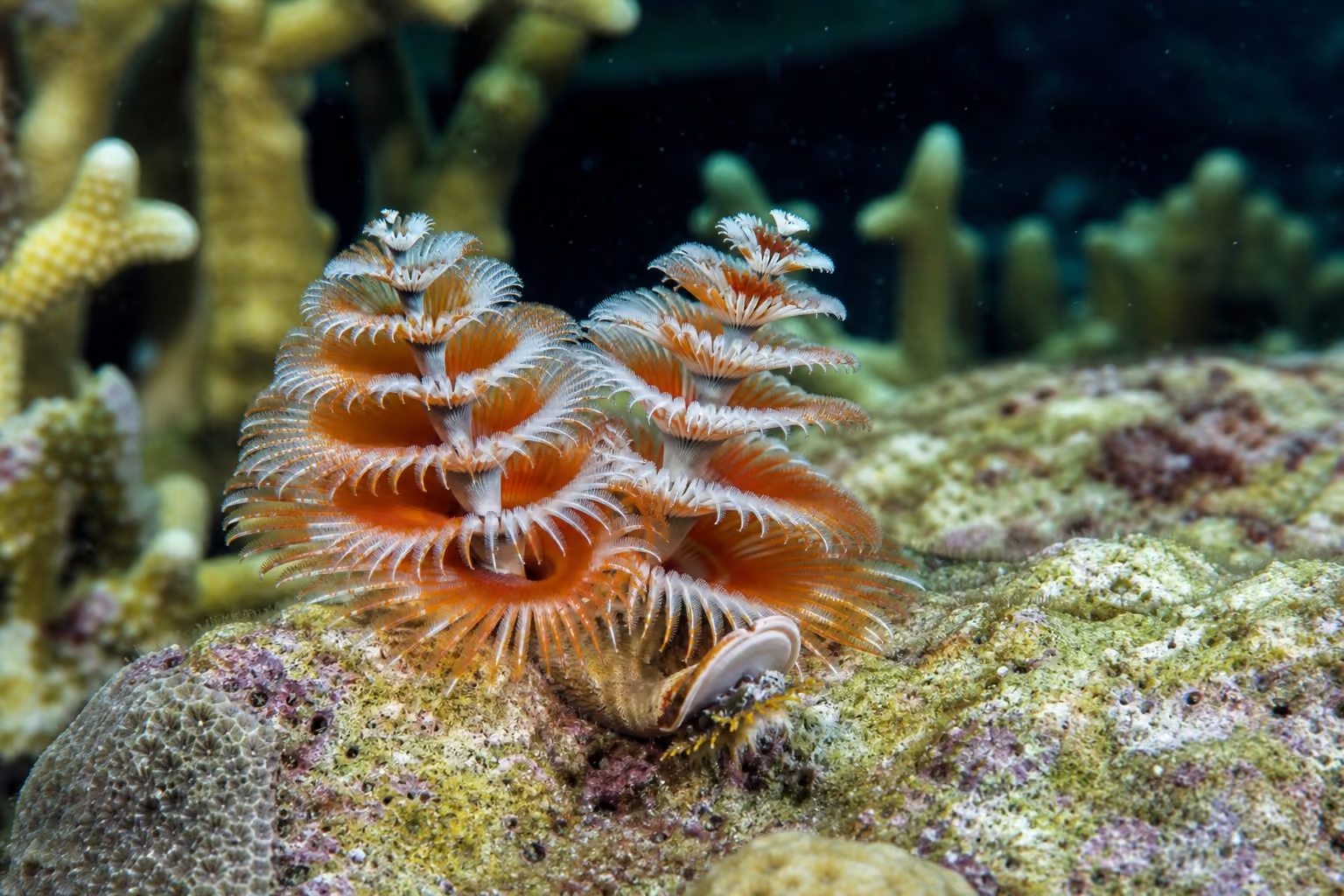
The Christmas tree worm is a reef polychaete with two bright spiral crowns. Hidden in a calcareous tube, it filters food from passing water.

View in catalog
Key facts

  • Christmas tree worm (Spirobranchus giganteus) is a filter feeder animal classified as Invertebrate · Sabellida · Serpulidae.
  • Primary habitats are coral reef · open ocean, with a range across Atlantic Ocean · Indian Ocean · Pacific Ocean.
  • Activity is diurnal, sociality is solitary, and conservation status is LC (Least Concern).
  • The Christmas tree worm is a reef polychaete with two bright spiral crowns.
  • It lives on coral reefs of the Atlantic, Indian, and Pacific oceans.
  • Typical lifespan: 10–40 years

Range

Habitat range map
Native rangeOccasional / Transient
Pacific OceanPacific OceanPacific OceanAtlantic OceanAtlantic OceanAtlantic OceanAtlantic OceanAtlantic OceanIndian Ocean

Map: Ecoregions 2017 © RESOLVE (CC BY 4.0) · Natural Earth (PD)

Details

Habitat

It lives on coral reefs of the Atlantic, Indian, and Pacific oceans. Calcareous tubes are built in living coral or hard rock where light and current are available.

Appearance

Length 1.5-4 cm; weight 0.2-3 g. Most of the body stays inside the tube, while two spiral feeding crowns protrude like miniature trees. Colors include red, blue, yellow, white, and many mixes.

Behavior

Diurnal and solitary, it spreads the crowns to feed. Shadows or vibration trigger a rapid withdrawal into the tube.

Feeding

A filter-feeder, it uses fine hairs on the crowns to trap plankton and organic particles. Captured particles are carried to the mouth.

Reproduction

Adults release eggs and sperm into the water. Larvae drift before settling on coral or other firm substrate and extending a tube.

Notes

It is listed as Least Concern. Because it depends on reefs, bleaching and heavy sediment can affect local populations.