Spectacled bear

Details

Spectacled bear

Tremarctos ornatus

Size
1.2–2 m · 60–175 kg
Diet
Omnivore
Activity
Cathemeral
Sociality
Solitary
Lifespan
20–25 years

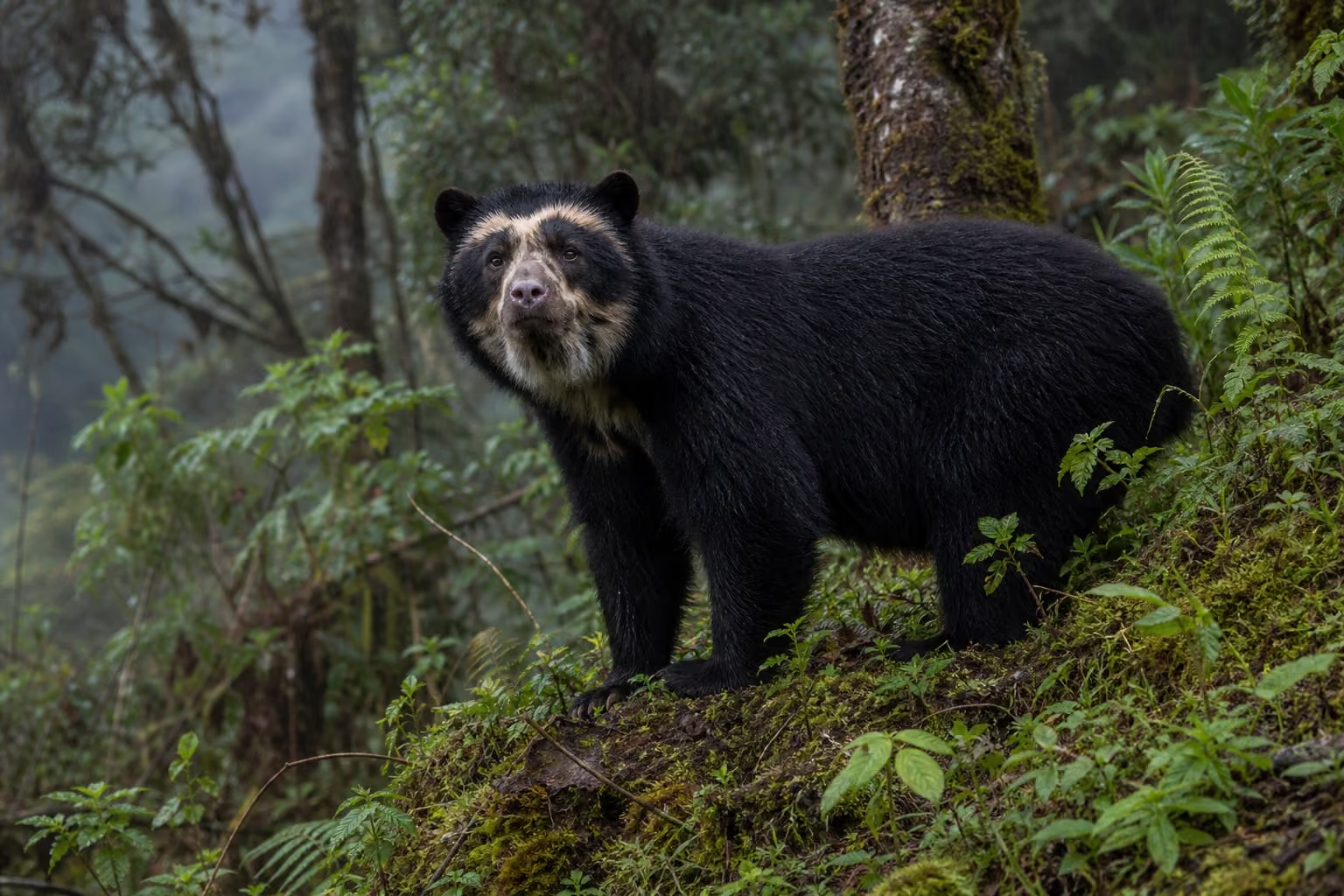
The spectacled bear is the only bear native to South America. Pale markings around the eyes vary by individual, and much of its diet is fruit and vegetation.

View in catalog
Key facts

  • Spectacled bear (Tremarctos ornatus) is an omnivore animal classified as Mammal · Carnivora · Ursidae.
  • Primary habitats are forest · mountains, with a range across Neotropical.
  • Activity is cathemeral, sociality is solitary, and conservation status is VU (Vulnerable).
  • The spectacled bear is the only bear native to South America.
  • It inhabits Neotropical mountain forest and cloud forest.
  • Typical lifespan: 20–25 years

Range

Habitat range map
Native rangeOccasional / Transient
NeotropicalNeotropicalNeotropicalNeotropicalNeotropicalNeotropicalNeotropicalNeotropical

Map: Ecoregions 2017 © RESOLVE (CC BY 4.0) · Natural Earth (PD)

Details

Habitat

It inhabits Neotropical mountain forest and cloud forest. Andean forest, shrubland, and grassland edges are used as seasonal plant foods change.

Appearance

Length 120-200 cm; weight 60-175 kg. Dark fur is marked with white to yellowish patches on the face and chest. A short muzzle and strong forelimbs suit climbing and tearing plants.

Behavior

Cathemeral and solitary, it climbs well. It may break branches to form simple feeding platforms or resting sites in trees.

Feeding

An omnivore with a heavily plant-based diet, it eats fruit, bromeliads, palms, and shoots. Insects, small animals, and carrion are taken opportunistically.

Reproduction

Females give birth to small litters in secure dens and care for cubs for an extended period. Young learn seasonal feeding routes by following the mother.

Notes

It is listed as Vulnerable. Loss of mountain forest, agricultural expansion, and persecution over livestock conflict are key threats.