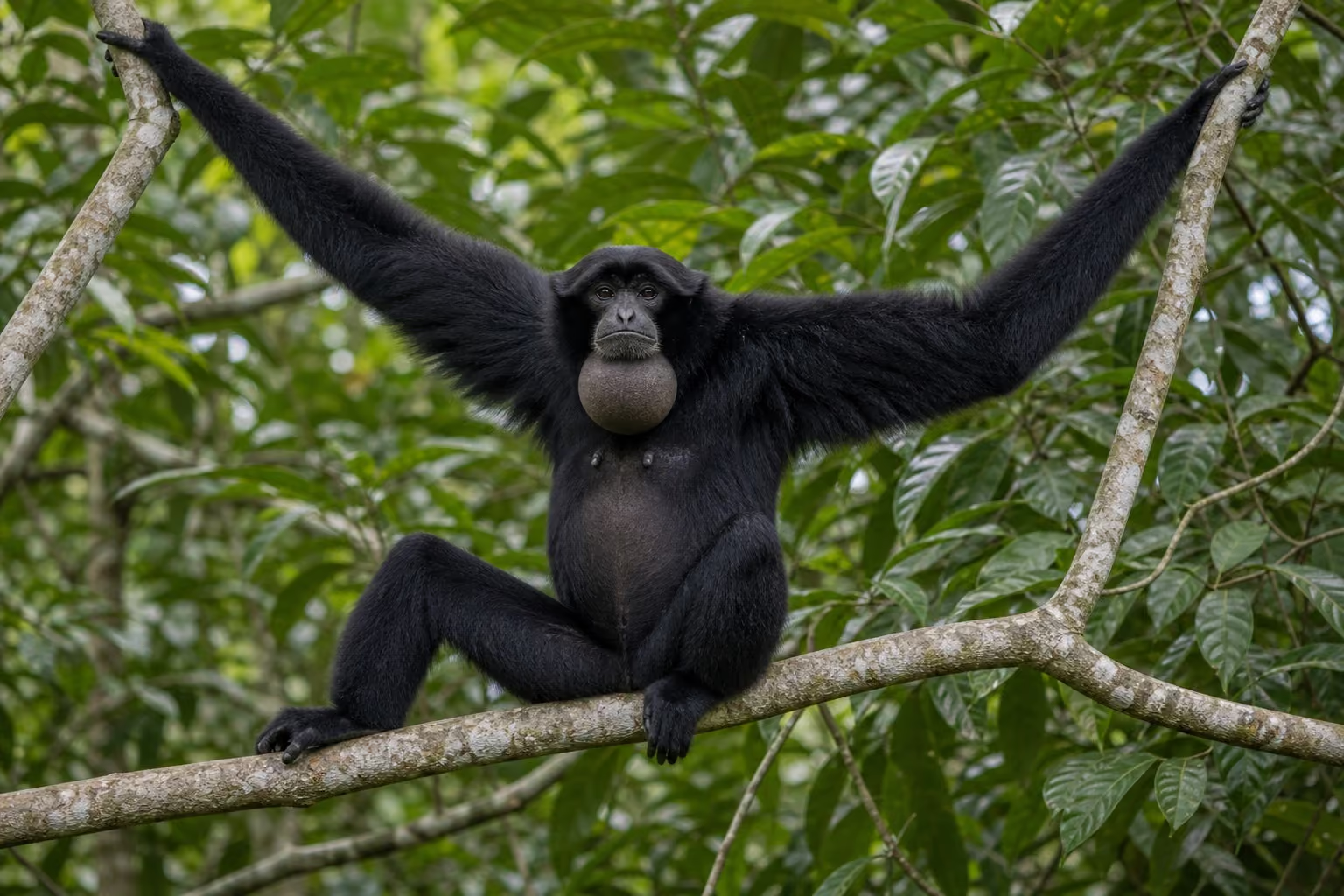
Siamang

Details

Siamang

Symphalangus syndactylus

Size
70–90 cm · 9–14 kg
Diet
Omnivore
Activity
Diurnal
Sociality
Pair
Lifespan

A large black gibbon from Sumatra and the Malay Peninsula. Its inflatable throat sac amplifies loud morning duets.

View in catalog
Key facts

  • Siamang (Symphalangus syndactylus) is an omnivore animal classified as Mammal · Primates · Hylobatidae.
  • Primary habitats are forest, with a range across Indomalayan.
  • Activity is diurnal, sociality is pair, and conservation status is EN (Endangered).
  • A large black gibbon from Sumatra and the Malay Peninsula.
  • Siamangs live in lowland to montane tropical rainforest, moist evergreen forest, and hill forest.

Range

Habitat range map
Native rangeOccasional / Transient
IndomalayanIndomalayanIndomalayanIndomalayanIndomalayanIndomalayanIndomalayanIndomalayanIndomalayanIndomalayanIndomalayanIndomalayanIndomalayanIndomalayanIndomalayan

Map: Ecoregions 2017 © RESOLVE (CC BY 4.0) · Natural Earth (PD)

Details

Habitat

Siamangs live in lowland to montane tropical rainforest, moist evergreen forest, and hill forest. Continuous high canopy is essential.

Appearance

They are black with very long arms and a large throat sac. The throat sac inflates during calls and carries sound over long distances.

Behavior

They are diurnal and highly arboreal, using brachiation to move between branches. Pair-based family groups defend territories with songs.

Feeding

They eat fruit, young leaves, flowers, and insects. Seasonal food availability shifts the balance between fruit and leaves.

Reproduction

Long-term pair bonds are common, and offspring develop over several years. Fathers may help carry young.

Notes

Deforestation, fragmentation, and the pet trade threaten populations. Loud duets reinforce pair bonds and territory boundaries.