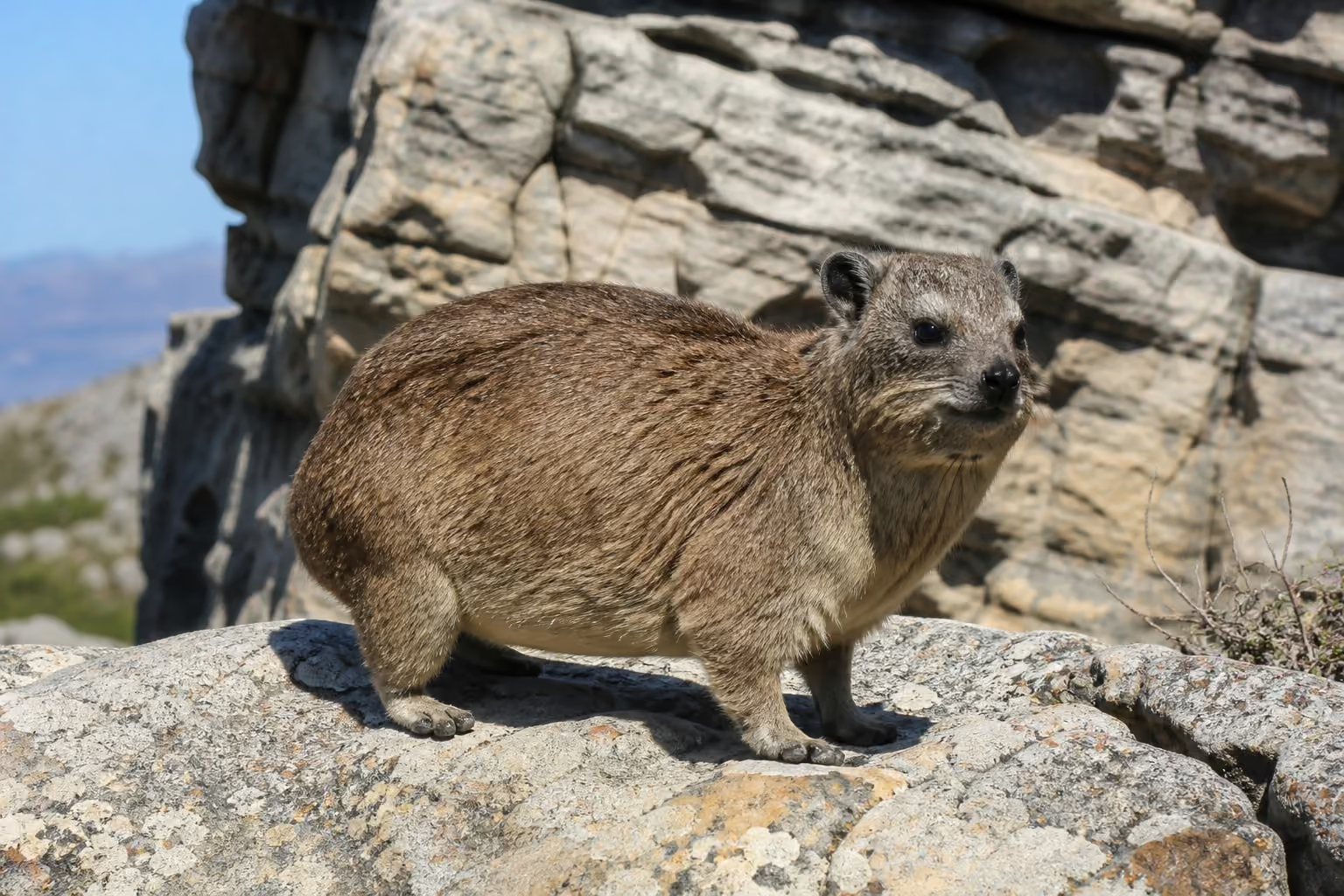
Rock hyrax

Details

Rock hyrax

Procavia capensis

Size
40–55 cm · 1.8–5.4 kg
Diet
Herbivore
Activity
Diurnal
Sociality
Colony
Lifespan
10–12 years

The rock hyrax is a small herbivorous mammal that lives in colonies on rocky outcrops. It looks rodentlike but belongs to a lineage close to elephants and manatees.

View in catalog
Key facts

  • Rock hyrax (Procavia capensis) is a herbivore animal classified as Mammal · Hyracoidea · Procaviidae.
  • Primary habitats are mountains · savanna · desert, with a range across Afrotropical · Palearctic.
  • Activity is diurnal, sociality is colony, and conservation status is LC (Least Concern).
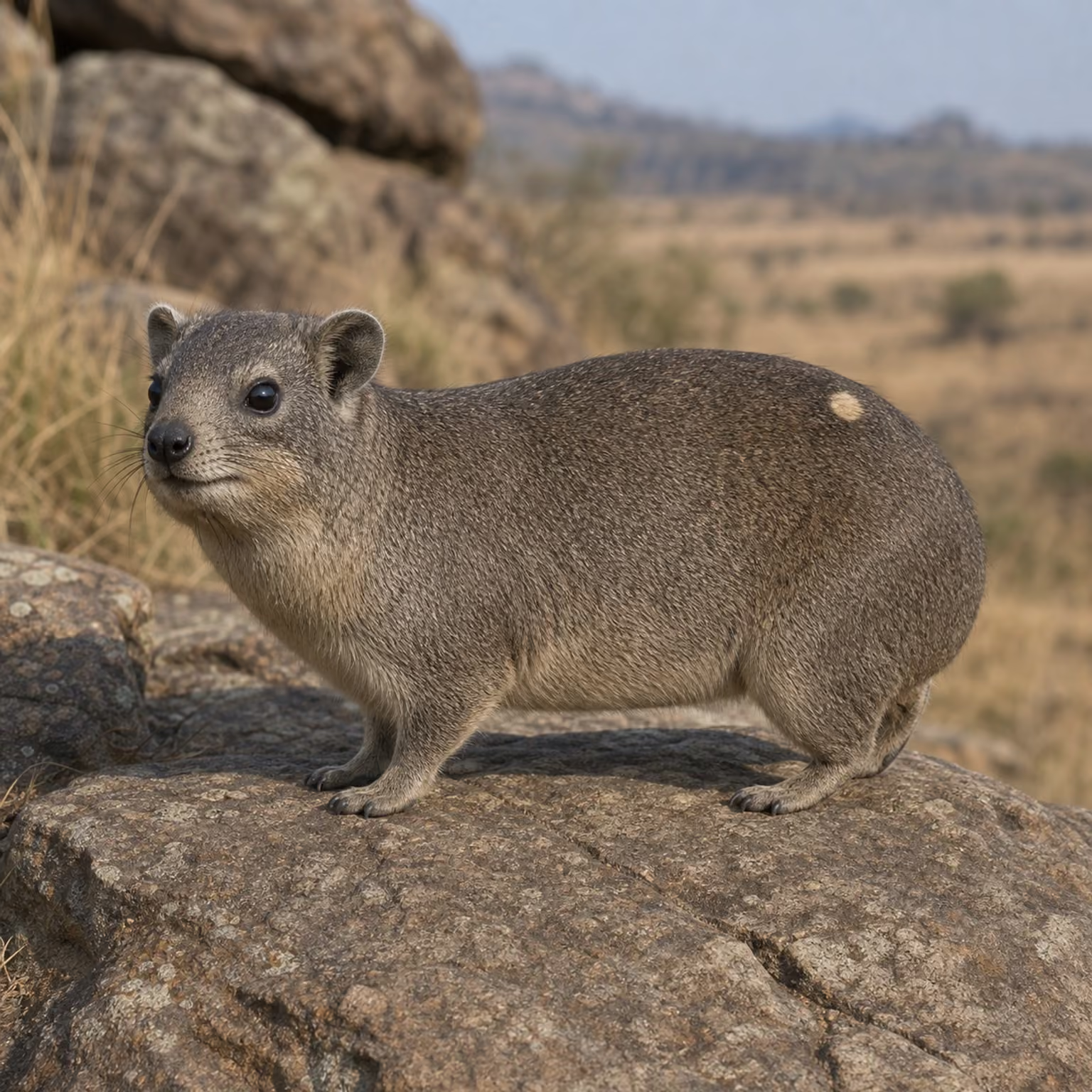
  • The rock hyrax is a small herbivorous mammal that lives in colonies on rocky outcrops.
  • It inhabits Afrotropical and Palearctic rocky hills, savannas, and deserts.
  • Typical lifespan: 10–12 years

Range

Habitat range map
Native rangeOccasional / Transient
PalearcticPalearcticPalearcticPalearcticPalearcticPalearcticPalearcticPalearcticPalearcticPalearcticPalearcticPalearcticPalearcticPalearcticPalearcticPalearcticPalearcticPalearcticPalearcticPalearcticPalearcticPalearcticPalearcticPalearcticAfrotropicalAfrotropicalAfrotropicalAfrotropical

Map: Ecoregions 2017 © RESOLVE (CC BY 4.0) · Natural Earth (PD)

Details

Habitat

It inhabits Afrotropical and Palearctic rocky hills, savannas, and deserts. Crevices provide refuge, while nearby grass and shrubs provide food.

Appearance

Length 40-55 cm; weight 1.8-5.4 kg. A rounded body, short ears, and almost hidden tail are typical. Moist, rubbery foot pads help grip rock; fur is grey-brown to tawny.

Behavior

Diurnal and colonial, it often basks on rocks. Sentinels give alarm calls, and the group rushes into crevices when threatened.

Feeding

A herbivore, it eats grasses, leaves, shoots, and fruit. In dry areas it relies heavily on moisture-rich plants near rocky shelter.

Reproduction

Females give birth in rocky refuges. Young are born relatively well developed and soon move with the colony.

Notes

It is listed as Least Concern. It is prey for many predators, and the availability of rocky cracks is central to colony safety.