Leopard

Details

Leopard

Panthera pardus

Size
0.9–1.9 m · 17–90 kg
Diet
Carnivore
Activity
Nocturnal
Sociality
Solitary
Lifespan
12–17 years

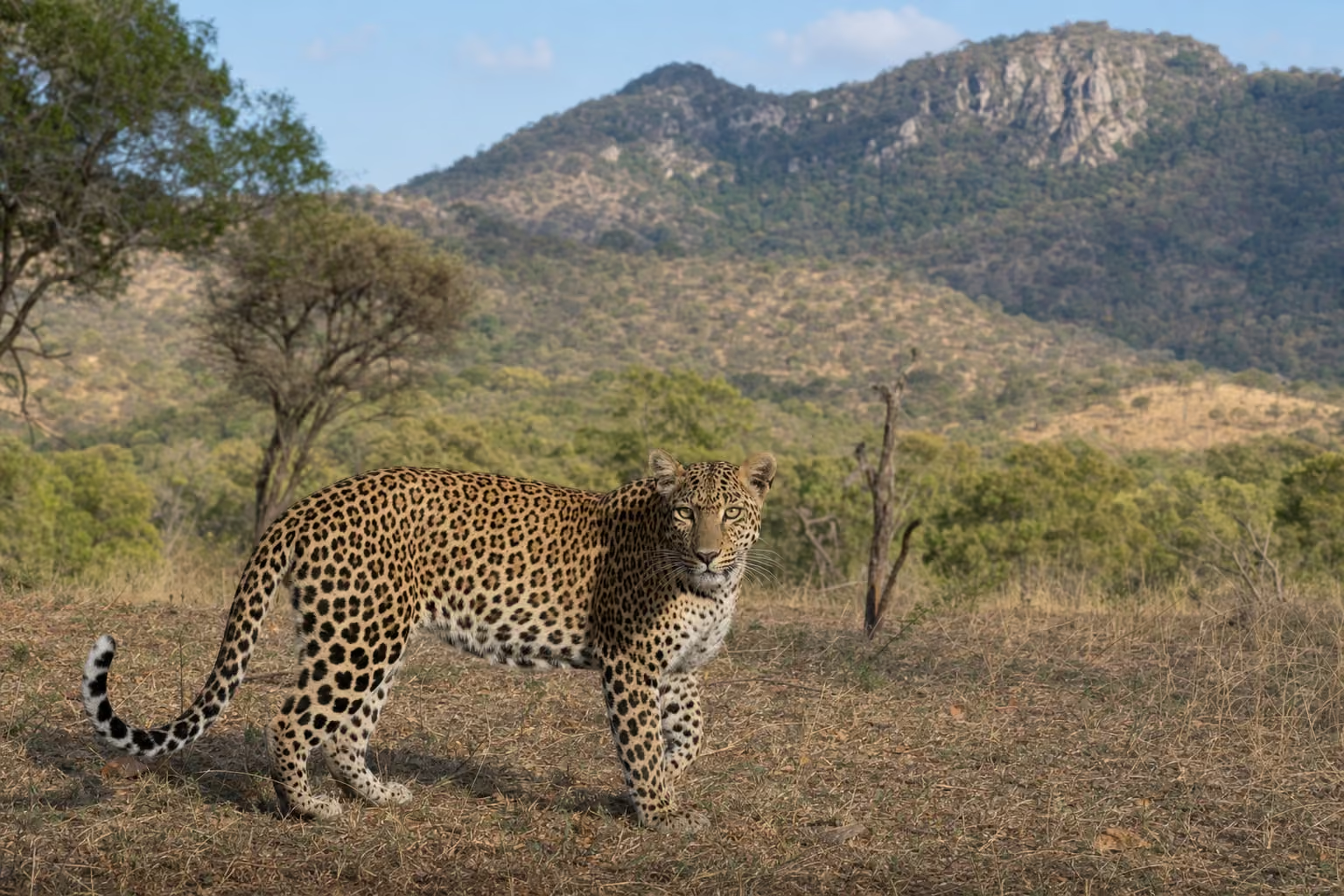
The leopard is a spotted big cat that blends into forest and savanna. Solitary and powerful, it can haul prey into trees.

View in catalog
Key facts

  • Leopard (Panthera pardus) is a carnivore animal classified as Mammal · Carnivora · Felidae.
  • Primary habitats are savanna · forest · mountains · desert, with a range across Afrotropical · Palearctic · Indomalayan.
  • Activity is nocturnal, sociality is solitary, and conservation status is VU (Vulnerable).
  • The leopard is a spotted big cat that blends into forest and savanna.
  • It occurs in the Afrotropical, Palearctic, and Indomalayan regions, using savanna, forest, mountains, and desert edges.
  • Typical lifespan: 12–17 years

Range

Habitat range map
Native rangeOccasional / Transient
PalearcticPalearcticPalearcticPalearcticPalearcticPalearcticPalearcticPalearcticPalearcticPalearcticPalearcticPalearcticPalearcticPalearcticPalearcticPalearcticPalearcticPalearcticPalearcticPalearcticPalearcticPalearcticPalearcticPalearcticAfrotropicalAfrotropicalAfrotropicalAfrotropicalIndomalayanIndomalayanIndomalayanIndomalayanIndomalayanIndomalayanIndomalayanIndomalayanIndomalayanIndomalayanIndomalayanIndomalayanIndomalayanIndomalayanIndomalayan

Map: Ecoregions 2017 © RESOLVE (CC BY 4.0) · Natural Earth (PD)

Details

Habitat

It occurs in the Afrotropical, Palearctic, and Indomalayan regions, using savanna, forest, mountains, and desert edges. Cover and prey allow it to persist near people in some areas.

Appearance

Length 90-190 cm; weight 17-90 kg. A tawny coat is covered with black rosettes, paler below. The muscular body and long tail are well suited to climbing.

Behavior

Nocturnal and solitary, it marks a territory with scent. By day it often rests in thickets, rocky cover, or trees.

Feeding

A carnivore, it takes antelopes, monkeys, pigs, small mammals, birds, and many other prey. It stalks from cover and may carry kills into trees.

Reproduction

Breeding can occur year-round. Females raise cubs in hidden dens, and young follow the mother and learn to hunt before dispersing.

Notes

It is listed as Vulnerable. Habitat loss, poaching, and conflict with people have reduced its range in many regions.