Red junglefowl

Details

Red junglefowl

Gallus gallus

Size
43–76 cm · 0.5–1.5 kg
Diet
Omnivore
Activity
Diurnal
Sociality
Loose group
Lifespan

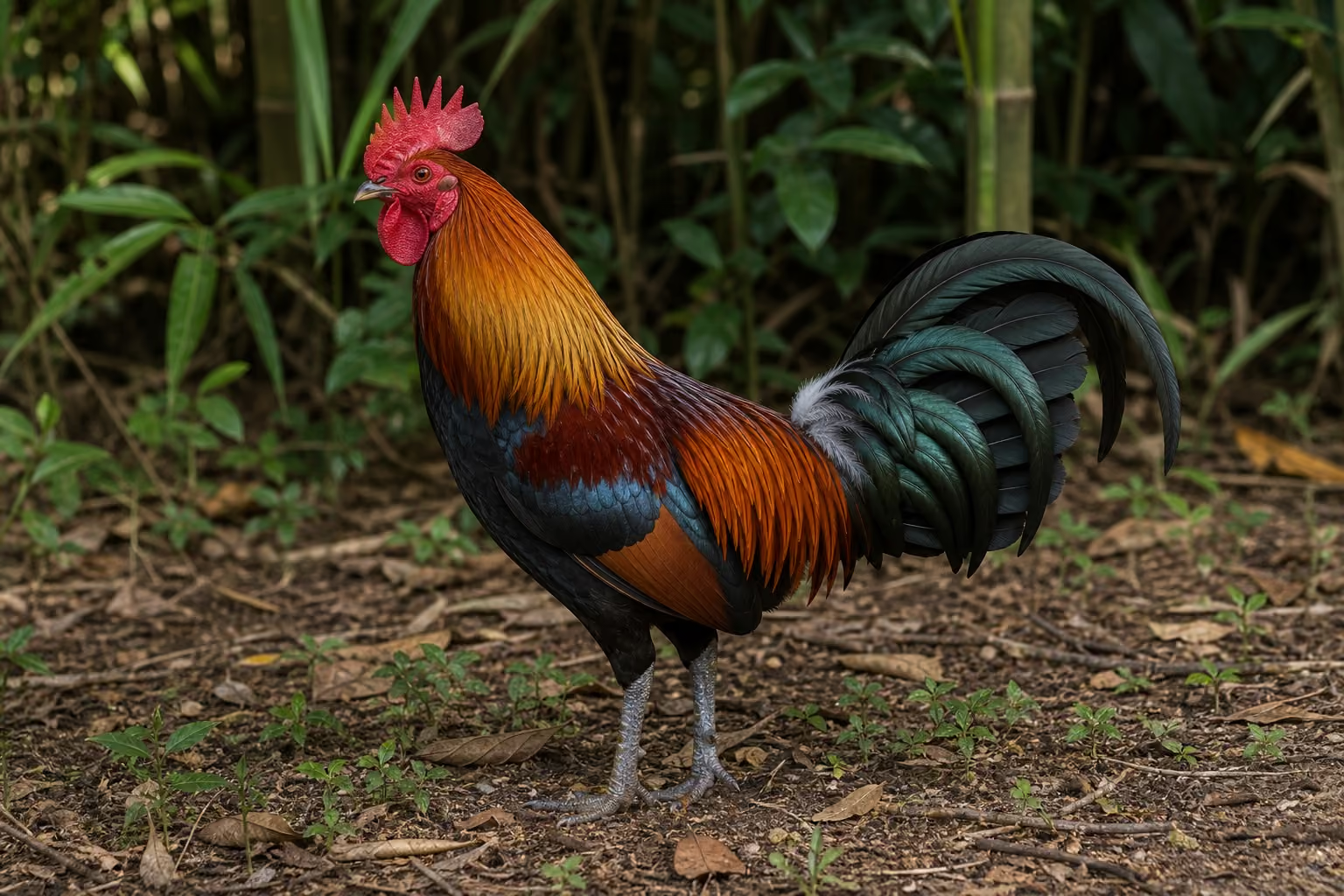
The main wild ancestor of domestic chickens, with males bearing a red comb, wattles, and long arched tail feathers.

View in catalog
Key facts

  • Red junglefowl (Gallus gallus) is an omnivore animal classified as Bird · Galliformes · Phasianidae.
  • Primary habitats are forest · grassland · urban, with a range across Indomalayan · Australasian.
  • Activity is diurnal, sociality is loose group, and conservation status is LC (Least Concern).
  • The main wild ancestor of domestic chickens, with males bearing a red comb, wattles, and long arched tail feathers.
  • Lives in tropical forest, bamboo, secondary woodland, forest edges, and farmland margins with cover near feeding areas.

Range

Habitat range map
Native rangeOccasional / Transient
IndomalayanIndomalayanIndomalayanIndomalayanIndomalayanIndomalayanIndomalayanIndomalayanIndomalayanIndomalayanIndomalayanIndomalayanIndomalayanIndomalayanIndomalayanAustralasianAustralasianAustralasianAustralasianAustralasianAustralasianAustralasianAustralasianAustralasianAustralasianAustralasianAustralasianAustralasianAustralasianAustralasianAustralasianAustralasian

Map: Ecoregions 2017 © RESOLVE (CC BY 4.0) · Natural Earth (PD)

Details

Habitat

Lives in tropical forest, bamboo, secondary woodland, forest edges, and farmland margins with cover near feeding areas.

Appearance

Males have a red comb and wattles, golden to red hackles, and green-black tail feathers. Females are cryptic brown.

Behavior

Small groups walk on the ground and roost in trees at dusk. Males crow early and signal dominance or territory.

Feeding

Seeds, fruit, shoots, insects, earthworms, and small invertebrates are eaten.

Reproduction

Females lay in hidden ground nests. Precocial chicks follow the hen and forage soon after hatching.

Notes

Wild-type birds are threatened locally by hybridization with domestic chickens, making intact forest populations important.