Razorbill

Details

Razorbill

Alca torda

Size
37–39 cm · 500–890 g
Diet
Carnivore
Activity
Diurnal
Sociality
Herd
Lifespan

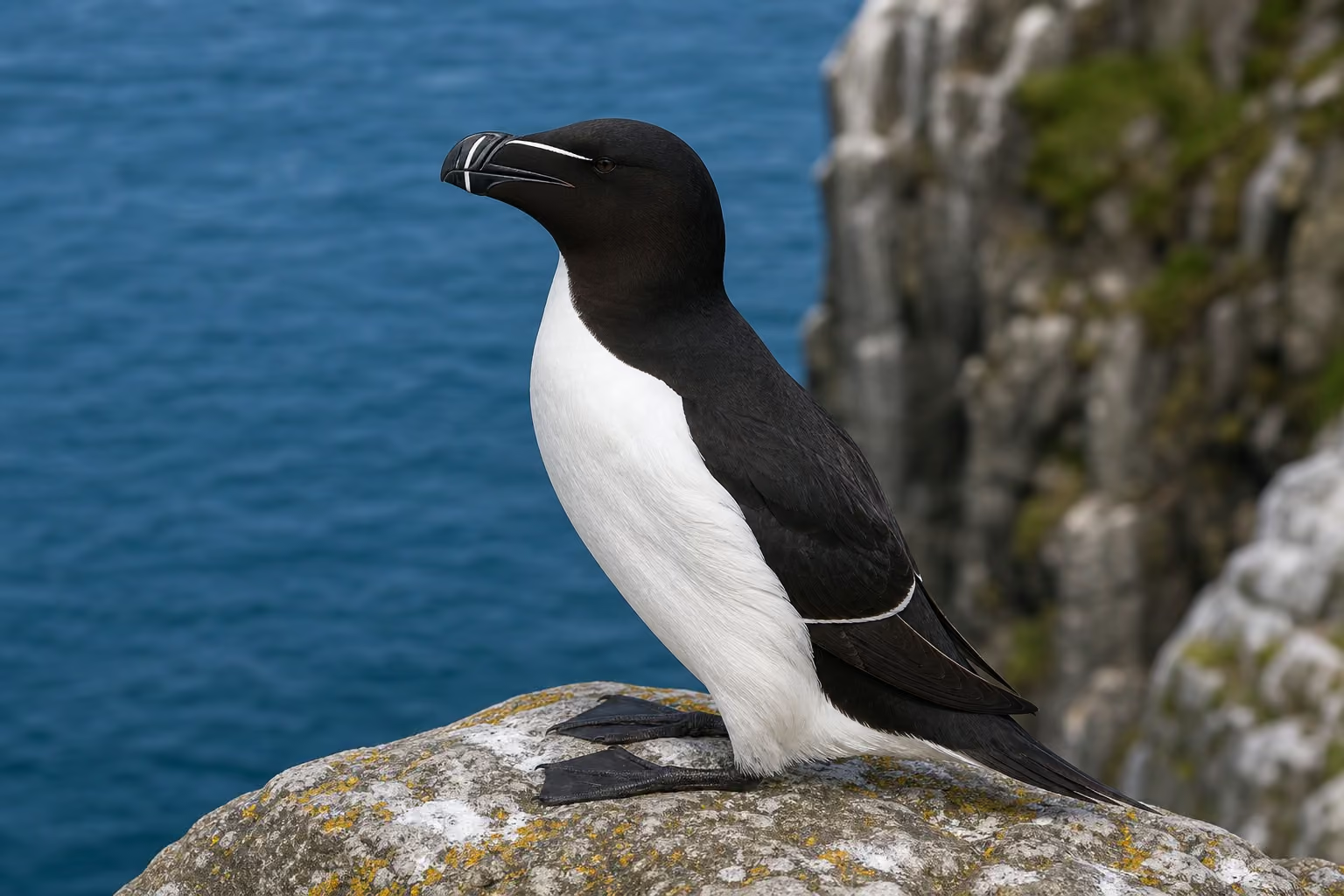
A black-and-white auk of North Atlantic cliffs, recognized by a tall flattened bill marked with a white groove.

View in catalog

Key facts

  • Razorbill (Alca torda) is a carnivore animal classified as Bird · Charadriiformes · Alcidae.
  • Primary habitats are open ocean · coast, with a range across Atlantic Ocean · Arctic Ocean · Nearctic · Palearctic.
  • Activity is diurnal, sociality is herd, and conservation status is LC (Least Concern).
  • A black-and-white auk of North Atlantic cliffs, recognized by a tall flattened bill marked with a white groove.
  • Lives in cold North Atlantic waters and gathers on rocky cliffs and island crevices during the breeding season.

Range

Habitat range map
Native rangeOccasional / Transient
Atlantic OceanAtlantic OceanAtlantic OceanAtlantic OceanAtlantic OceanArctic OceanArctic OceanArctic OceanPalearcticPalearcticPalearcticPalearcticPalearcticPalearcticPalearcticPalearcticPalearcticPalearcticPalearcticPalearcticPalearcticPalearcticPalearcticPalearcticPalearcticPalearcticPalearcticPalearcticPalearcticPalearcticPalearcticPalearcticNearcticNearcticNearcticNearcticNearcticNearcticNearcticNearcticNearcticNearcticNearcticNearcticNearcticNearcticNearcticNearcticNearcticNearcticNearcticNearcticNearcticNearcticNearcticNearcticNearcticNearcticNearcticNearcticNearcticNearcticNearcticNearcticNearcticNearcticNearcticNearcticNearcticNearcticNearcticNearcticNearctic

Map: Ecoregions 2017 © RESOLVE (CC BY 4.0) · Natural Earth (PD)

Details

Habitat

Lives in cold North Atlantic waters and gathers on rocky cliffs and island crevices during the breeding season.

Appearance

The back is black and the belly white. The deep flattened bill has a white groove, with a white facial line.

Behavior

At sea it dives and swims underwater with its wings. Breeding birds crowd into colonies and often return to the same site.

Feeding

It dives for small fish such as sand lance, herring, and capelin.

Reproduction

A single egg is laid on a ledge or in a crevice with little nesting material. Both parents incubate and bring fish to the chick.

Notes

Oil pollution, fishing-net bycatch, and changes in prey linked to ocean temperature affect populations.