Irrawaddy dolphin

Details

Irrawaddy dolphin

Orcaella brevirostris

Size
1.8–2.8 m · 90–200 kg
Diet
Carnivore
Activity
Cathemeral
Sociality
Loose group
Lifespan
10-20 years

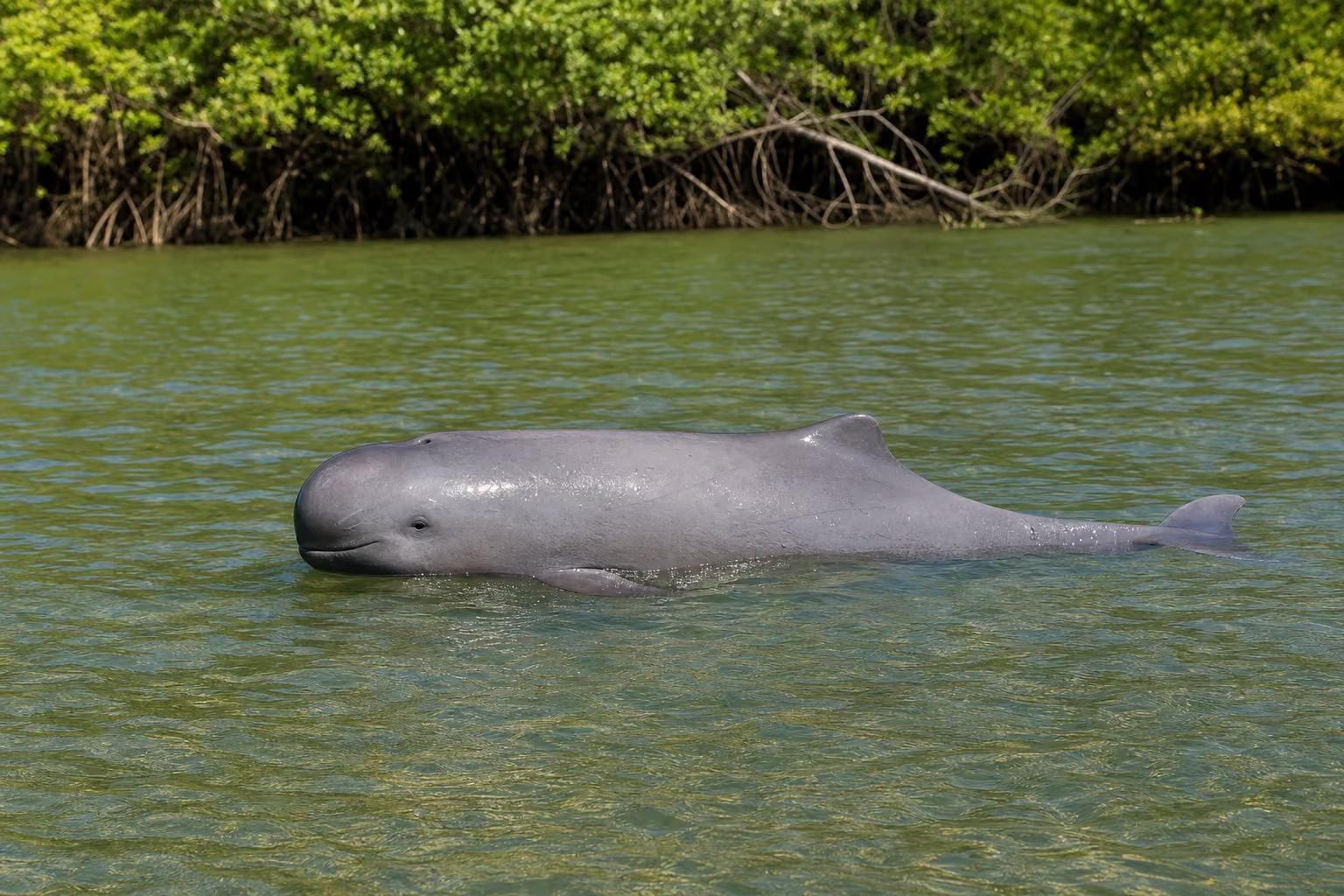
The Irrawaddy dolphin lives in freshwater and coastal waters of the Indomalayan, Indian Ocean, and Pacific regions. It is cathemeral and forms loose groups.

View in catalog
Key facts

  • Irrawaddy dolphin (Orcaella brevirostris) is a carnivore animal classified as Mammal · Cetartiodactyla · Delphinidae.
  • Primary habitats are freshwater · coast, with a range across Indomalayan · Indian Ocean · Pacific Ocean.
  • Activity is cathemeral, sociality is loose group, and conservation status is EN (Endangered).
  • The Irrawaddy dolphin lives in freshwater and coastal waters of the Indomalayan, Indian Ocean, and Pacific regions.
  • It uses rivers, estuaries, mangrove coasts, and shallow coastal waters.
  • Typical lifespan: 10-20 years

Range

Habitat range map
Native rangeOccasional / Transient

Map: Ecoregions 2017 © RESOLVE (CC BY 4.0) · Natural Earth (PD)

Details

Habitat

It uses rivers, estuaries, mangrove coasts, and shallow coastal waters. It is adapted to turbid and tide-influenced habitats.

Appearance

Body length is about 180-275 cm and weight about 90-200 kg. A rounded forehead, short beak, smooth gray body, and small dorsal fin are distinctive.

Behavior

It may be active by day or night and often swims in small loose groups. It surfaces quietly and moves through complex river and coastal channels.

Feeding

It is carnivorous, eating fish, crustaceans, and squid. In murky water it relies heavily on sound and touch-sensitive cues.

Reproduction

Calves are born in water and nurse while swimming close to the mother. They learn shallow-water movement and feeding over an extended period.

Notes

Its status is listed as Endangered. Bycatch, river changes, and coastal development are major pressures.