Northern lapwing

Details

Northern lapwing

Vanellus vanellus

Size
28–33 cm · 128–330 g
Diet
Carnivore
Activity
Diurnal
Sociality
Loose group
Lifespan

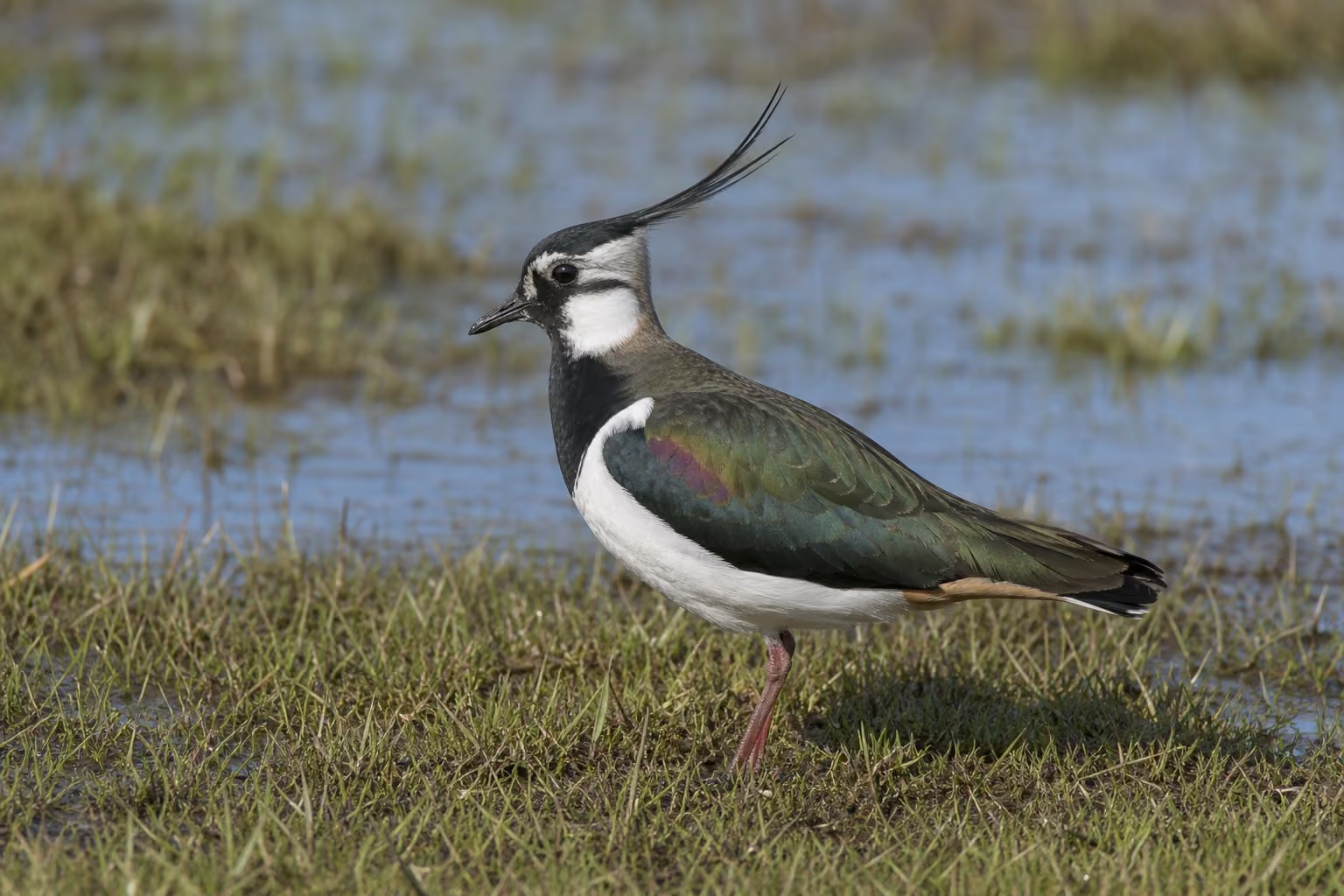
A crested plover with green-glossed upperparts, famous for tumbling display flights over breeding fields.

View in catalog
Key facts

  • Northern lapwing (Vanellus vanellus) is a carnivore animal classified as Bird · Charadriiformes · Charadriidae.
  • Primary habitats are grassland · freshwater · coast, with a range across Palearctic · Afrotropical · Indomalayan.
  • Activity is diurnal, sociality is loose group, and conservation status is NT (Near Threatened).
  • A crested plover with green-glossed upperparts, famous for tumbling display flights over breeding fields.
  • Uses damp pasture, farmland, reclaimed land, marshes, estuaries, and tidal flats, favoring open short vegetation.

Range

Habitat range map
Native rangeOccasional / Transient
PalearcticPalearcticPalearcticPalearcticPalearcticPalearcticPalearcticPalearcticPalearcticPalearcticPalearcticPalearcticPalearcticPalearcticPalearcticPalearcticPalearcticPalearcticPalearcticPalearcticPalearcticPalearcticPalearcticPalearcticAfrotropicalAfrotropicalAfrotropicalAfrotropicalIndomalayanIndomalayanIndomalayanIndomalayanIndomalayanIndomalayanIndomalayanIndomalayanIndomalayanIndomalayanIndomalayanIndomalayanIndomalayanIndomalayanIndomalayan

Map: Ecoregions 2017 © RESOLVE (CC BY 4.0) · Natural Earth (PD)

Details

Habitat

Uses damp pasture, farmland, reclaimed land, marshes, estuaries, and tidal flats, favoring open short vegetation.

Appearance

The body is black and white with greenish upperparts, rounded wings, and a long crest. Breeding males have darker head and breast markings.

Behavior

It feeds on the ground and performs rolling aerial displays at nesting sites. Winter flocks gather in fields and tidal wetlands.

Feeding

Earthworms, insects, larvae, spiders, crustaceans, and mollusks are eaten.

Reproduction

Shallow nests are made in short grass or bare ground. Adults guard chicks and loudly mob predators.

Notes

Agricultural change and wetland loss have driven declines in parts of Europe, supporting its near-threatened status.