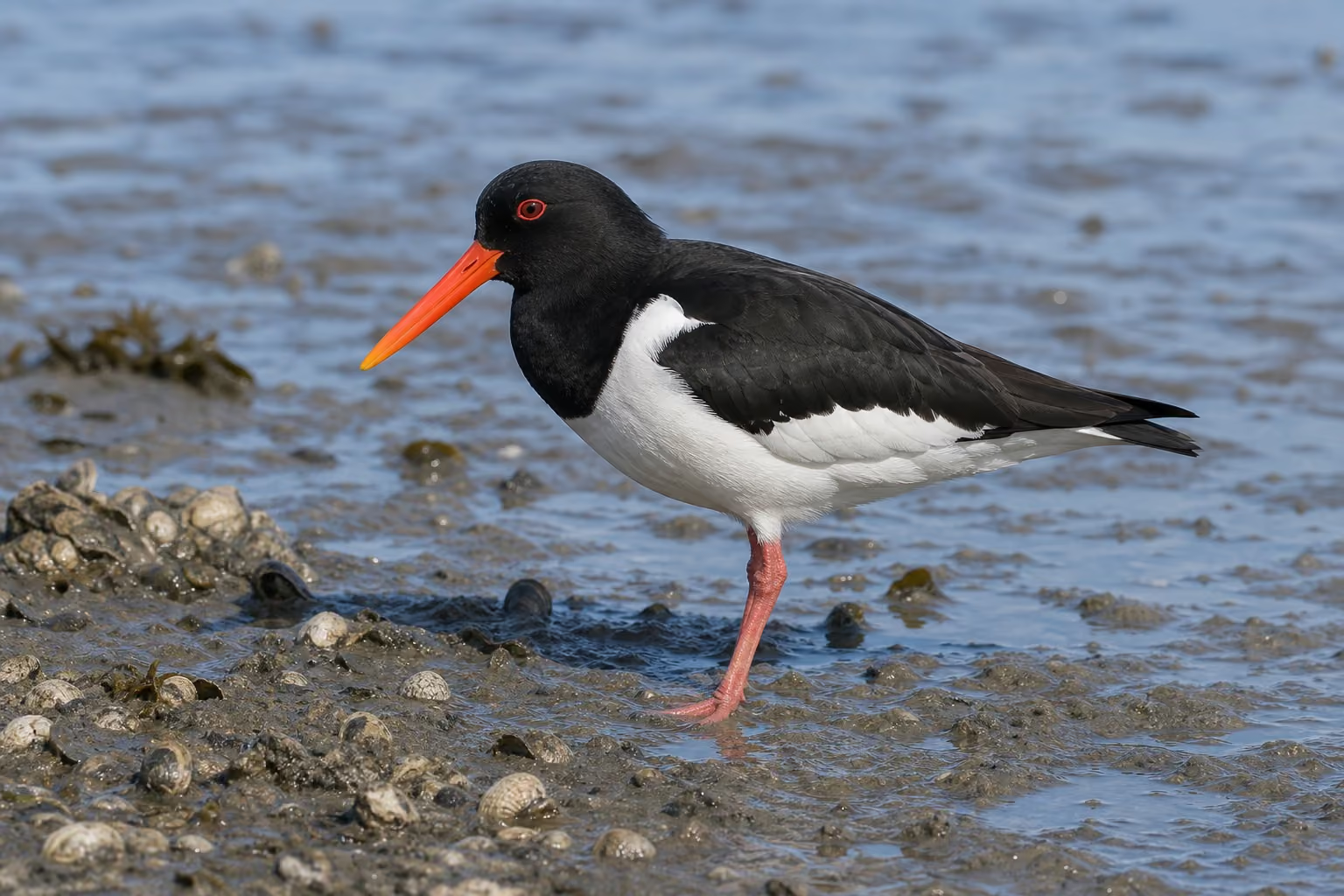
Eurasian oystercatcher

Details

Eurasian oystercatcher

Haematopus ostralegus

Size
40–45 cm · 430–820 g
Diet
Carnivore
Activity
Diurnal
Sociality
Loose group
Lifespan

A black-and-white shorebird with a long orange-red bill, feeding on shellfish and worms across tidal flats.

View in catalog
Key facts

  • Eurasian oystercatcher (Haematopus ostralegus) is a carnivore animal classified as Bird · Charadriiformes · Haematopodidae.
  • Primary habitats are coast · freshwater · grassland, with a range across Palearctic · Afrotropical.
  • Activity is diurnal, sociality is loose group, and conservation status is NT (Near Threatened).
  • A black-and-white shorebird with a long orange-red bill, feeding on shellfish and worms across tidal flats.
  • Uses rocky coasts, sandy beaches, mudflats, estuaries, saltmarsh, inland grassland, and river shingle.

Range

Habitat range map
Native rangeOccasional / Transient
PalearcticPalearcticPalearcticPalearcticPalearcticPalearcticPalearcticPalearcticPalearcticPalearcticPalearcticPalearcticPalearcticPalearcticPalearcticPalearcticPalearcticPalearcticPalearcticPalearcticPalearcticPalearcticPalearcticPalearcticAfrotropicalAfrotropicalAfrotropicalAfrotropical

Map: Ecoregions 2017 © RESOLVE (CC BY 4.0) · Natural Earth (PD)

Details

Habitat

Uses rocky coasts, sandy beaches, mudflats, estuaries, saltmarsh, inland grassland, and river shingle.

Appearance

Head and back are black, underparts white, bill long and orange-red, legs pink, and eye ring red.

Behavior

Noisy flocks walk across mudflats, prying open shellfish or probing mud for hidden prey.

Feeding

Bivalves, snails, worms, crustaceans, insects, and earthworms are eaten, with bill wear shaped by feeding method.

Reproduction

Shallow scrapes are made on coastal or inland bare ground. Precocial chicks walk under parental protection.

Notes

Tidal feeding areas, nesting disturbance, and shellfish changes affect populations, supporting its near-threatened status.