Ocellate river stingray

Details

Ocellate river stingray

Potamotrygon motoro

Size
0.3–1 m · 5–15 kg
Diet
Carnivore
Activity
Diurnal
Sociality
Solitary
Lifespan
10–20 years

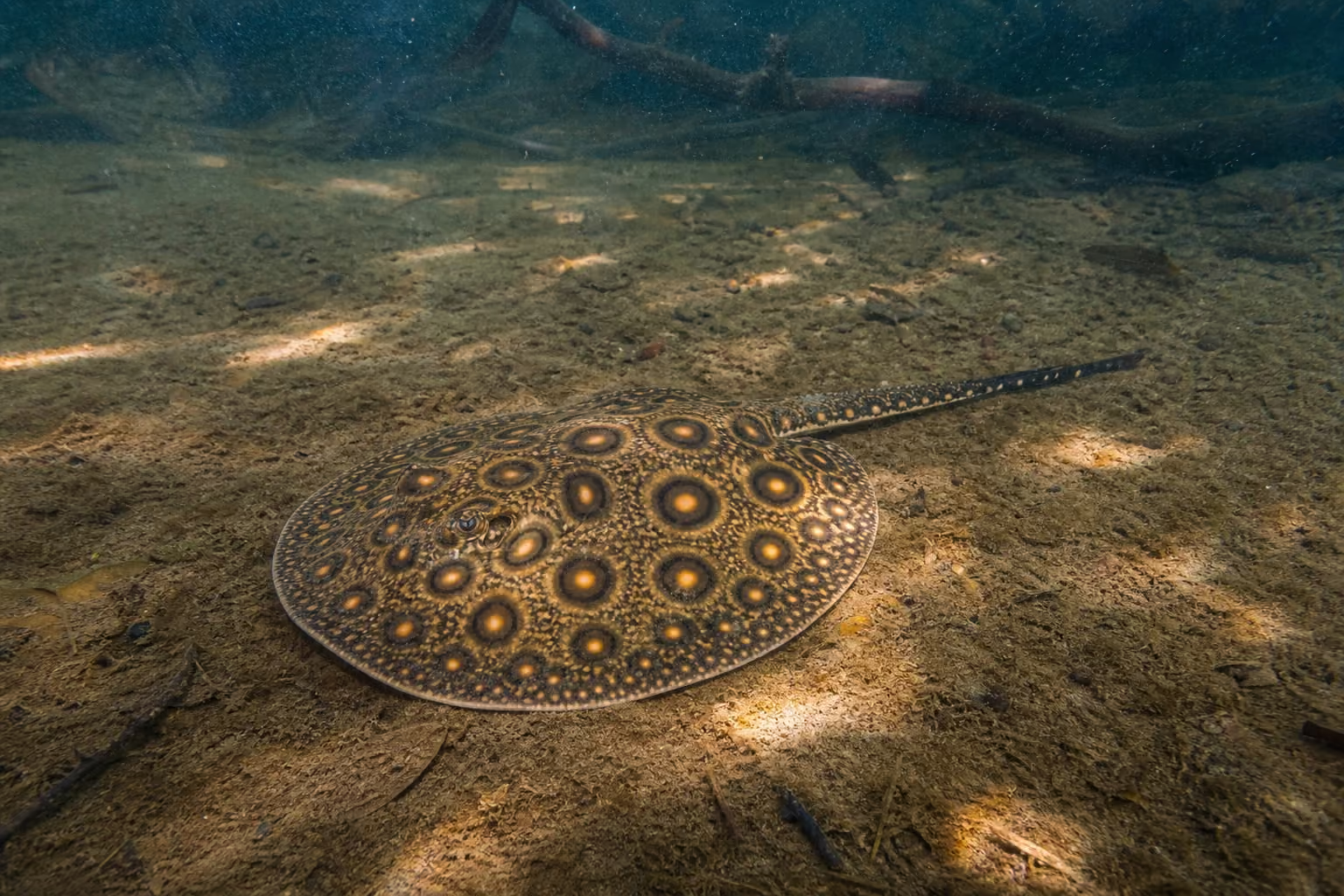
The ocellate river stingray is a round freshwater ray from South America. It searches river bottoms for small animals and blends into sand and mud with eyespot markings.

View in catalog
Key facts

  • Ocellate river stingray (Potamotrygon motoro) is a carnivore animal classified as Fish · Rajiformes · Potamotrygonidae.
  • Primary habitats are freshwater · forest, with a range across Neotropical.
  • Activity is diurnal, sociality is solitary, and conservation status is DD (Data Deficient).
  • The ocellate river stingray is a round freshwater ray from South America.
  • It inhabits rivers, lakes, and flooded forest waters of the Neotropics.
  • Typical lifespan: 10–20 years

Range

Habitat range map
Native rangeOccasional / Transient
NeotropicalNeotropicalNeotropicalNeotropicalNeotropicalNeotropicalNeotropicalNeotropical

Map: Ecoregions 2017 © RESOLVE (CC BY 4.0) · Natural Earth (PD)

Details

Habitat

It inhabits rivers, lakes, and flooded forest waters of the Neotropics. Sandy or muddy shallows with leaf litter are often used.

Appearance

Length 30-100 cm; weight 5 kg-15 kg. A circular flattened disc carries orange eyespots, and the long tail bears a defensive spine. The dorsal pattern camouflages it on the river bottom.

Behavior

Diurnal and solitary, it moves close to the bottom. It may bury shallowly in sand and moves quickly when prey or danger is detected.

Feeding

A carnivore, it eats mollusks, crustaceans, insect larvae, and small fishes. It sucks prey from sand and mud with the mouth pressed to the bottom.

Reproduction

Young develop inside the mother and are born as formed rays. During development they also use nutrient-rich uterine secretions.

Notes

It is Data Deficient, so careful protection of river habitats matters while distribution and population trends remain unclear.