Freshwater angelfish

Details

Freshwater angelfish

Pterophyllum scalare

Size
12–15 cm · 40–90 g
Diet
Omnivore
Activity
Diurnal
Sociality
Pair
Lifespan
8–12 years

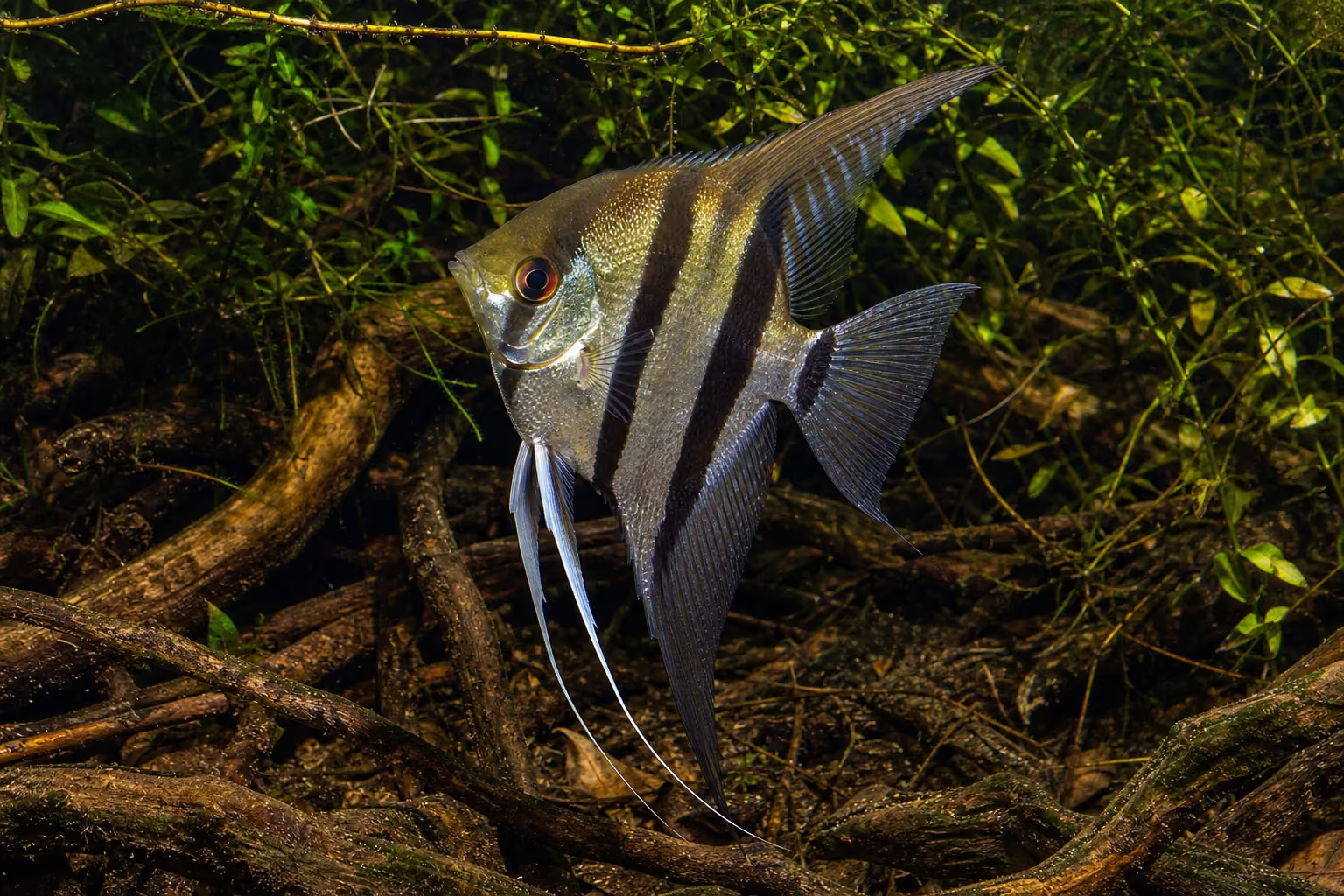
The freshwater angelfish is an Amazonian cichlid with tall fins and trailing pelvic filaments. Pairs move among vertical branches in flooded forest.

View in catalog
Key facts

  • Freshwater angelfish (Pterophyllum scalare) is an omnivore animal classified as Fish · Blenniiformes · Cichlidae.
  • Primary habitats are freshwater · forest, with a range across Neotropical.
  • Activity is diurnal, sociality is pair, and conservation status is LC (Least Concern).
  • The freshwater angelfish is an Amazonian cichlid with tall fins and trailing pelvic filaments.
  • It inhabits freshwater forest waters of the Neotropics.
  • Typical lifespan: 8–12 years

Range

Habitat range map
Native rangeOccasional / Transient
NeotropicalNeotropicalNeotropicalNeotropicalNeotropicalNeotropicalNeotropicalNeotropical

Map: Ecoregions 2017 © RESOLVE (CC BY 4.0) · Natural Earth (PD)

Details

Habitat

It inhabits freshwater forest waters of the Neotropics. Slow flooded forest, roots, wood, and aquatic plants provide structure.

Appearance

Length 12-15 cm; weight 40 g-90 g. The triangular body is strongly compressed, with long dorsal and anal fins. A silvery body with dark vertical bars blends among branch shadows.

Behavior

Diurnal, it defends territories as a pair when breeding. The tall body lets it slip quietly between stems and roots.

Feeding

An omnivore, it eats small fishes, crustaceans, insect larvae, and plant matter. It picks food from midwater and around vegetation.

Reproduction

A pair cleans a leaf or firm surface and lays eggs in rows. Both parents fan and guard eggs and young.

Notes

It is listed as Least Concern, though local populations can still be affected by habitat change, collection, or pollution.