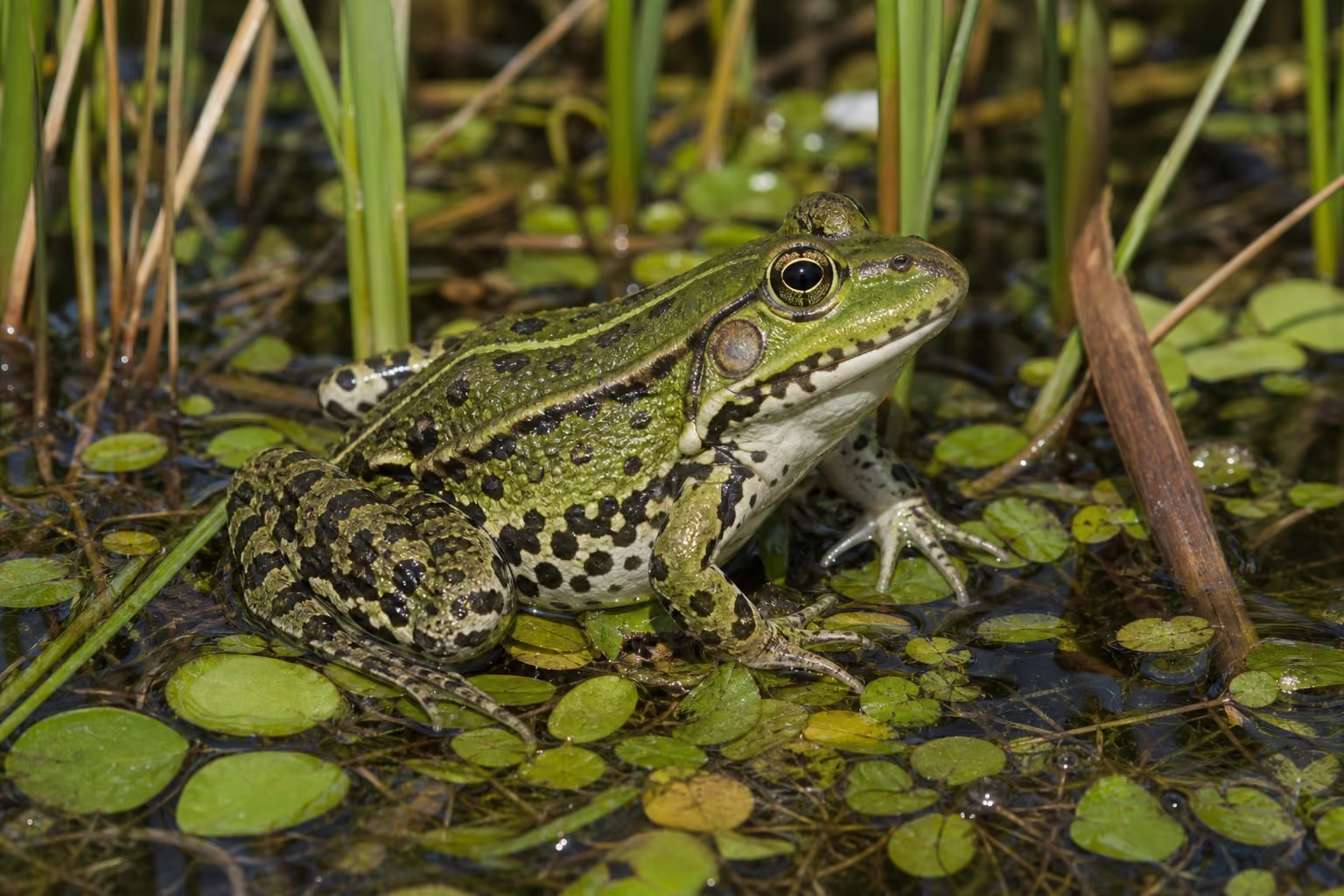
Marsh frog

Details

Marsh frog

Pelophylax ridibundus

Size
9–17 cm · 20–80 g
Diet
Carnivore
Activity
Diurnal
Sociality
Loose group
Lifespan

Marsh frog is a large green frog of ponds, marshes, and slow waters from Europe into western Asia. Introduced populations can compete or hybridize with native frogs.

View in catalog
Key facts

  • Marsh frog (Pelophylax ridibundus) is a carnivore animal classified as Amphibian · Anura · Ranidae.
  • Primary habitats are freshwater · grassland · urban, with a range across Palearctic.
  • Activity is diurnal, sociality is loose group, and conservation status is LC (Least Concern).
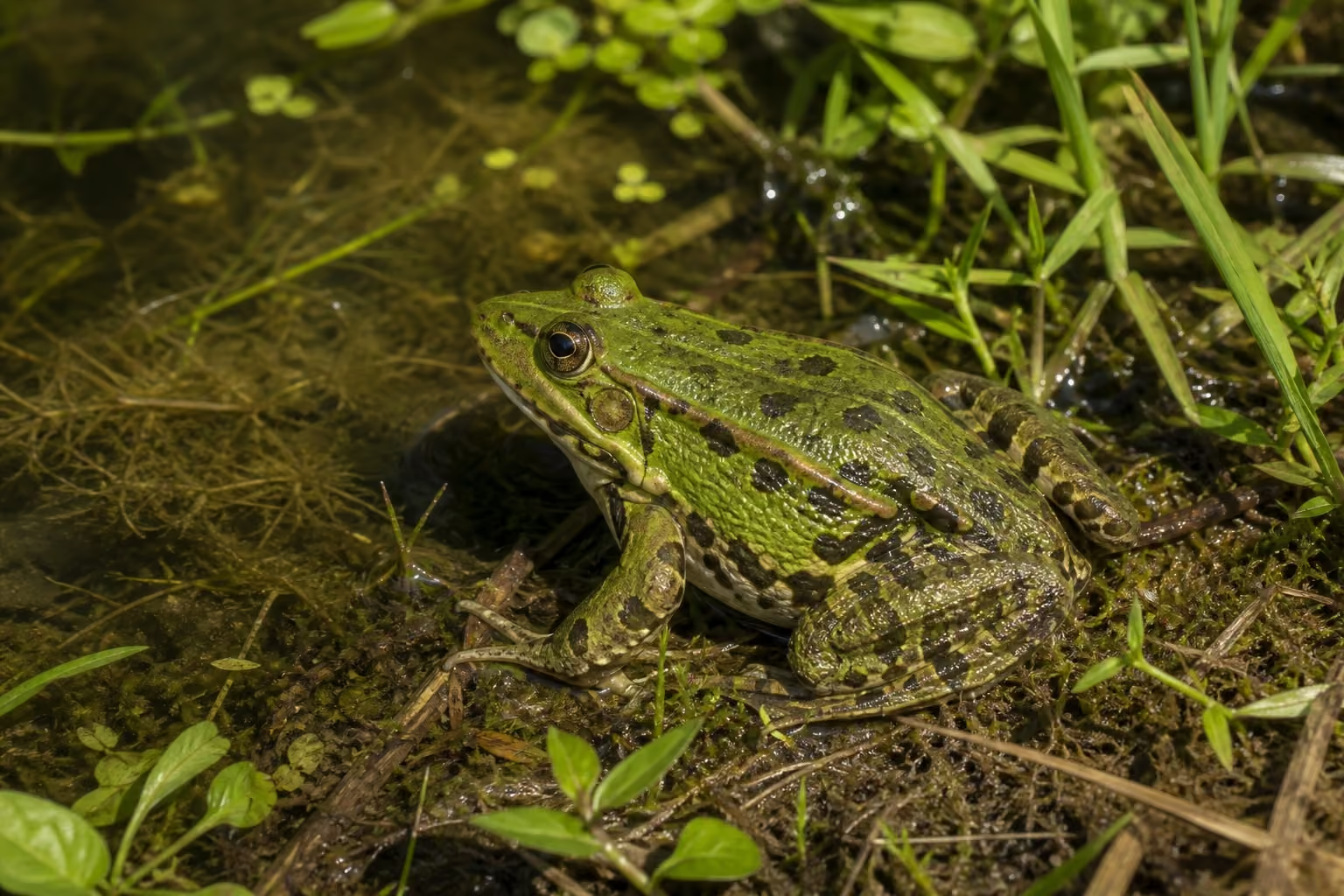
  • Marsh frog is a large green frog of ponds, marshes, and slow waters from Europe into western Asia.
  • It lives in ponds, marshes, lake edges, canals, slow rivers, and urban park waters.

Range

Habitat range map
Native rangeOccasional / Transient
PalearcticPalearcticPalearcticPalearcticPalearcticPalearcticPalearcticPalearcticPalearcticPalearcticPalearcticPalearcticPalearcticPalearcticPalearcticPalearcticPalearcticPalearcticPalearcticPalearcticPalearcticPalearcticPalearcticPalearctic

Map: Ecoregions 2017 © RESOLVE (CC BY 4.0) · Natural Earth (PD)

Details

Habitat

It lives in ponds, marshes, lake edges, canals, slow rivers, and urban park waters. Main habitat types in this guide are freshwater, grassland, urban.

Appearance

Typical length 9-17 cm, weight 20 g-80 g. Green to brown coloration, a pale back stripe, long hind legs, and large eardrums are typical.

Behavior

It is diurnal and often found in loose groups. It calls from watersides by day and quickly jumps into water when disturbed.

Feeding

It is carnivorous. Insects, spiders, small fish, and even other frogs may be taken.

Reproduction

Egg masses are laid in water from spring to early summer, and tadpoles develop there.

Notes

Although still widespread in places, it remains sensitive to habitat change. Introduced populations can compete or hybridize with native frogs.