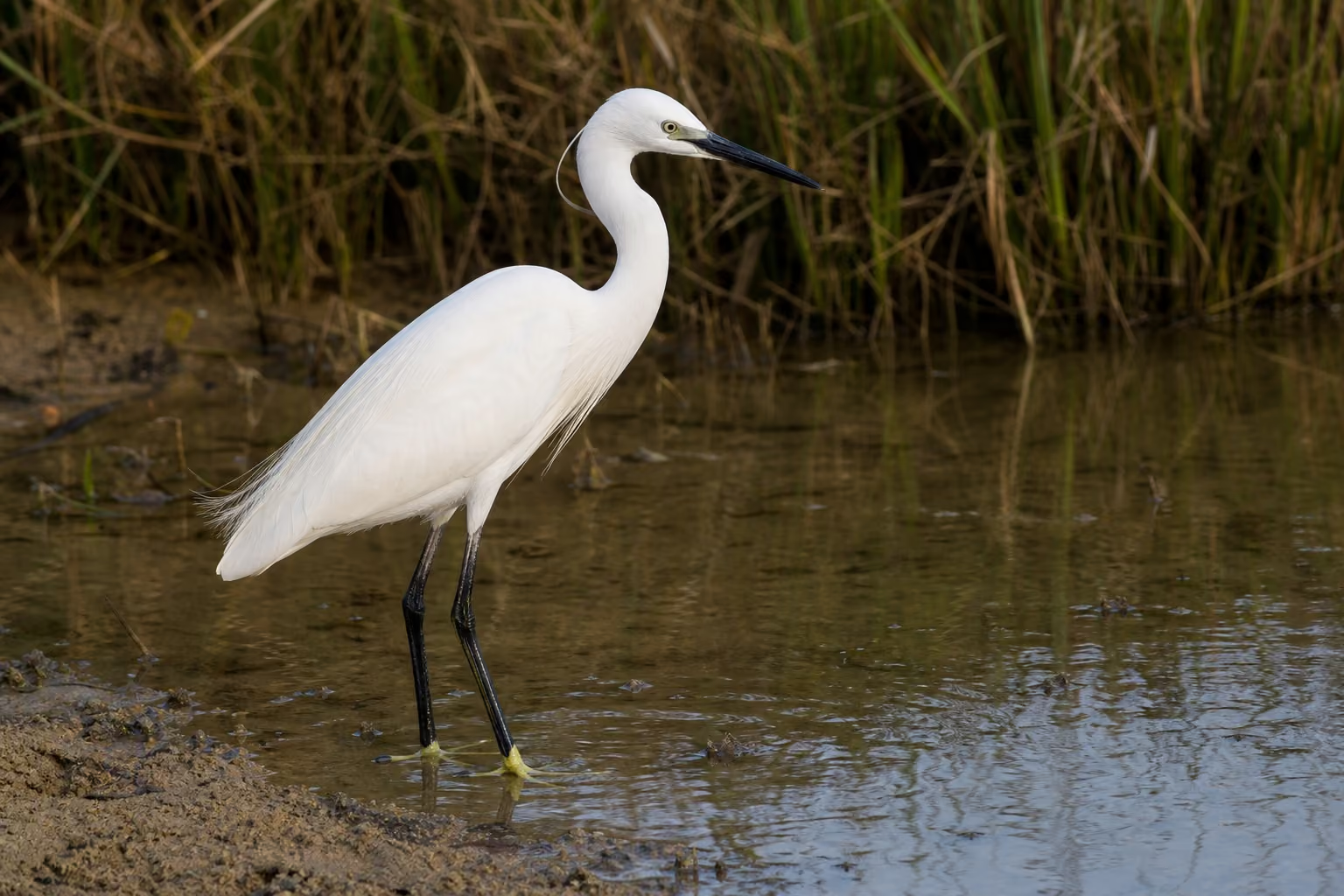
Little egret

Details

Little egret

Egretta garzetta

Size
Wingspan 0.9–1.1 m · 350–550 g
Diet
Carnivore
Activity
Diurnal
Sociality
Loose group
Lifespan
8-25 years

The little egret is a white heron of shallow wetlands and coasts. Diurnal birds forage alone or in loose groups.

View in catalog
Key facts

  • Little egret (Egretta garzetta) is a carnivore animal classified as Bird · Pelecaniformes · Ardeidae.
  • Primary habitats are freshwater · coast, with a range across Palearctic · Afrotropical.
  • Activity is diurnal, sociality is loose group, and conservation status is LC (Least Concern).
  • The little egret is a white heron of shallow wetlands and coasts.
  • It uses mudflats, estuaries, marshes, rice fields, lake edges, and shallow rivers.
  • Typical lifespan: 8-25 years

Range

Habitat range map
Native rangeOccasional / Transient
PalearcticPalearcticPalearcticPalearcticPalearcticPalearcticPalearcticPalearcticPalearcticPalearcticPalearcticPalearcticPalearcticPalearcticPalearcticPalearcticPalearcticPalearcticPalearcticPalearcticPalearcticPalearcticPalearcticPalearcticAfrotropicalAfrotropicalAfrotropicalAfrotropical

Map: Ecoregions 2017 © RESOLVE (CC BY 4.0) · Natural Earth (PD)

Details

Habitat

It uses mudflats, estuaries, marshes, rice fields, lake edges, and shallow rivers. Shallow water with abundant small animals is ideal.

Appearance

Wingspan is about 88-106 cm and weight about 350-550 g. White plumage, a black bill, black legs, yellow feet, and breeding plumes are distinctive.

Behavior

Active by day, it walks through water searching for prey. It may stir with its feet, rush after fish, or wait motionless.

Feeding

It is carnivorous, eating small fish, crustaceans, insects, amphibians, and similar prey. Strikes are quick and made in shallow water.

Reproduction

It often breeds in colonies in trees or dense shrubs. Adults build stick nests and carry wetland prey back to the chicks.

Notes

Its status is listed as Least Concern. It can use rice fields and urban wetlands, but local numbers depend on wetland quality.