Grey heron

Details

Grey heron

Ardea cinerea

Size
0.8–1 m · 1–2.1 kg
Diet
Carnivore
Activity
Diurnal
Sociality
Colony
Lifespan
15–25 years

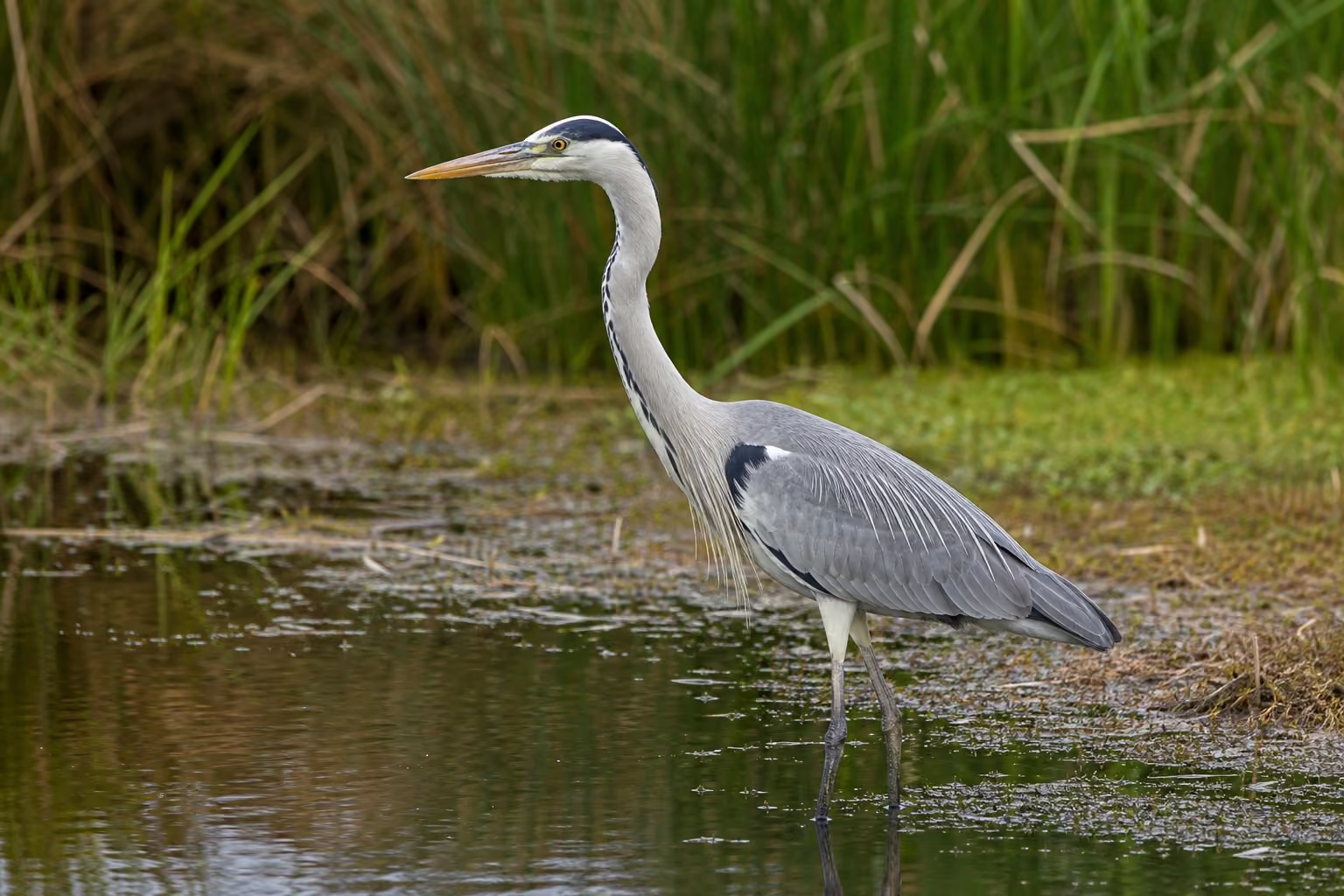
The grey heron is a large heron widespread around waters of the Palearctic, Africa, and the Indomalayan region. With long legs and neck, it waits in shallows for fish.

View in catalog
Key facts

  • Grey heron (Ardea cinerea) is a carnivore animal classified as Bird · Pelecaniformes · Ardeidae.
  • Primary habitats are freshwater · coast, with a range across Palearctic · Afrotropical · Indomalayan.
  • Activity is diurnal, sociality is colony, and conservation status is LC (Least Concern).
  • The grey heron is a large heron widespread around waters of the Palearctic, Africa, and the Indomalayan region.
  • It uses rivers, lakes, marshes, rice fields, estuaries, and coastal shallows.
  • Typical lifespan: 15–25 years

Range

Habitat range map
Native rangeOccasional / Transient
PalearcticPalearcticPalearcticPalearcticPalearcticPalearcticPalearcticPalearcticPalearcticPalearcticPalearcticPalearcticPalearcticPalearcticPalearcticPalearcticPalearcticPalearcticPalearcticPalearcticPalearcticPalearcticPalearcticPalearcticAfrotropicalAfrotropicalAfrotropicalAfrotropicalIndomalayanIndomalayanIndomalayanIndomalayanIndomalayanIndomalayanIndomalayanIndomalayanIndomalayanIndomalayanIndomalayanIndomalayanIndomalayanIndomalayanIndomalayan

Map: Ecoregions 2017 © RESOLVE (CC BY 4.0) · Natural Earth (PD)

Details

Habitat

It uses rivers, lakes, marshes, rice fields, estuaries, and coastal shallows. Colonies are built in trees or reedbeds near feeding waters.

Appearance

Length is 84-102 cm and weight 1-2.1 kg. It has grey wings, a white head, black crest plumes, and a long yellow bill; in flight the neck is folded into an S.

Behavior

Diurnal and colonial at nests, it often feeds alone. It stands motionless in shallow water, then strikes by extending the neck rapidly.

Feeding

A carnivore, it eats fish, frogs, crustaceans, small mammals, and insects. It is an opportunistic predator of many waterside animals.

Reproduction

Stick nests are built high in trees or reedbeds within colonies. Both adults incubate and feed chicks by regurgitating fish and other prey.

Notes

It is listed as Least Concern. It adapts to waters near towns, though breeding colonies can be sensitive to disturbance.