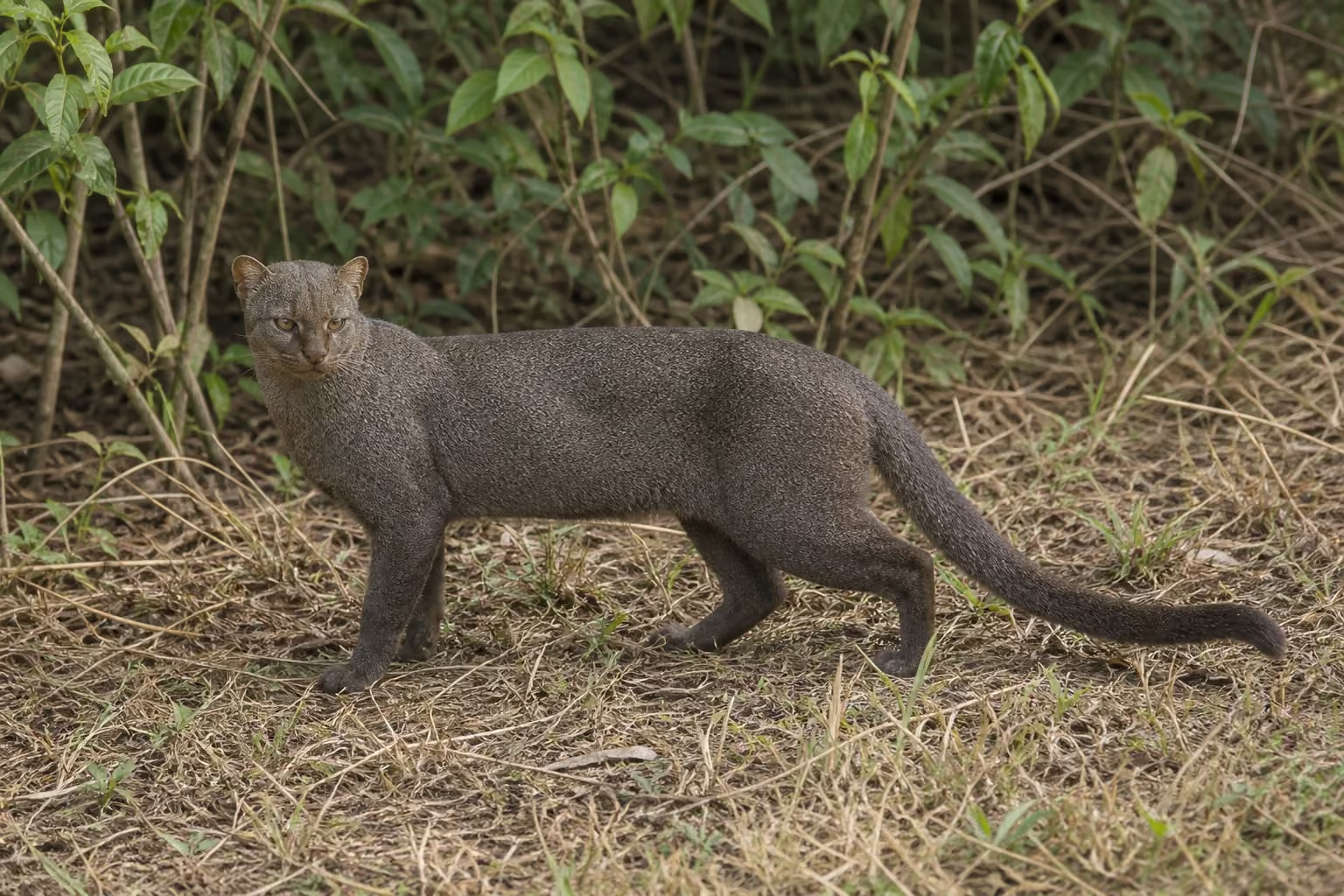
Jaguarundi

Details

Jaguarundi

Puma yagouaroundi

Size
53–77 cm · 3.5–9 kg
Diet
Carnivore
Activity
Diurnal
Sociality
Solitary
Lifespan

Jaguarundi is a small Neotropical cat with a long body and short legs. It is adaptable across wooded and open habitats, though it remains difficult to observe.

View in catalog

Key facts

  • Jaguarundi (Puma yagouaroundi) is a carnivore animal classified as Mammal · Carnivora · Felidae.
  • Primary habitats are forest · grassland · savanna, with a range across Neotropical · Nearctic.
  • Activity is diurnal, sociality is solitary, and conservation status is LC (Least Concern).
  • Jaguarundi is a small Neotropical cat with a long body and short legs.
  • It uses scrub, grassland, forest edges, and wetland margins from southern North America into South America.

Range

Habitat range map
Native rangeOccasional / Transient
NearcticNearcticNearcticNearcticNearcticNearcticNearcticNearcticNearcticNearcticNearcticNearcticNearcticNearcticNearcticNearcticNearcticNearcticNearcticNearcticNearcticNearcticNearcticNearcticNearcticNearcticNearcticNearcticNearcticNearcticNearcticNearcticNearcticNearcticNearcticNearcticNearcticNearcticNearcticNearcticNearcticNeotropicalNeotropicalNeotropicalNeotropicalNeotropicalNeotropicalNeotropicalNeotropical

Map: Ecoregions 2017 © RESOLVE (CC BY 4.0) · Natural Earth (PD)

Details

Habitat

It uses scrub, grassland, forest edges, and wetland margins from southern North America into South America. Main habitat types in this guide are forest, grassland, savanna.

Appearance

Typical length 53-77 cm, weight 3.5 kg-9 kg. A plain gray to reddish coat, long tail, and low weasel-like body shape are distinctive.

Behavior

It is diurnal and usually solitary. It is often active by day and moves quickly on the ground while searching for prey.

Feeding

It is carnivorous. Small mammals, birds, reptiles, and frogs are commonly taken.

Reproduction

Females give birth in dense cover or cavities and keep kittens hidden at first.

Notes

Although still widespread in places, it remains sensitive to habitat change. It is adaptable across wooded and open habitats, though it remains difficult to observe.