Details
Eurasian spoonbill
Platalea leucorodia
- Size
- 80–93 cm · 1.2–2 kg
- Diet
- Carnivore
- Activity
- Diurnal
- Sociality
- Herd
- Lifespan
- —
A white ibis relative that sweeps a spoon-shaped bill through shallow water while feeding in groups.
View in catalogDetails
Platalea leucorodia
A white ibis relative that sweeps a spoon-shaped bill through shallow water while feeding in groups.
View in catalogMap: Ecoregions 2017 © RESOLVE (CC BY 4.0) · Natural Earth (PD)
Uses shallow lakes, marshes, tidal flats, estuaries, and coastal lagoons, nesting on safe islands or reedbeds.
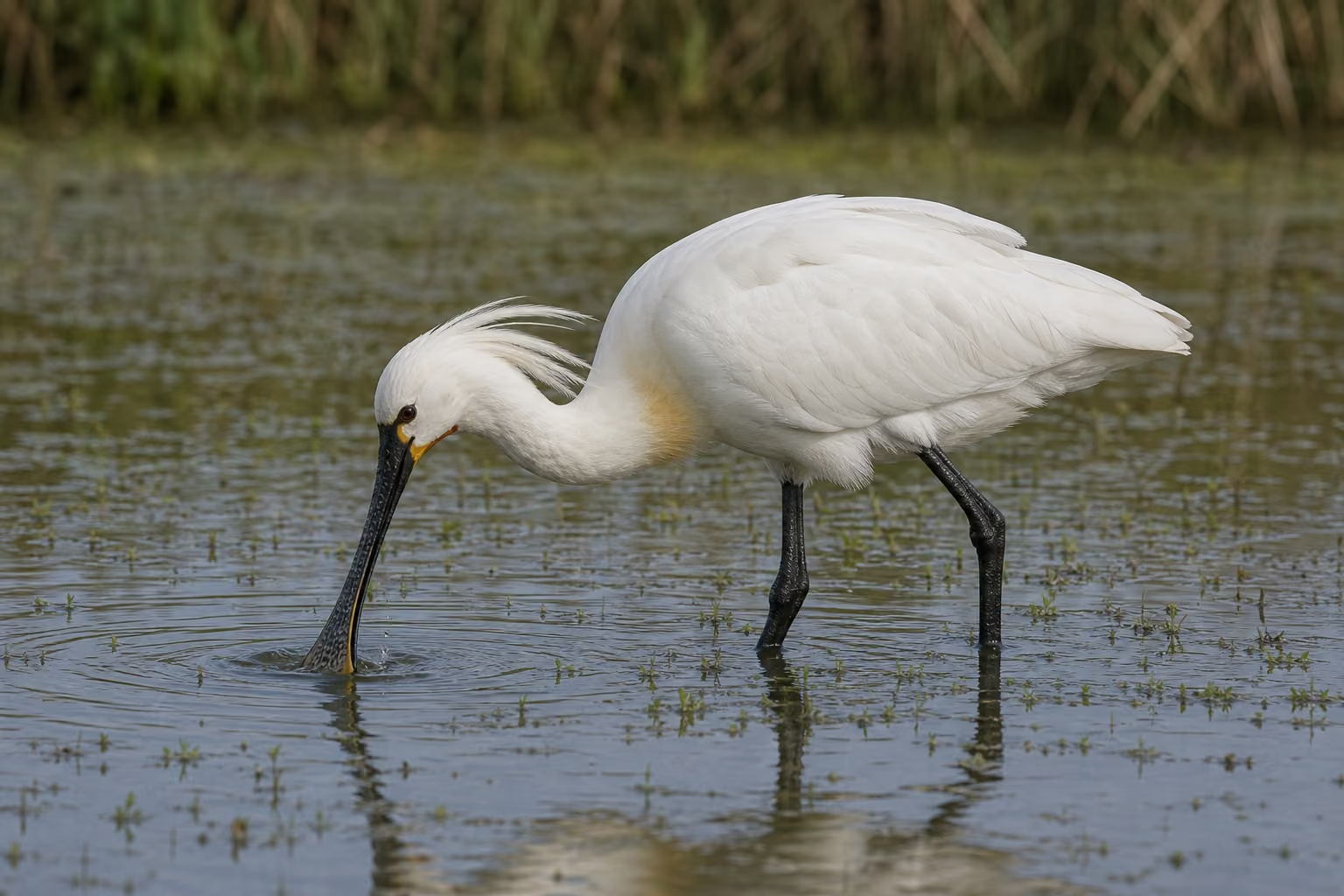
The body is white with long legs and a black spoon-shaped bill. Breeding birds grow a crest from the back of the head.
It walks through shallows with the bill partly open, sweeping side to side and snapping shut on contact with prey.
Small fish, shrimp, aquatic insects, crustaceans, and tadpoles are eaten.
Colonies nest in trees, reedbeds, or on the ground, building nests of sticks and vegetation. Chicks are fed softened food.
It responds strongly to wetland water levels and prey abundance, making protected shallow wetlands important.