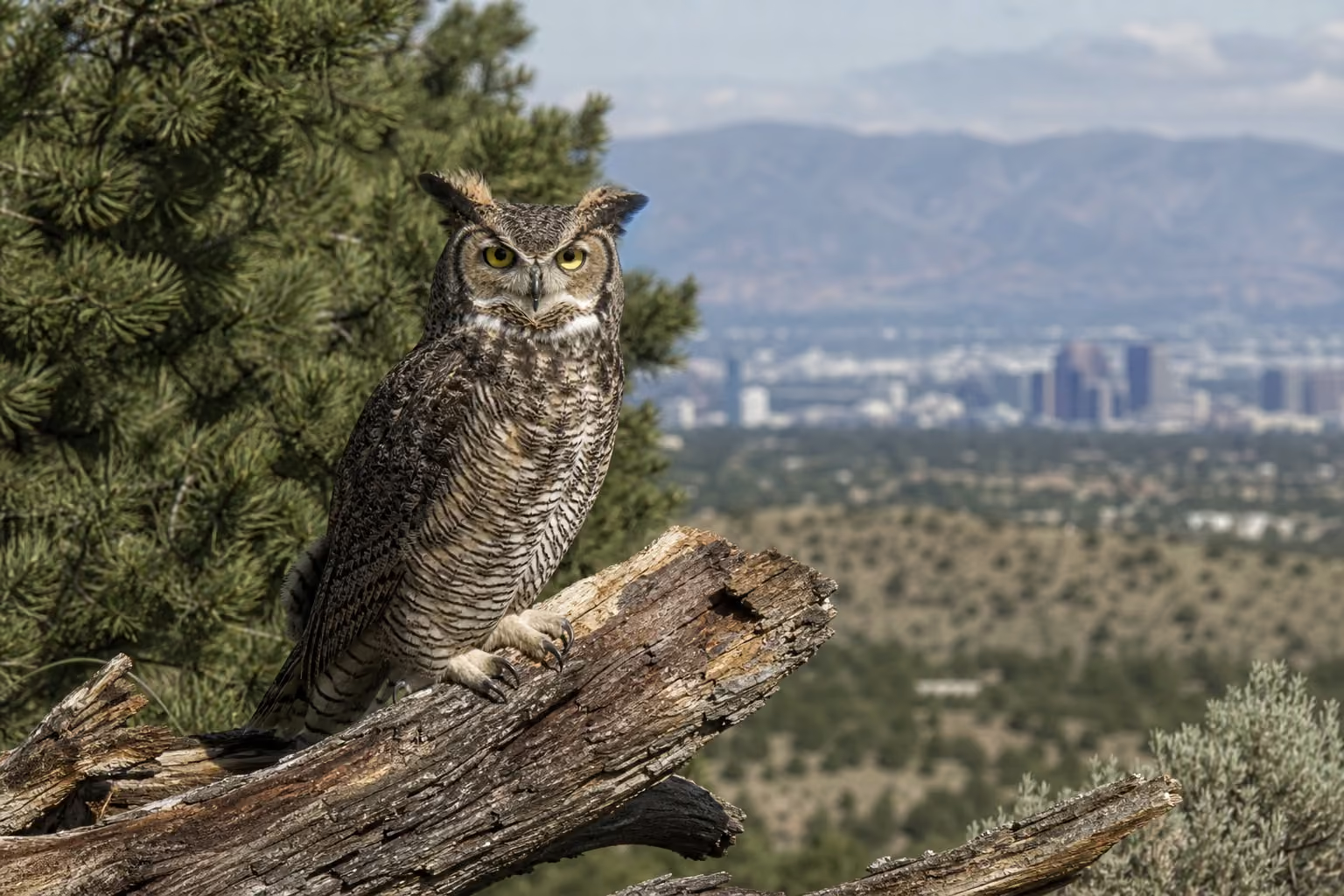
Great horned owl

Details

Great horned owl

Bubo virginianus

Size
46–64 cm · 0.9–2.5 kg
Diet
Carnivore
Activity
Nocturnal
Sociality
Pair
Lifespan
10–20 years

The great horned owl is a powerful nocturnal owl widespread across the Americas. Prominent ear tufts and strong talons suit it to taking a wide range of prey.

View in catalog
Key facts

  • Great horned owl (Bubo virginianus) is a carnivore animal classified as Bird · Strigiformes · Strigidae.
  • Primary habitats are forest · desert · grassland · urban, with a range across Nearctic · Neotropical.
  • Activity is nocturnal, sociality is pair, and conservation status is LC (Least Concern).
  • The great horned owl is a powerful nocturnal owl widespread across the Americas.
  • It uses forests, deserts, wetlands, farmland, and city parks.
  • Typical lifespan: 10–20 years

Range

Habitat range map
Native rangeOccasional / Transient
NearcticNearcticNearcticNearcticNearcticNearcticNearcticNearcticNearcticNearcticNearcticNearcticNearcticNearcticNearcticNearcticNearcticNearcticNearcticNearcticNearcticNearcticNearcticNearcticNearcticNearcticNearcticNearcticNearcticNearcticNearcticNearcticNearcticNearcticNearcticNearcticNearcticNearcticNearcticNearcticNearcticNeotropicalNeotropicalNeotropicalNeotropicalNeotropicalNeotropicalNeotropicalNeotropical

Map: Ecoregions 2017 © RESOLVE (CC BY 4.0) · Natural Earth (PD)

Details

Habitat

It uses forests, deserts, wetlands, farmland, and city parks. Good habitat combines open hunting areas with trees, cliffs, or other daytime roosts.

Appearance

Length is 46-64 cm and weight 900-2500 g. It has a bulky body, large yellow eyes, horn-like ear tufts, and barred grey-brown to reddish-brown plumage.

Behavior

Nocturnal pairs maintain territories. From branches or rocks they launch in quiet flight and pin prey with powerful feet.

Feeding

A carnivore, it eats rabbits, rodents, skunks, birds, reptiles, and other animals. It can subdue prey approaching its own size.

Reproduction

It does not build its own nest, instead using old hawk or crow nests, cavities, ledges, or similar sites. Breeding can begin early in the season, and both adults defend the young.

Notes

It is listed as Least Concern. The species adapts well to many landscapes, though vehicle strikes and secondary poisoning can affect local birds.