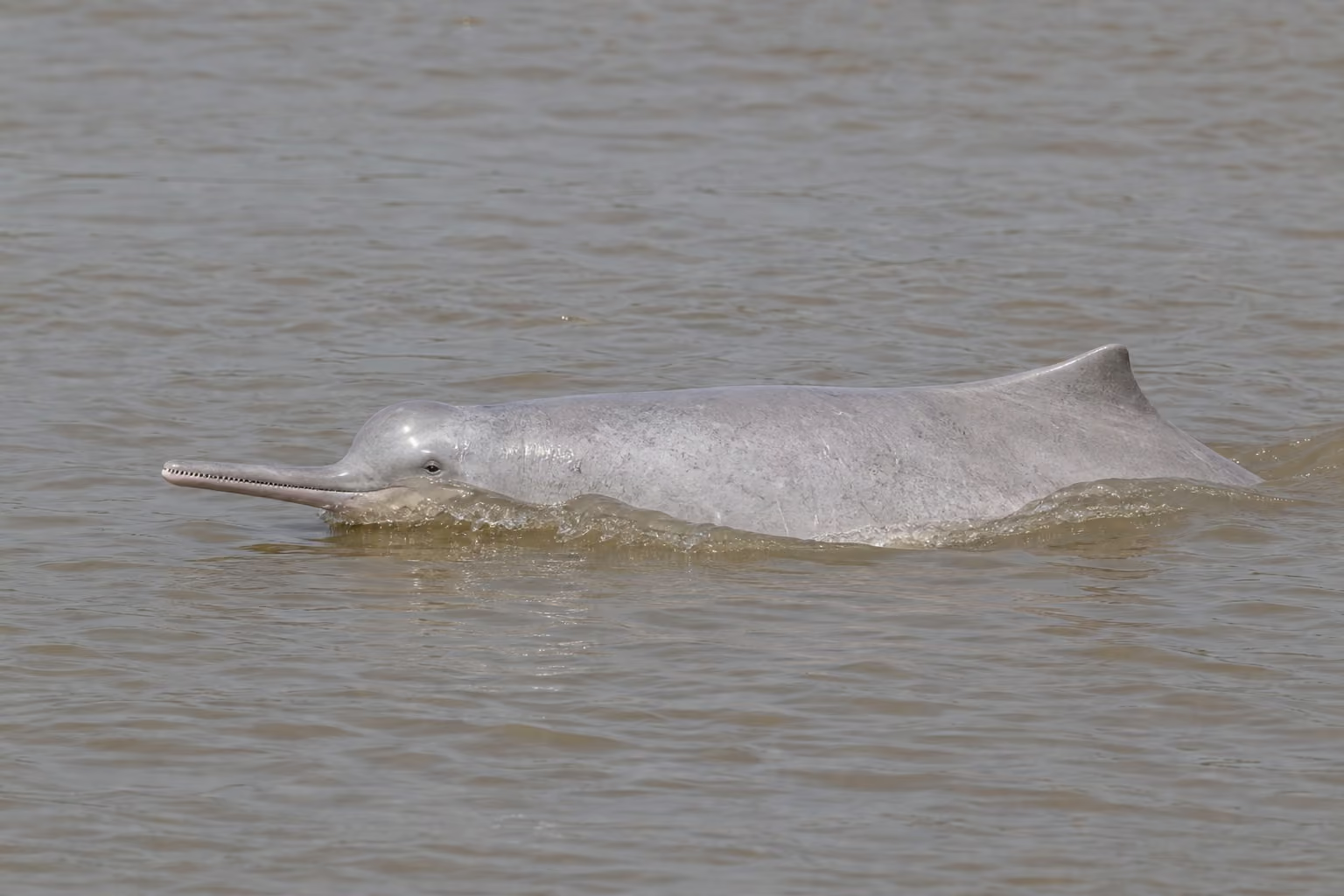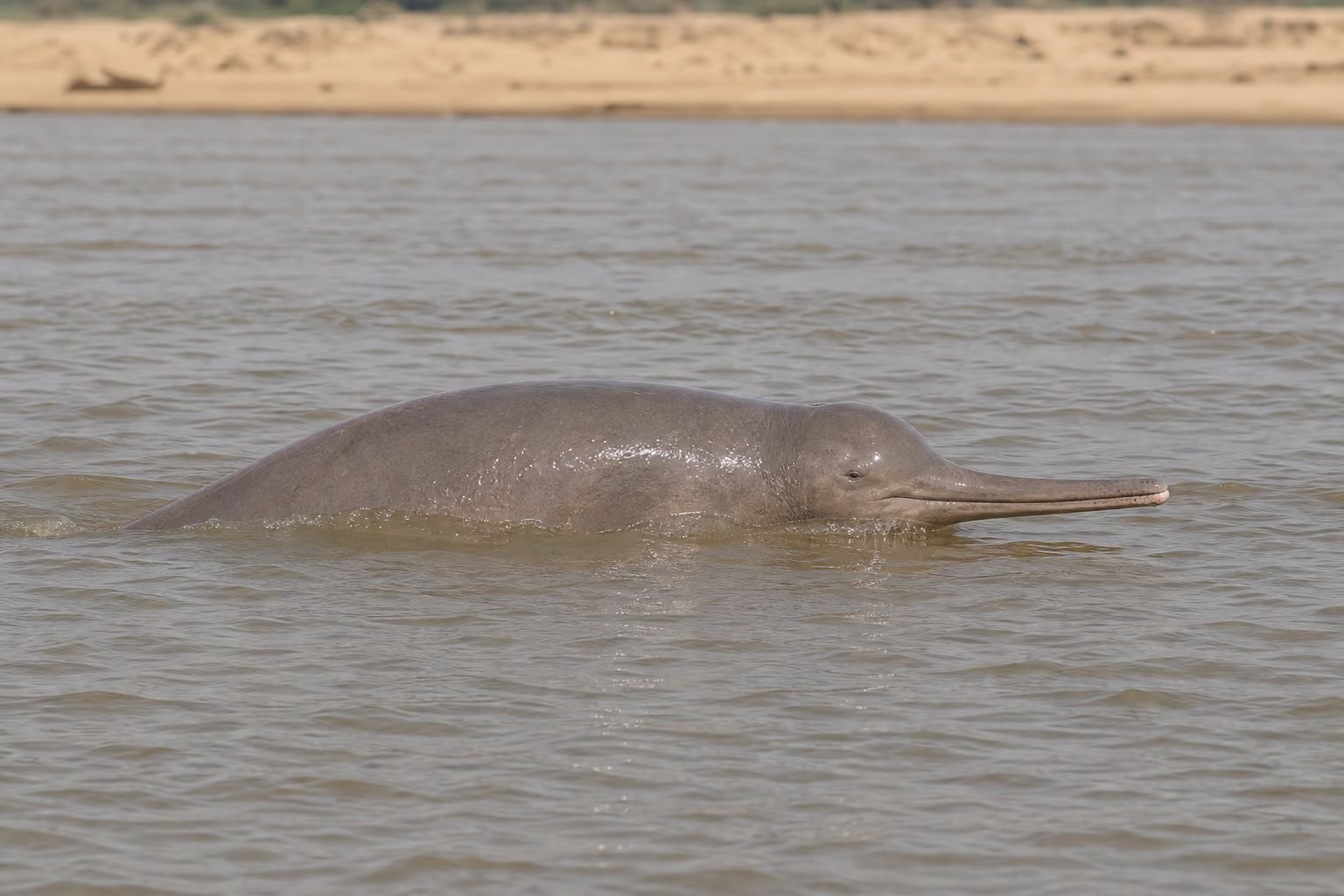
Ganges river dolphin

Details

Ganges river dolphin

Platanista gangetica

Size
2–2.6 m · 70–90 kg
Diet
Carnivore
Activity
Cathemeral
Sociality
Solitary
Lifespan

Ganges river dolphin is a South Asian river dolphin that navigates turbid rivers mainly by echolocation. Dams, water extraction, nets, and pollution fragment river habitat and raise mortality.

View in catalog
Key facts

  • Ganges river dolphin (Platanista gangetica) is a carnivore animal classified as Mammal · Artiodactyla · Platanistidae.
  • Primary habitats are freshwater, with a range across Indomalayan.
  • Activity is cathemeral, sociality is solitary, and conservation status is EN (Endangered).
  • Ganges river dolphin is a South Asian river dolphin that navigates turbid rivers mainly by echolocation.
  • It lives in deep channels, confluences, and pools of the Ganges, Brahmaputra, and Meghna systems.

Range

Habitat range map
Native rangeOccasional / Transient
IndomalayanIndomalayanIndomalayanIndomalayanIndomalayanIndomalayanIndomalayanIndomalayanIndomalayanIndomalayanIndomalayanIndomalayanIndomalayanIndomalayanIndomalayan

Map: Ecoregions 2017 © RESOLVE (CC BY 4.0) · Natural Earth (PD)

Details

Habitat

It lives in deep channels, confluences, and pools of the Ganges, Brahmaputra, and Meghna systems. Main habitat types in this guide are freshwater.

Appearance

Typical length 200-260 cm, weight 70 kg-90 kg. A long beak, tiny eyes, stocky body, and flexible neck are distinctive.

Behavior

It is active in repeated bouts across day and night and usually solitary. It surfaces alone or in small numbers and searches muddy channels with sound.

Feeding

It is carnivorous. Fish, shrimp, and bottom animals are detected and seized with the long beak.

Reproduction

Females bear single calves that learn to surface and swim beside the mother.

Notes

Its limited range makes protection and habitat management important. Dams, water extraction, nets, and pollution fragment river habitat and raise mortality.