Baiji

Details

Baiji

Lipotes vexillifer

Size
1.4–2.5 m · 42–167 kg
Diet
Carnivore
Activity
Cathemeral
Sociality
Loose group
Lifespan

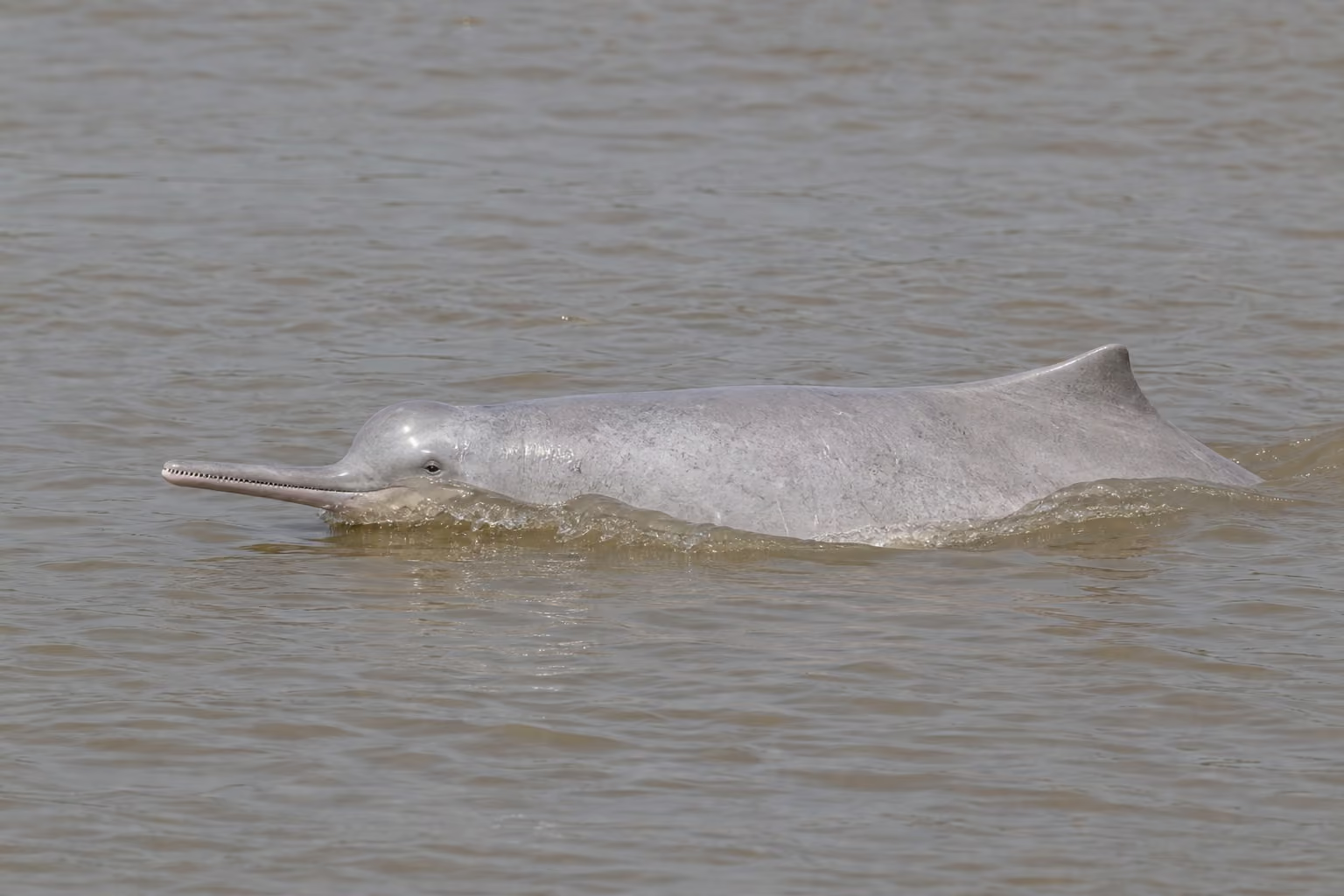
Baiji is a Yangtze River dolphin with a long beak and adaptations to turbid freshwater. It is often regarded as functionally extinct after pressure from fishing gear, vessels, and river modification.

View in catalog
Key facts

  • Baiji (Lipotes vexillifer) is a carnivore animal classified as Mammal · Artiodactyla · Lipotidae.
  • Primary habitats are freshwater, with a range across Palearctic.
  • Activity is cathemeral, sociality is loose group, and conservation status is CR (Critically Endangered).
  • Baiji is a Yangtze River dolphin with a long beak and adaptations to turbid freshwater.
  • It occurred in the main Yangtze River and connected lakes in China, but confirmed records have ceased.

Range

Habitat range map
Native rangeOccasional / Transient

Map: Ecoregions 2017 © RESOLVE (CC BY 4.0) · Natural Earth (PD)

Details

Habitat

It occurred in the main Yangtze River and connected lakes in China, but confirmed records have ceased. Main habitat types in this guide are freshwater.

Appearance

Typical length 140-250 cm, weight 42 kg-167 kg. A long beak, small eyes, and pale gray body suited life in muddy river water where echolocation was vital.

Behavior

It is active in repeated bouts across day and night and often found in loose groups. It moved through channels and deep river sections, and small groups were once observed.

Feeding

It is carnivorous. Fish were caught with the long beak, often near the bottom or in turbid water.

Reproduction

Like other river dolphins, it likely bore single calves after a long gestation.

Notes

Wild populations are extremely limited and require strict protection. It is often regarded as functionally extinct after pressure from fishing gear, vessels, and river modification.