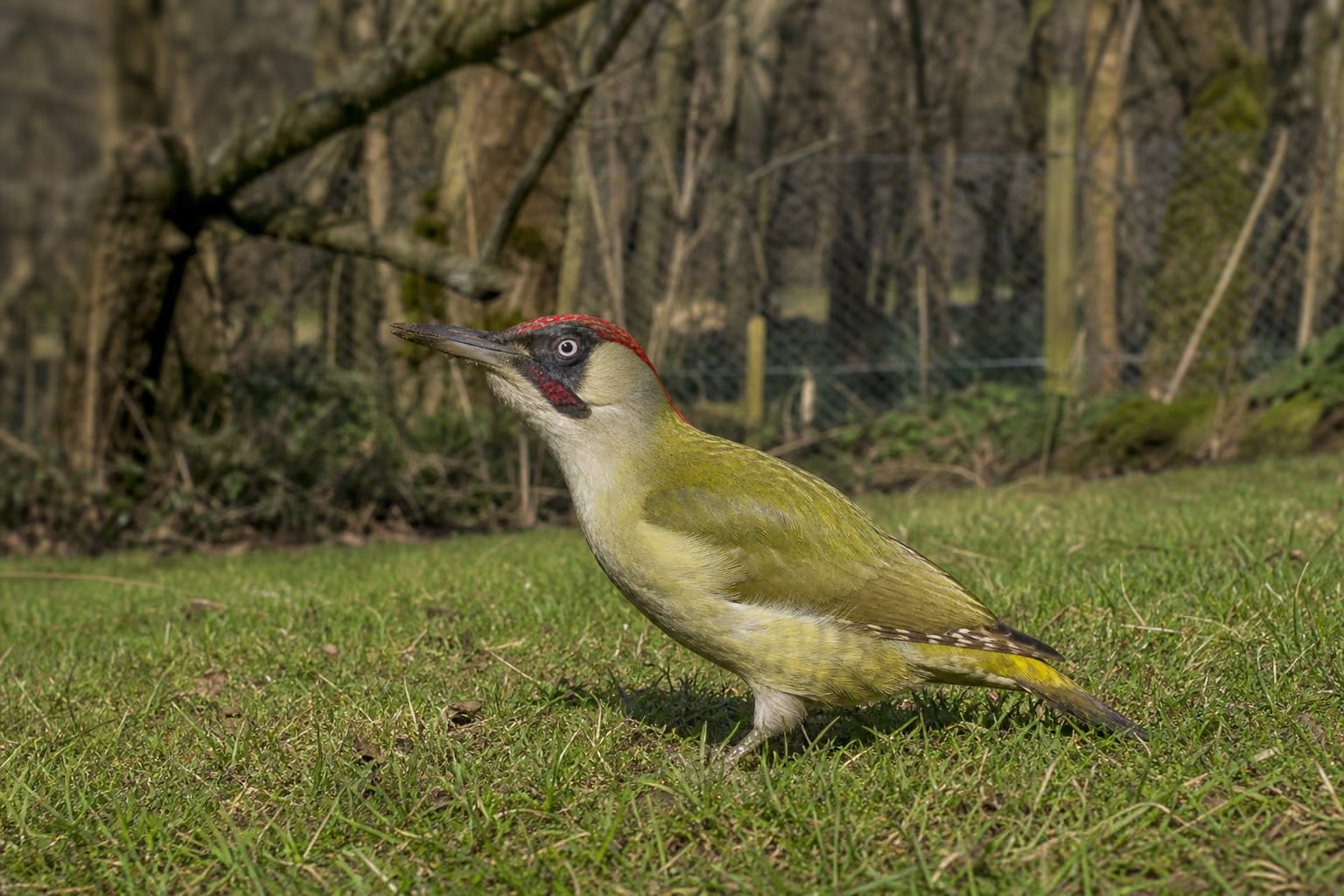
European green woodpecker

Details

European green woodpecker

Picus viridis

Size
30–36 cm · 138–250 g
Diet
Carnivore
Activity
Diurnal
Sociality
Solitary
Lifespan

A large green woodpecker with a red crown, often feeding on ants on the ground and known for its laughing call.

View in catalog
Key facts

  • European green woodpecker (Picus viridis) is a carnivore animal classified as Bird · Piciformes · Picidae.
  • Primary habitats are forest · grassland · urban, with a range across Palearctic.
  • Activity is diurnal, sociality is solitary, and conservation status is LC (Least Concern).
  • A large green woodpecker with a red crown, often feeding on ants on the ground and known for its laughing call.
  • Uses open woods, pasture, orchards, parks, gardens, and woodland edges where short grassland occurs near cavity trees.

Range

Habitat range map
Native rangeOccasional / Transient
PalearcticPalearcticPalearcticPalearcticPalearcticPalearcticPalearcticPalearcticPalearcticPalearcticPalearcticPalearcticPalearcticPalearcticPalearcticPalearcticPalearcticPalearcticPalearcticPalearcticPalearcticPalearcticPalearcticPalearctic

Map: Ecoregions 2017 © RESOLVE (CC BY 4.0) · Natural Earth (PD)

Details

Habitat

Uses open woods, pasture, orchards, parks, gardens, and woodland edges where short grassland occurs near cavity trees.

Appearance

The back is green, the rump yellow, and the crown red. A black moustache mark is present, with red in the center on males.

Behavior

Ground feeding is more frequent than heavy drumming. It flies in a bounding pattern and gives loud laughing territorial calls.

Feeding

Ants and their larvae dominate the diet, taken from ground nests with a long sticky tongue.

Reproduction

Nest holes are excavated in trees and chicks are cared for by both adults. Old orchard and park trees can be important.

Notes

Globally low-risk, though local numbers can be affected by grassland management and loss of old trees.