European bison

Details

European bison

Bison bonasus

Size
2.1–3.5 m · 300–920 kg
Diet
Herbivore
Activity
Diurnal
Sociality
Herd
Lifespan

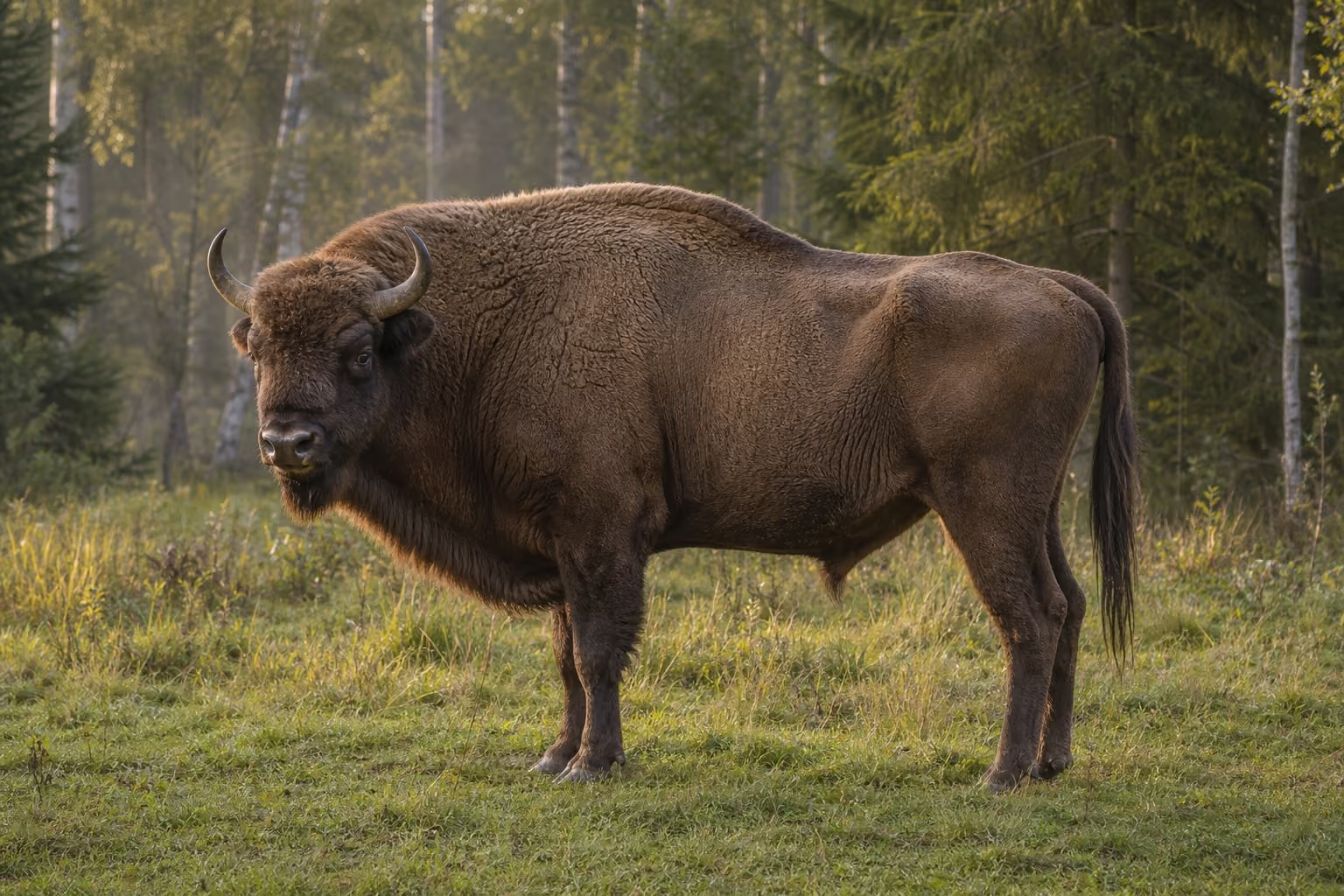
Europe's largest land mammal, also called the wisent. It survived a near-extinction crisis through captive breeding and reintroduction.

View in catalog
Key facts

  • European bison (Bison bonasus) is a herbivore animal classified as Mammal · Cetartiodactyla · Bovidae.
  • Primary habitats are forest · grassland, with a range across Palearctic.
  • Activity is diurnal, sociality is herd, and conservation status is NT (Near Threatened).
  • Europe's largest land mammal, also called the wisent.
  • European bison use forest, grassland, forest edges, and open valleys.

Range

Habitat range map
Native rangeOccasional / Transient
PalearcticPalearcticPalearcticPalearcticPalearcticPalearcticPalearcticPalearcticPalearcticPalearcticPalearcticPalearcticPalearcticPalearcticPalearcticPalearcticPalearcticPalearcticPalearcticPalearcticPalearcticPalearcticPalearcticPalearctic

Map: Ecoregions 2017 © RESOLVE (CC BY 4.0) · Natural Earth (PD)

Details

Habitat

European bison use forest, grassland, forest edges, and open valleys. Modern herds often occur in reserves and reintroduction areas where winter forage matters.

Appearance

They have high shoulders, short horns, dark brown fur, and a heavy forebody. Compared with American bison, they are longer-legged and less shaggy.

Behavior

Females and young form herds, while adult males are often solitary or in small groups. Herds move between woods and openings while feeding.

Feeding

They graze and browse on grasses, sedges, leaves, shoots, and bark. Seasonal shifts alter the balance between herbs and woody plants.

Reproduction

Males join female herds during the rut. Females give birth to single calves that follow the mother soon after birth.

Notes

The species vanished from the wild but was restored from captive animals. Low genetic diversity and disease management remain long-term challenges.