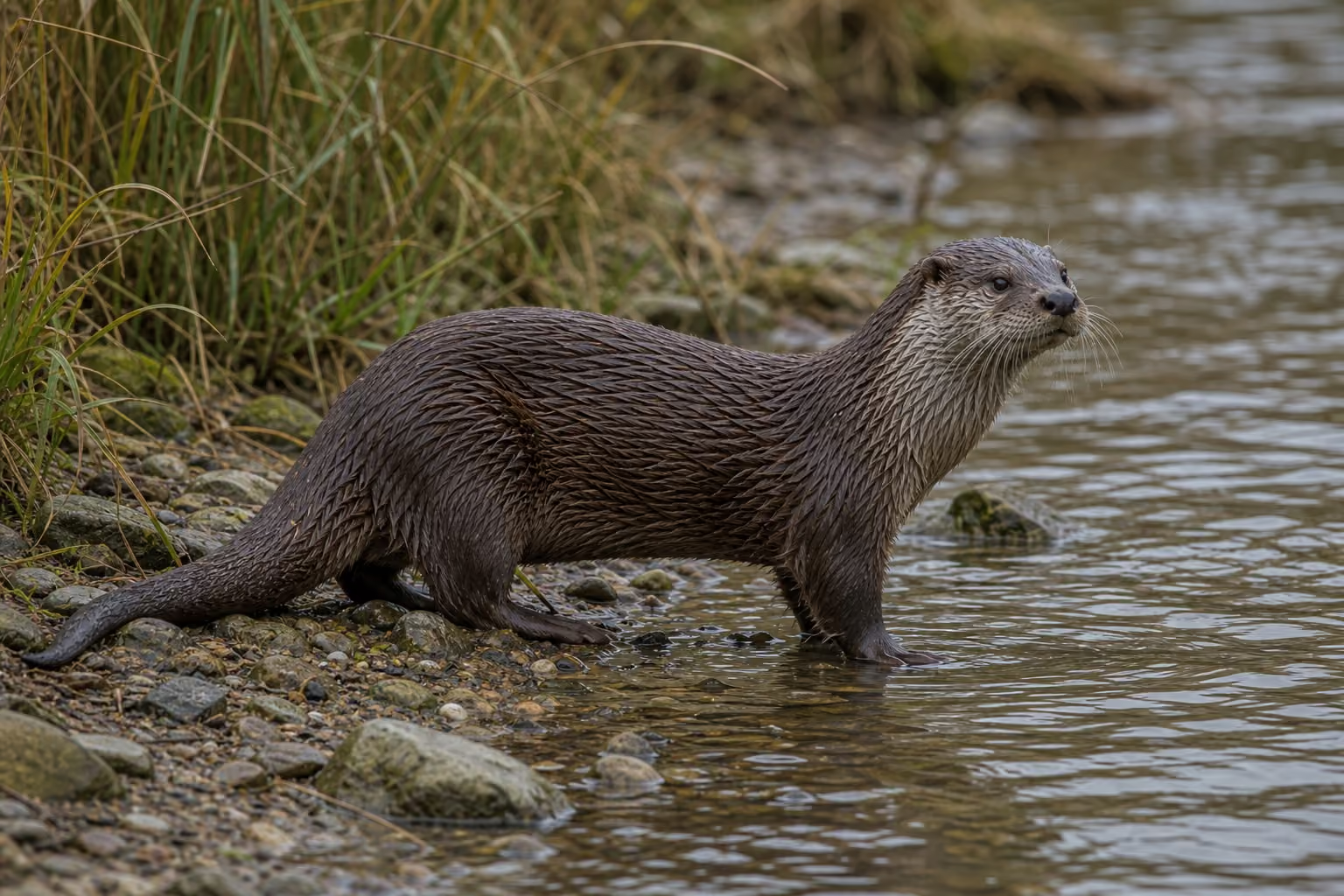
Eurasian otter

Details

Eurasian otter

Lutra lutra

Size
57–95 cm · 7–12 kg
Diet
Carnivore
Activity
Nocturnal
Sociality
Solitary
Lifespan

A semiaquatic mustelid from Europe across much of Asia. A streamlined body and powerful tail help it pursue prey in rivers, lakes, and coasts.

View in catalog
Key facts

  • Eurasian otter (Lutra lutra) is a carnivore animal classified as Mammal · Carnivora · Mustelidae.
  • Primary habitats are freshwater · coast · forest, with a range across Palearctic · Indomalayan.
  • Activity is nocturnal, sociality is solitary, and conservation status is NT (Near Threatened).
  • A semiaquatic mustelid from Europe across much of Asia.
  • Eurasian otters inhabit rivers, lakes, marshes, estuaries, and rocky shores.

Range

Habitat range map
Native rangeOccasional / Transient
PalearcticPalearcticPalearcticPalearcticPalearcticPalearcticPalearcticPalearcticPalearcticPalearcticPalearcticPalearcticPalearcticPalearcticPalearcticPalearcticPalearcticPalearcticPalearcticPalearcticPalearcticPalearcticPalearcticPalearcticIndomalayanIndomalayanIndomalayanIndomalayanIndomalayanIndomalayanIndomalayanIndomalayanIndomalayanIndomalayanIndomalayanIndomalayanIndomalayanIndomalayanIndomalayan

Map: Ecoregions 2017 © RESOLVE (CC BY 4.0) · Natural Earth (PD)

Details

Habitat

Eurasian otters inhabit rivers, lakes, marshes, estuaries, and rocky shores. Clean water, fish, bankside cover, and den sites are important.

Appearance

They have dense brown waterproof fur, a long tail, webbed feet, and sensitive whiskers that detect prey movements underwater.

Behavior

Mostly nocturnal and solitary, they patrol territories along waterways. They swim smoothly and rest in holts under banks, roots, or rocks.

Feeding

Fish are the main food, with crustaceans, frogs, waterbirds, and small mammals also taken. Diet shifts by region and season.

Reproduction

Females give birth in waterside dens and later teach young to swim and hunt. Young disperse after an extended period with the mother.

Notes

River engineering, pollution, and road mortality affect populations, so the species is often treated as an indicator of connected waterways.