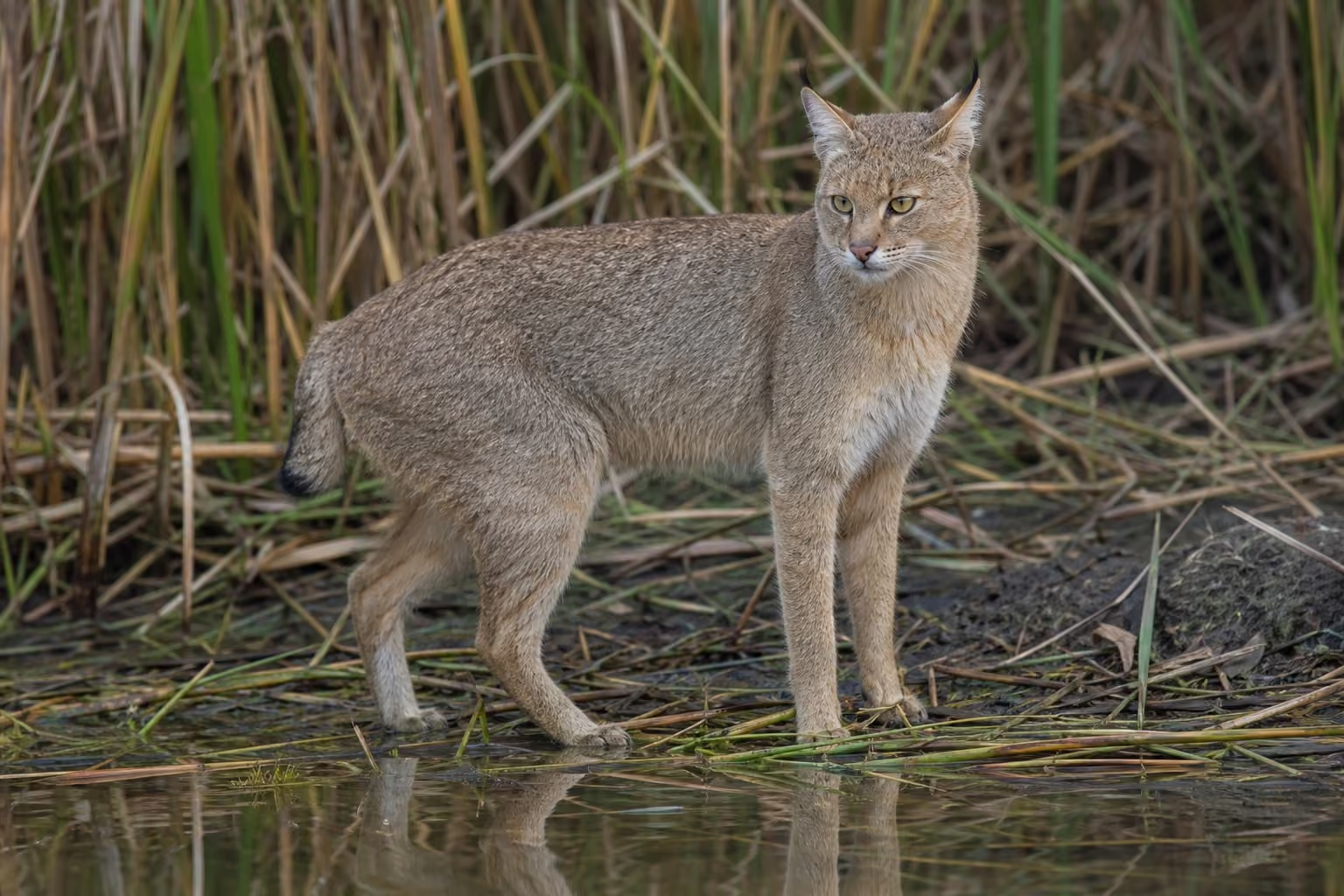
Jungle cat

Details

Jungle cat

Felis chaus

Size
59–76 cm · 3–16 kg
Diet
Carnivore
Activity
Crepuscular
Sociality
Solitary
Lifespan

Jungle cat is a medium-sized cat adapted to reed beds, marsh edges, and dense waterside cover. Wetland conversion and conflict around poultry or small livestock can pressure local populations.

View in catalog
Key facts

  • Jungle cat (Felis chaus) is a carnivore animal classified as Mammal · Carnivora · Felidae.
  • Primary habitats are freshwater · grassland · forest, with a range across Palearctic · Indomalayan.
  • Activity is crepuscular, sociality is solitary, and conservation status is LC (Least Concern).
  • Jungle cat is a medium-sized cat adapted to reed beds, marsh edges, and dense waterside cover.
  • It ranges through wetlands, grassland, farmland edges, and woodland margins from western Asia to South and Southeast Asia.

Range

Habitat range map
Native rangeOccasional / Transient
PalearcticPalearcticPalearcticPalearcticPalearcticPalearcticPalearcticPalearcticPalearcticPalearcticPalearcticPalearcticPalearcticPalearcticPalearcticPalearcticPalearcticPalearcticPalearcticPalearcticPalearcticPalearcticPalearcticPalearcticIndomalayanIndomalayanIndomalayanIndomalayanIndomalayanIndomalayanIndomalayanIndomalayanIndomalayanIndomalayanIndomalayanIndomalayanIndomalayanIndomalayanIndomalayan

Map: Ecoregions 2017 © RESOLVE (CC BY 4.0) · Natural Earth (PD)

Details

Habitat

It ranges through wetlands, grassland, farmland edges, and woodland margins from western Asia to South and Southeast Asia. Main habitat types in this guide are freshwater, grassland, forest.

Appearance

Typical length 59-76 cm, weight 3 kg-16 kg. Long legs, a short tail, gray-brown to sandy fur, and small ear tufts give it a lean profile.

Behavior

It is most active around dawn and dusk and usually solitary. It slips through reeds and shrubs and stalks low across open waterside ground.

Feeding

It is carnivorous. Rodents, birds, reptiles, fish, and frogs are commonly taken.

Reproduction

Females den in cover or burrows and move kittens among sheltered sites.

Notes

Although still widespread in places, it remains sensitive to habitat change. Wetland conversion and conflict around poultry or small livestock can pressure local populations.