Details
Eurasian nuthatch
Sitta europaea
- Size
- 12–14.5 cm · 17–28 g
- Diet
- Omnivore
- Activity
- Diurnal
- Sociality
- Pair
- Lifespan
- —
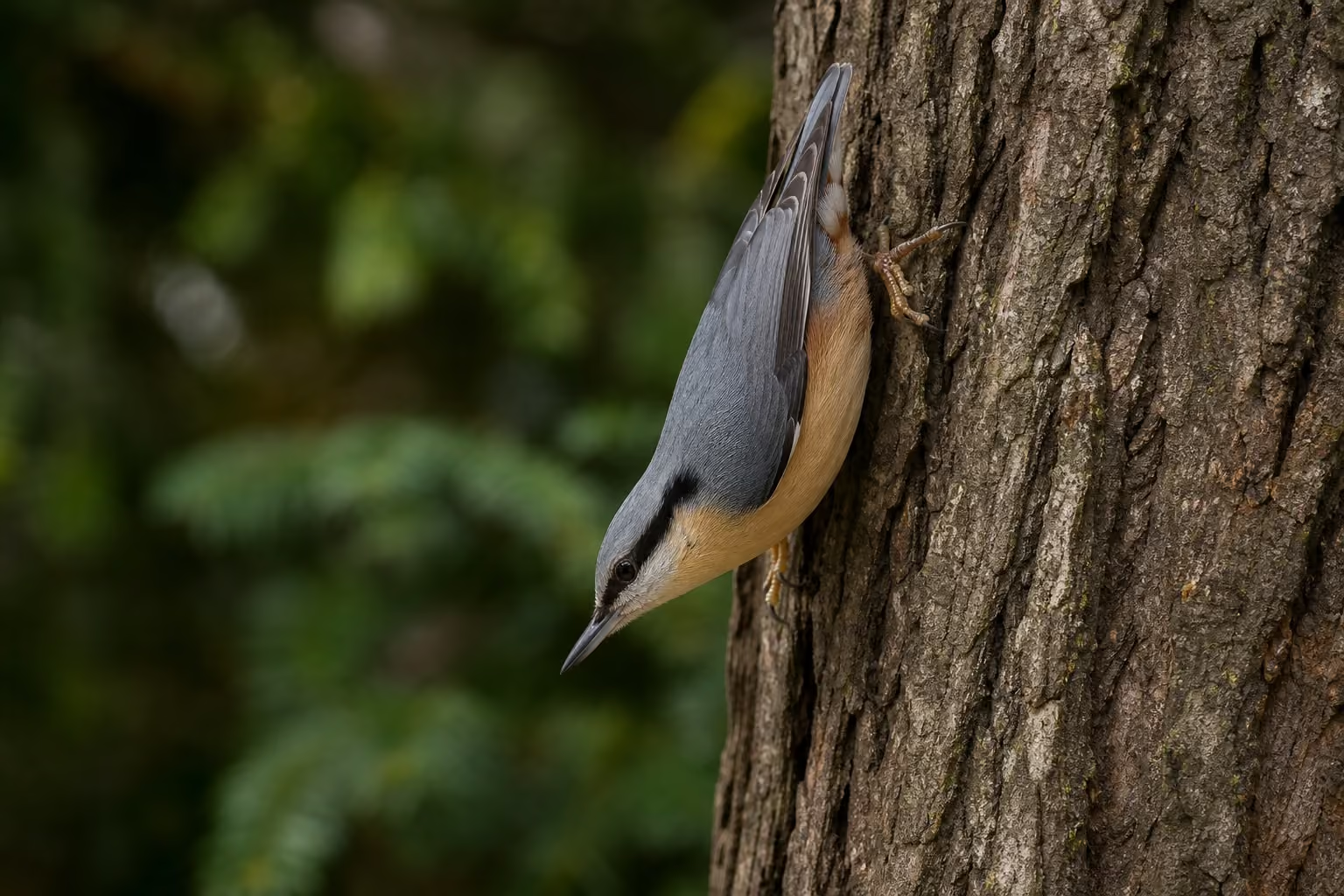
A small woodland bird able to walk both up and down trunks, with blue-gray upperparts and a black eye stripe.
View in catalogDetails
Sitta europaea
A small woodland bird able to walk both up and down trunks, with blue-gray upperparts and a black eye stripe.
View in catalogMap: Ecoregions 2017 © RESOLVE (CC BY 4.0) · Natural Earth (PD)
Lives in mature deciduous and mixed forests, parks, and old gardens, favoring large trees and cavities.
Blue-gray upperparts, pale underparts, a black eye stripe, short tail, and straight pointed bill define its shape.
It climbs along trunks and branches, including head-down, probing bark crevices. Nest entrances are narrowed with mud.
Insects, larvae, spiders, nuts, and seeds are eaten, with hard seeds wedged into bark and hammered open.
Tree holes and nest boxes are used, often plastered with mud at the entrance. Both adults feed the chicks.
It caches nuts for winter, making mature woodland with old trees especially valuable.