Eurasian blue tit

Details

Eurasian blue tit

Cyanistes caeruleus

Size
11–12 cm · 9–13 g
Diet
Omnivore
Activity
Diurnal
Sociality
Loose group
Lifespan
2–10 years

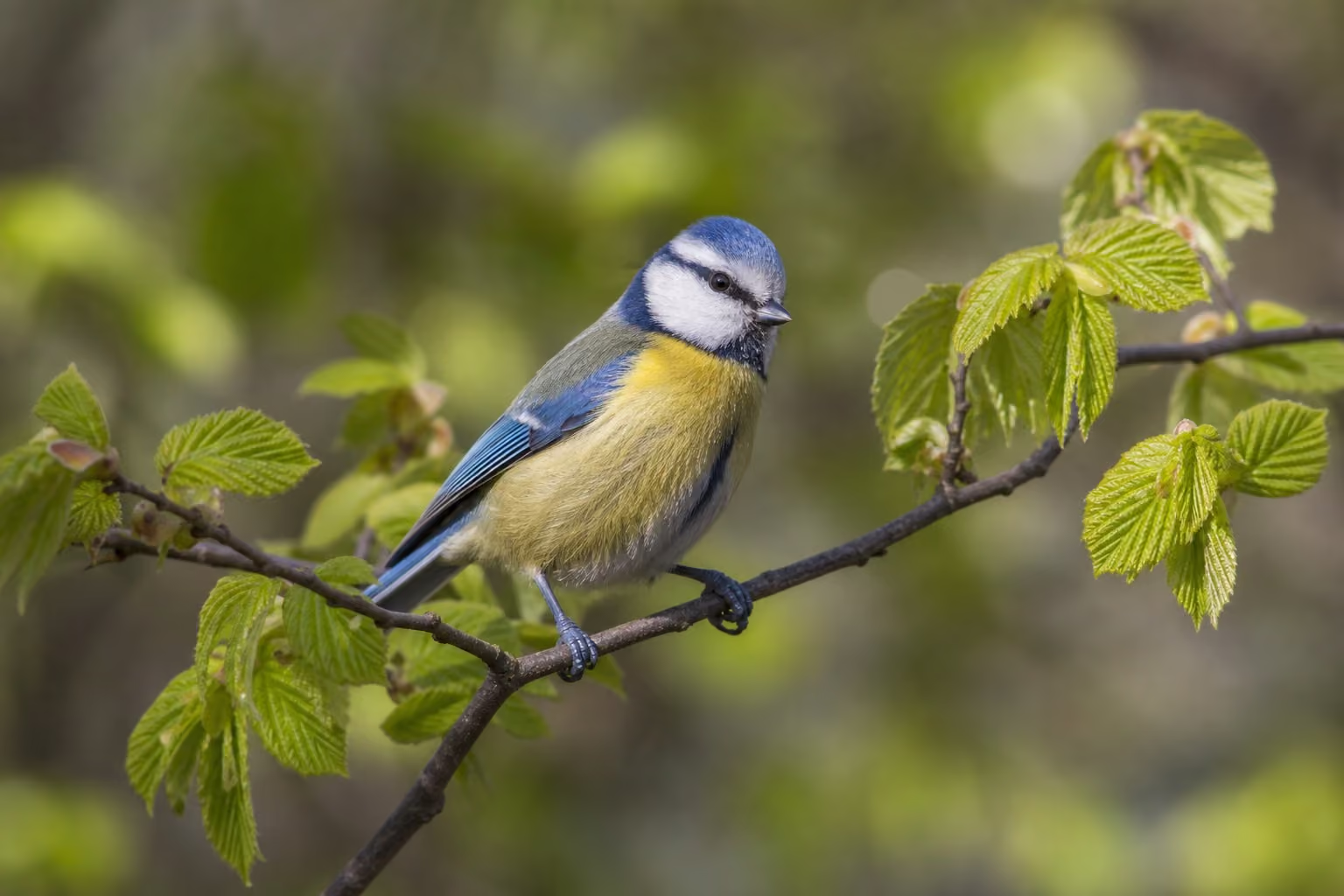
The Eurasian blue tit is a tiny Palearctic tit with a blue cap and yellow underparts. It moves acrobatically through branches and eats both insects and plant foods.

View in catalog
Key facts

  • Eurasian blue tit (Cyanistes caeruleus) is an omnivore animal classified as Bird · Passeriformes · Paridae.
  • Primary habitats are forest · urban, with a range across Palearctic.
  • Activity is diurnal, sociality is loose group, and conservation status is LC (Least Concern).
  • The Eurasian blue tit is a tiny Palearctic tit with a blue cap and yellow underparts.
  • It uses deciduous and mixed woodland, hedgerows, parks, and gardens.
  • Typical lifespan: 2–10 years

Range

Habitat range map
Native rangeOccasional / Transient
PalearcticPalearcticPalearcticPalearcticPalearcticPalearcticPalearcticPalearcticPalearcticPalearcticPalearcticPalearcticPalearcticPalearcticPalearcticPalearcticPalearcticPalearcticPalearcticPalearcticPalearcticPalearcticPalearcticPalearctic

Map: Ecoregions 2017 © RESOLVE (CC BY 4.0) · Natural Earth (PD)

Details

Habitat

It uses deciduous and mixed woodland, hedgerows, parks, and gardens. Tree holes and nest boxes provide common breeding sites.

Appearance

Length is 11-12 cm and weight 9-13 g. A blue crown and wings, white face, dark eye stripe, and yellow belly make it easy to recognize.

Behavior

Diurnal birds often join loose mixed flocks outside the breeding season. They inspect twigs and leaves closely, sometimes hanging upside down to reach food.

Feeding

An omnivore, it eats many caterpillars, small insects, and spiders in spring and summer. In autumn and winter it also takes seeds, nuts, and buds.

Reproduction

Pairs nest in cavities or nest boxes lined with moss and hair. While chicks grow, adults deliver large numbers of small insects.

Notes

It is listed as Least Concern. Its readiness to use gardens and nest boxes makes it one of the more familiar woodland birds.