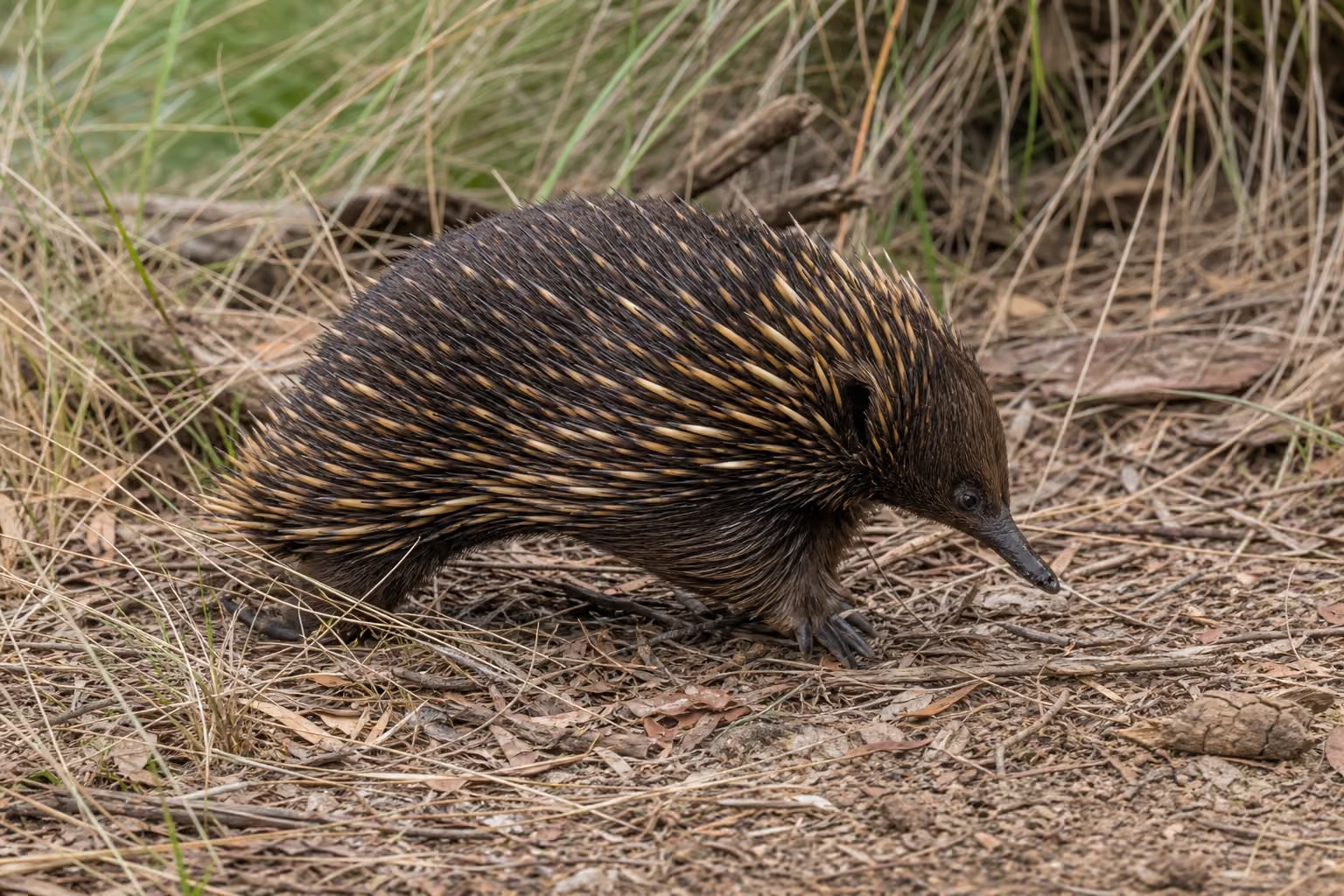
Short-beaked echidna

Details

Short-beaked echidna

Tachyglossus aculeatus

Size
30–45 cm · 2–7 kg
Diet
Carnivore
Activity
Cathemeral
Sociality
Solitary
Lifespan
10-20 years

The short-beaked echidna is a monotreme of Australasian forests and grasslands. Solitary and flexible in activity, it searches the ground for insects.

View in catalog
Key facts

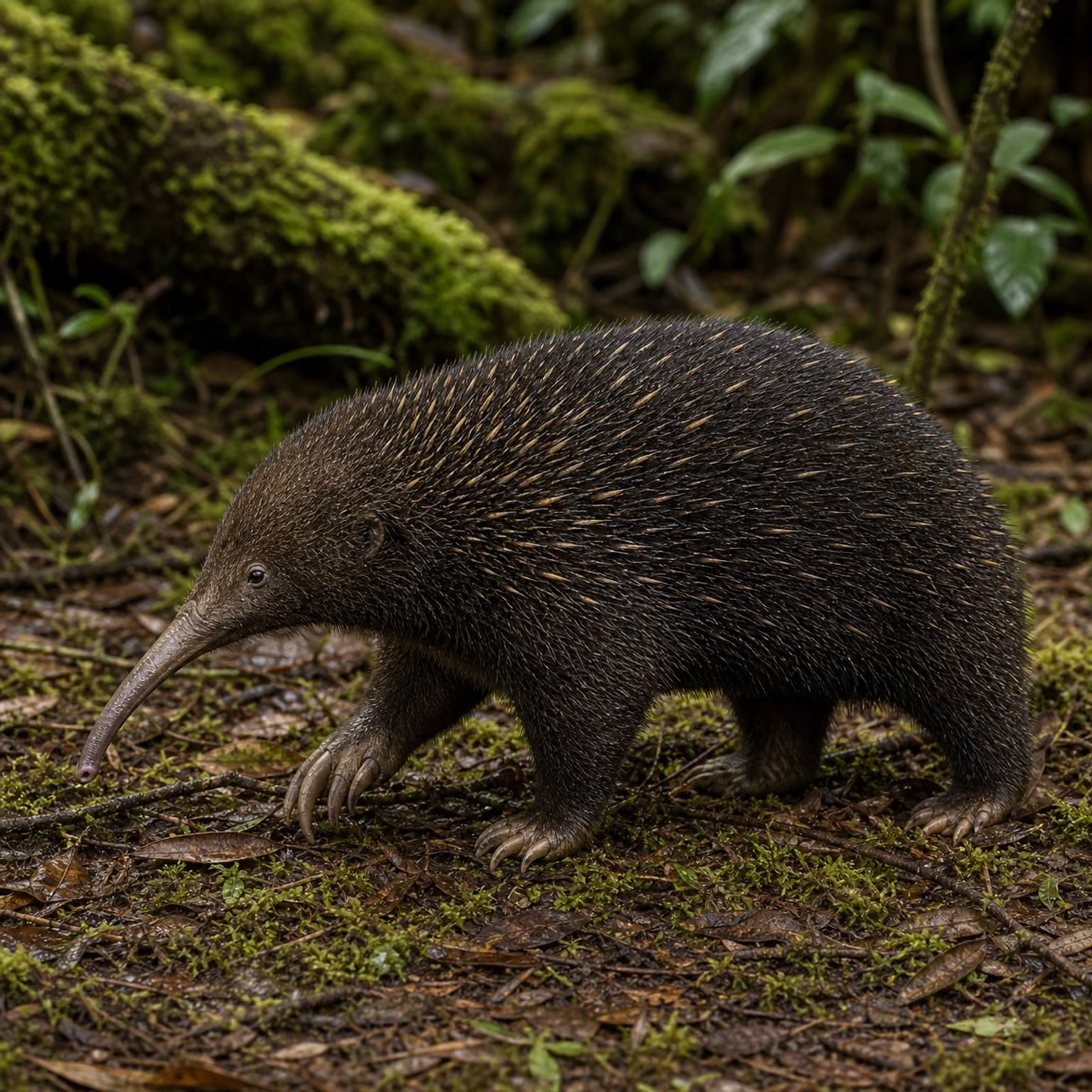
  • Short-beaked echidna (Tachyglossus aculeatus) is a carnivore animal classified as Mammal · Monotremata · Tachyglossidae.
  • Primary habitats are forest · grassland, with a range across Australasian.
  • Activity is cathemeral, sociality is solitary, and conservation status is LC (Least Concern).
  • The short-beaked echidna is a monotreme of Australasian forests and grasslands.
  • It uses forest, grassland, and scrub, especially areas with leaf litter or soft soil.
  • Typical lifespan: 10-20 years

Range

Habitat range map
Native rangeOccasional / Transient
AustralasianAustralasianAustralasianAustralasianAustralasianAustralasianAustralasianAustralasianAustralasianAustralasianAustralasianAustralasianAustralasianAustralasianAustralasianAustralasianAustralasian

Map: Ecoregions 2017 © RESOLVE (CC BY 4.0) · Natural Earth (PD)

Details

Habitat

It uses forest, grassland, and scrub, especially areas with leaf litter or soft soil. Logs, rocks, and sheltered ground provide resting sites.

Appearance

Body length is about 30-45 cm and weight about 2-7 kg. Sharp spines, a long snout, and strong forefeet make it an effective digger.

Behavior

Its activity shifts with temperature, and individuals range alone. When threatened, it may curl up or dig rapidly into the soil.

Feeding

It is carnivorous, feeding mainly on ants, termites, and other small invertebrates. A sticky tongue draws prey from galleries and nests.

Reproduction

It is an egg-laying mammal. The young hatches and develops against the mother's underside, then is left in a protected nursery site as spines grow.

Notes

Its status is listed as Least Concern. As a monotreme, it is a clear example of the diversity of mammalian reproduction.