Dunlin

Details

Dunlin

Calidris alpina

Size
16–22 cm · 35–85 g
Diet
Carnivore
Activity
Diurnal
Sociality
Herd
Lifespan

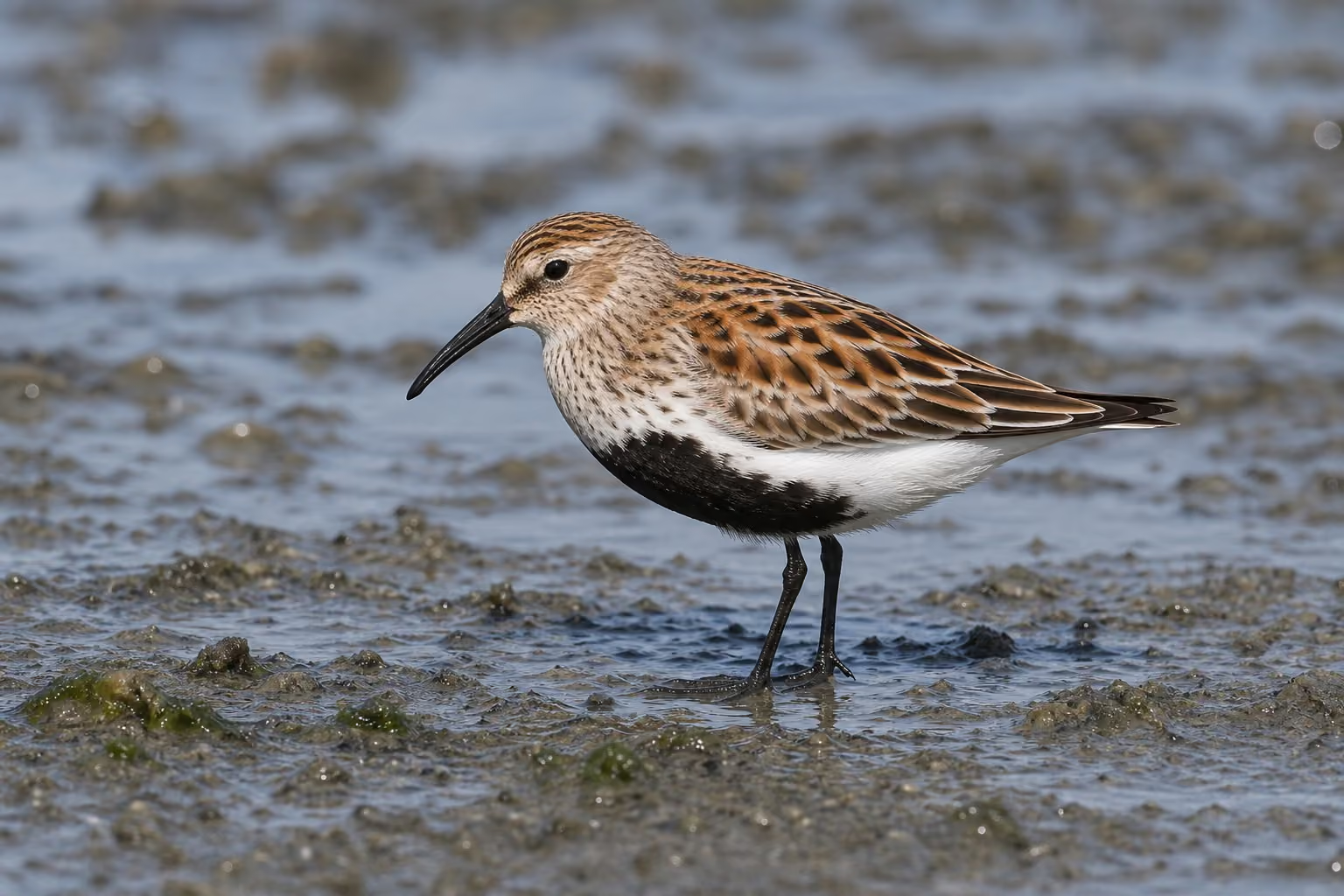
A small sandpiper that forms large mudflat flocks, with breeding birds showing a black belly patch and rufous back.

View in catalog

Key facts

  • Dunlin (Calidris alpina) is a carnivore animal classified as Bird · Charadriiformes · Scolopacidae.
  • Primary habitats are coast · freshwater · polar, with a range across Palearctic · Nearctic · Afrotropical · Indomalayan.
  • Activity is diurnal, sociality is herd, and conservation status is LC (Least Concern).
  • A small sandpiper that forms large mudflat flocks, with breeding birds showing a black belly patch and rufous back.
  • Breeds on wet Arctic tundra and winters on mudflats, beaches, estuaries, saltmarsh, and shallow lake shores.

Range

Habitat range map
Native rangeOccasional / Transient
PalearcticPalearcticPalearcticPalearcticPalearcticPalearcticPalearcticPalearcticPalearcticPalearcticPalearcticPalearcticPalearcticPalearcticPalearcticPalearcticPalearcticPalearcticPalearcticPalearcticPalearcticPalearcticPalearcticPalearcticNearcticNearcticNearcticNearcticNearcticNearcticNearcticNearcticNearcticNearcticNearcticNearcticNearcticNearcticNearcticNearcticNearcticNearcticNearcticNearcticNearcticNearcticNearcticNearcticNearcticNearcticNearcticNearcticNearcticNearcticNearcticNearcticNearcticNearcticNearcticNearcticNearcticNearcticNearcticNearcticNearcticAfrotropicalAfrotropicalAfrotropicalAfrotropicalIndomalayanIndomalayanIndomalayanIndomalayanIndomalayanIndomalayanIndomalayanIndomalayanIndomalayanIndomalayanIndomalayanIndomalayanIndomalayanIndomalayanIndomalayan

Map: Ecoregions 2017 © RESOLVE (CC BY 4.0) · Natural Earth (PD)

Details

Habitat

Breeds on wet Arctic tundra and winters on mudflats, beaches, estuaries, saltmarsh, and shallow lake shores.

Appearance

The bill is slightly downcurved and legs are black. Breeding plumage has a black belly, while winter plumage is gray-brown.

Behavior

Large flocks fly in rolling waves and feed quickly across mudflats, shifting with the tide.

Feeding

Worms, bivalves, small crustaceans, and insect larvae are probed from mud surfaces and shallow sediment.

Reproduction

Shallow ground nests are made on tundra. Precocial chicks feed for themselves while guarded by adults.

Notes

Migration and wintering depend on networks of large tidal wetlands along coasts.