Dromedary

Details

Dromedary

Camelus dromedarius

Size
2.2–3.4 m · 300–600 kg
Diet
Herbivore
Activity
Diurnal
Sociality
Herd
Lifespan
10-20 years

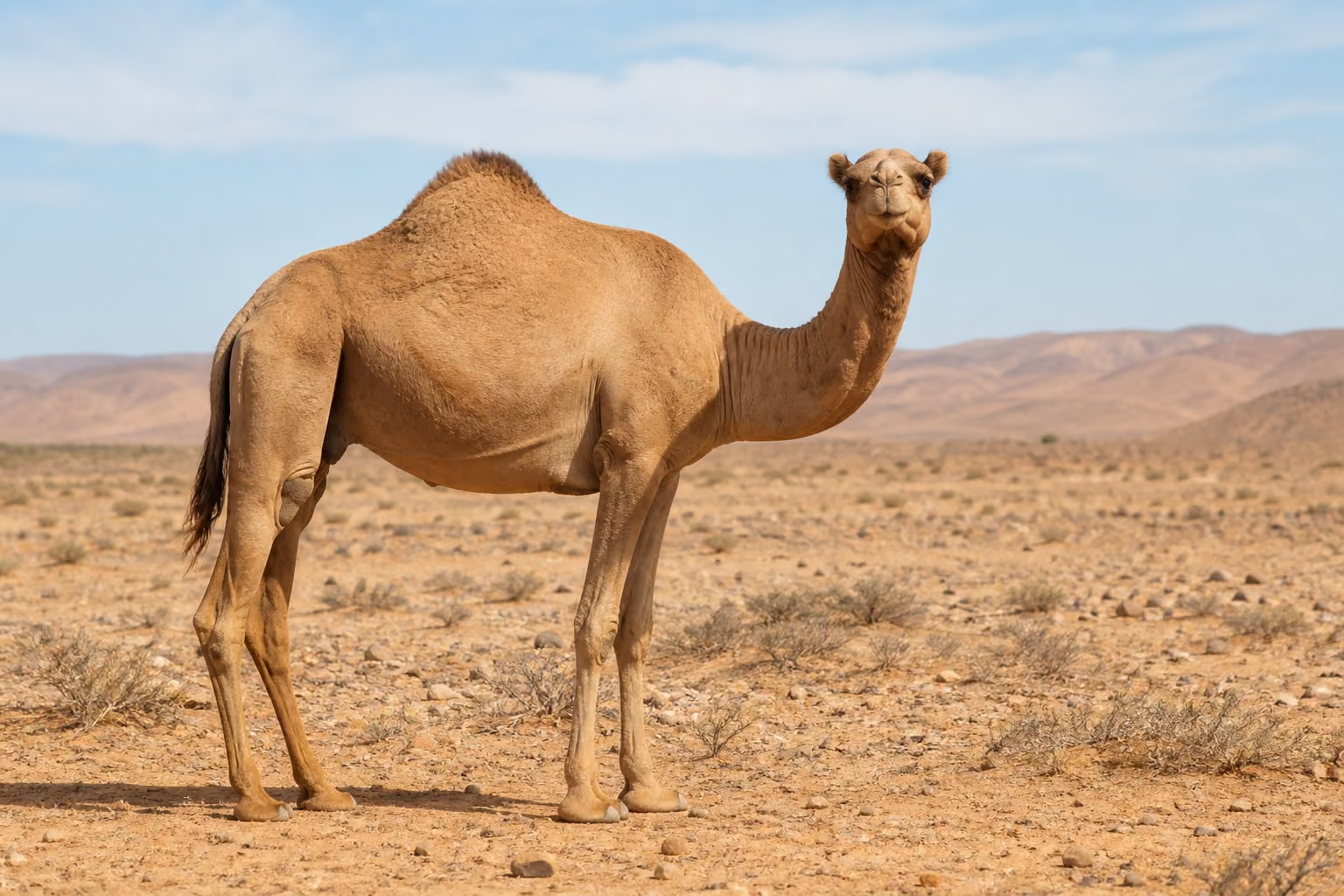
The dromedary is a large herbivorous mammal adapted to deserts. It is diurnal and moves in herds across dry landscapes.

View in catalog
Key facts

  • Dromedary (Camelus dromedarius) is a herbivore animal classified as Mammal · Cetartiodactyla · Camelidae.
  • Primary habitats are desert, with a range across Palearctic · Afrotropical.
  • Activity is diurnal, sociality is herd, and conservation status is LC (Least Concern).
  • The dromedary is a large herbivorous mammal adapted to deserts.
  • It uses deserts and arid plains, moving between sparse vegetation and water sources.
  • Typical lifespan: 10-20 years

Range

Habitat range map
Native rangeOccasional / Transient
PalearcticPalearcticPalearcticPalearcticPalearcticPalearcticPalearcticPalearcticPalearcticPalearcticPalearcticPalearcticPalearcticPalearcticPalearcticPalearcticPalearcticPalearcticPalearcticPalearcticPalearcticPalearcticPalearcticPalearcticAfrotropicalAfrotropicalAfrotropicalAfrotropical

Map: Ecoregions 2017 © RESOLVE (CC BY 4.0) · Natural Earth (PD)

Details

Habitat

It uses deserts and arid plains, moving between sparse vegetation and water sources. Its body is built to withstand heat and dryness.

Appearance

Body length is about 220-340 cm and weight about 300-600 kg. A single hump, long legs, broad feet, and long eyelashes aid desert travel.

Behavior

Diurnal herds move steadily while feeding. During intense heat, activity slows and animals use wind exposure or shade when available.

Feeding

It is herbivorous, eating dry grasses, shrub leaves, and salt-tolerant plants. Tough lips allow it to handle coarse or thorny vegetation.

Reproduction

Calves are born well developed and soon follow the mother. They grow while nursing within the moving herd.

Notes

Its status is listed as Least Concern. It has a long association with people and is central to travel and life in many dry regions.