Mahi-mahi

Details

Mahi-mahi

Coryphaena hippurus

Size
0.8–2.1 m · 5–40 kg
Diet
Carnivore
Activity
Cathemeral
Sociality
Loose group
Lifespan
5-20 years

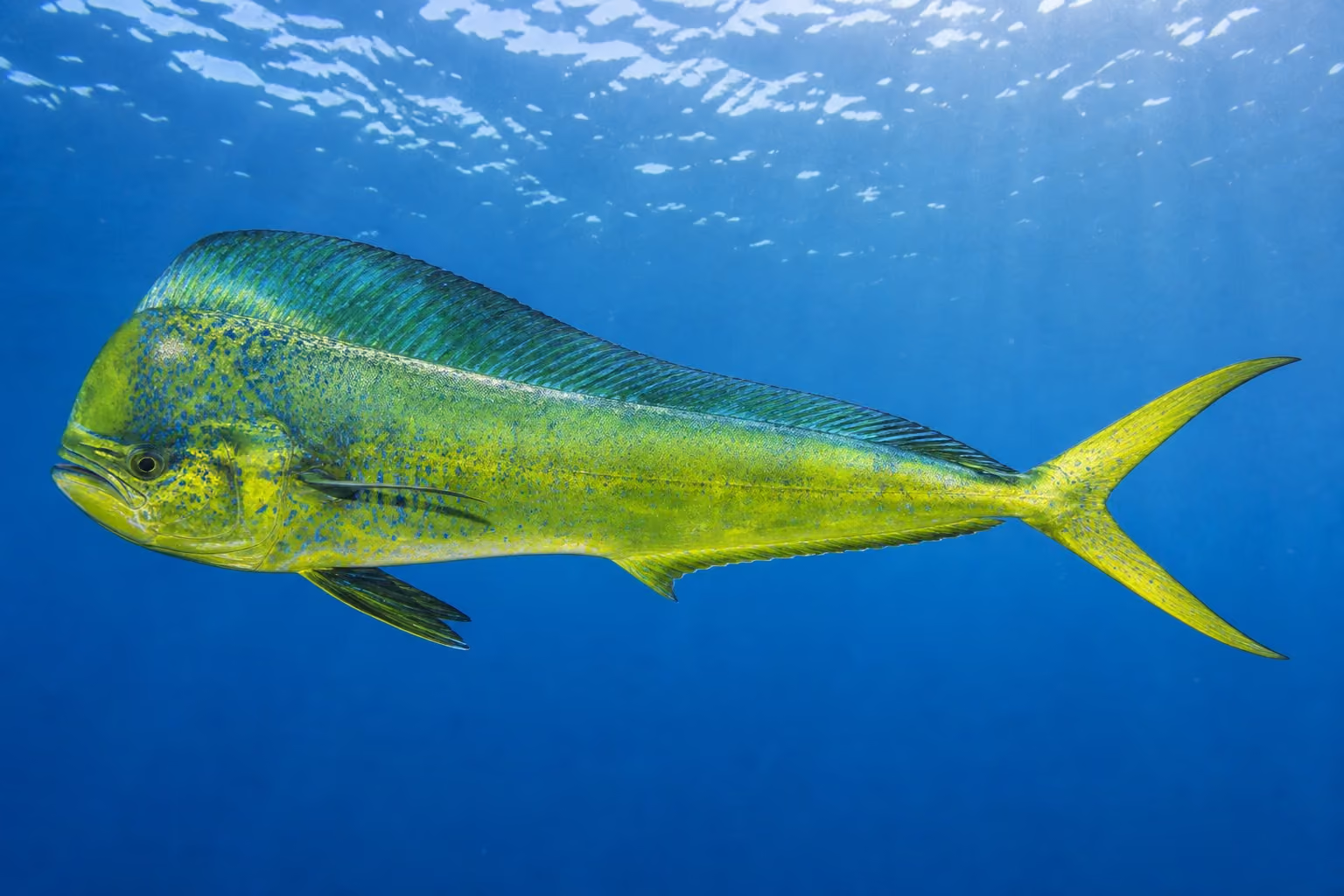
The mahi-mahi is a vivid open-ocean fish of the Atlantic, Indian, and Pacific oceans. Active across day and night, it often travels in loose groups around current lines and floating objects.

View in catalog
Key facts

  • Mahi-mahi (Coryphaena hippurus) is a carnivore animal classified as Fish · Carangiformes · Coryphaenidae.
  • Primary habitats are open ocean, with a range across Atlantic Ocean · Indian Ocean · Pacific Ocean.
  • Activity is cathemeral, sociality is loose group, and conservation status is LC (Least Concern).
  • The mahi-mahi is a vivid open-ocean fish of the Atlantic, Indian, and Pacific oceans.
  • It favors warm surface waters offshore, especially near driftwood, floating algae, and other flotsam.
  • Typical lifespan: 5-20 years

Range

Habitat range map
Native rangeOccasional / Transient
Pacific OceanPacific OceanPacific OceanAtlantic OceanAtlantic OceanAtlantic OceanAtlantic OceanAtlantic OceanIndian Ocean

Map: Ecoregions 2017 © RESOLVE (CC BY 4.0) · Natural Earth (PD)

Details

Habitat

It favors warm surface waters offshore, especially near driftwood, floating algae, and other flotsam. It may approach coasts, but it is mainly a fish of open water.

Appearance

Length is about 80-210 cm and weight about 5-40 kg. Bright green, blue, and gold colors, a long dorsal fin, and a high forehead in adults make it distinctive.

Behavior

Fast swimming lets it patrol surface waters and rush prey. Fish gather loosely where currents concentrate food, and body colors can shift with excitement.

Feeding

It is carnivorous, taking small fish, squid, and crustaceans. Floating objects attract prey, and mahi-mahi use speed to chase them down.

Reproduction

Spawning occurs in warm seas, with eggs and larvae drifting in surface waters. Young grow quickly while using offshore feeding areas.

Notes

Its status is listed as Least Concern. Its broad oceanic range offers resilience, but local catches and changes around floating habitats can still matter.