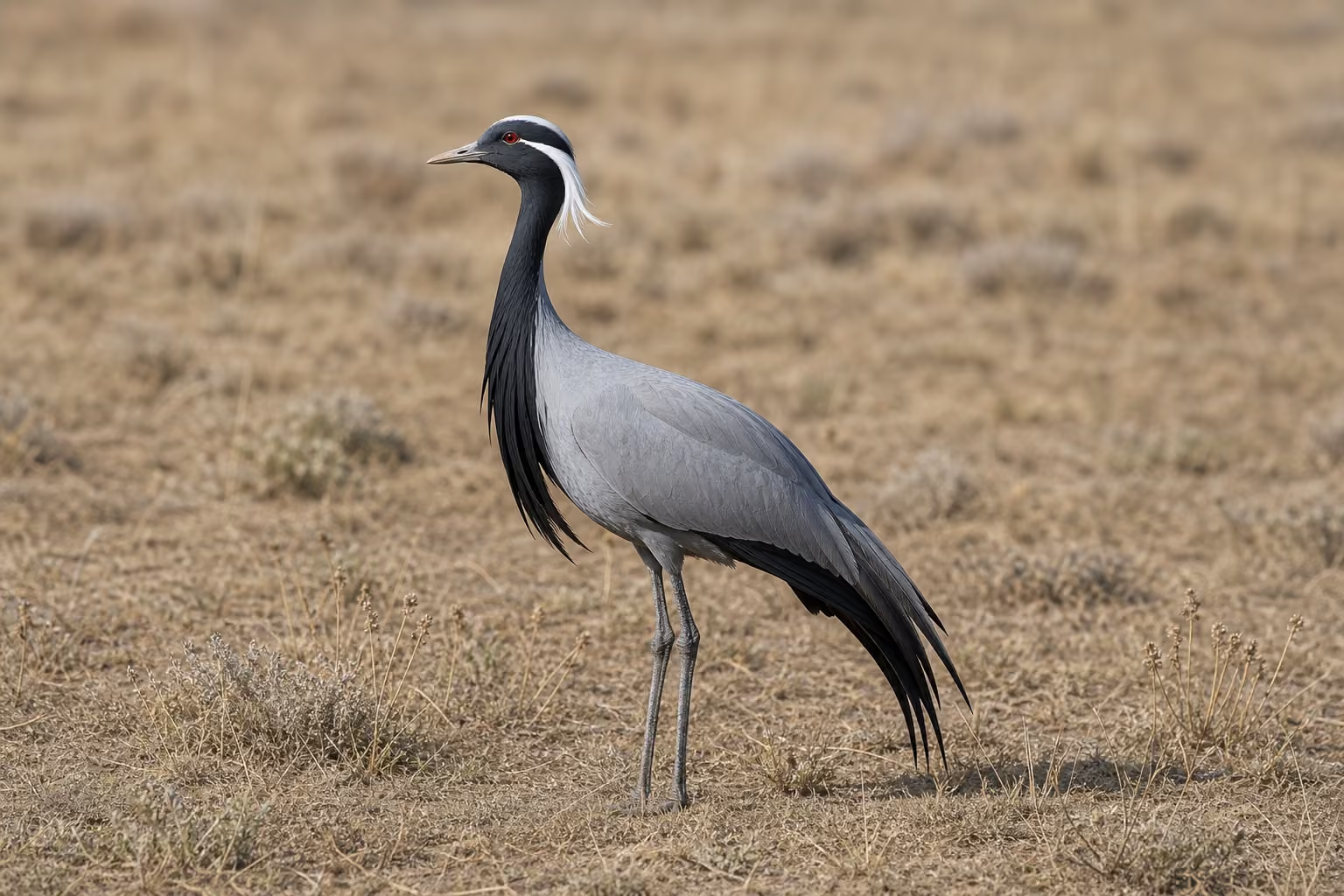
Demoiselle crane

Details

Demoiselle crane

Anthropoides virgo

Size
0.9–1 m · 2–2.7 kg
Diet
Omnivore
Activity
Diurnal
Sociality
Herd
Lifespan

A small elegant crane with black breast plumes and white ear tufts, famous for migrations over dry steppes and high mountains.

View in catalog
Key facts

  • Demoiselle crane (Anthropoides virgo) is an omnivore animal classified as Bird · Gruiformes · Gruidae.
  • Primary habitats are grassland · desert · freshwater, with a range across Palearctic · Afrotropical · Indomalayan.
  • Activity is diurnal, sociality is herd, and conservation status is LC (Least Concern).
  • A small elegant crane with black breast plumes and white ear tufts, famous for migrations over dry steppes and high mountains.
  • Uses dry grassland, semi-desert, farmland, and open areas near lakes, with wetlands and cropland used in winter.

Range

Habitat range map
Native rangeOccasional / Transient
PalearcticPalearcticPalearcticPalearcticPalearcticPalearcticPalearcticPalearcticPalearcticPalearcticPalearcticPalearcticPalearcticPalearcticPalearcticPalearcticPalearcticPalearcticPalearcticPalearcticPalearcticPalearcticPalearcticPalearcticAfrotropicalAfrotropicalAfrotropicalAfrotropicalIndomalayanIndomalayanIndomalayanIndomalayanIndomalayanIndomalayanIndomalayanIndomalayanIndomalayanIndomalayanIndomalayanIndomalayanIndomalayanIndomalayanIndomalayan

Map: Ecoregions 2017 © RESOLVE (CC BY 4.0) · Natural Earth (PD)

Details

Habitat

Uses dry grassland, semi-desert, farmland, and open areas near lakes, with wetlands and cropland used in winter.

Appearance

The body is blue-gray, the face and neck are black, and long white plumes trail behind the eyes. It is slim and small for a crane.

Behavior

Flocks feed together and migrate in large formations. Breeding pairs duet and perform jumping displays.

Feeding

Grass seeds, grain, legumes, insects, and small animals are taken while walking over dry ground.

Reproduction

Eggs are laid in a shallow ground scrape with sparse cover. Precocial chicks walk with the parents soon after hatching.

Notes

The species remains low-risk because of its broad range and large numbers, though disturbance and power-line collisions matter locally.