Crabeater seal

Details

Crabeater seal

Lobodon carcinophaga

Size
2.2–2.6 m · 180–300 kg
Diet
Carnivore
Activity
Cathemeral
Sociality
Loose group
Lifespan

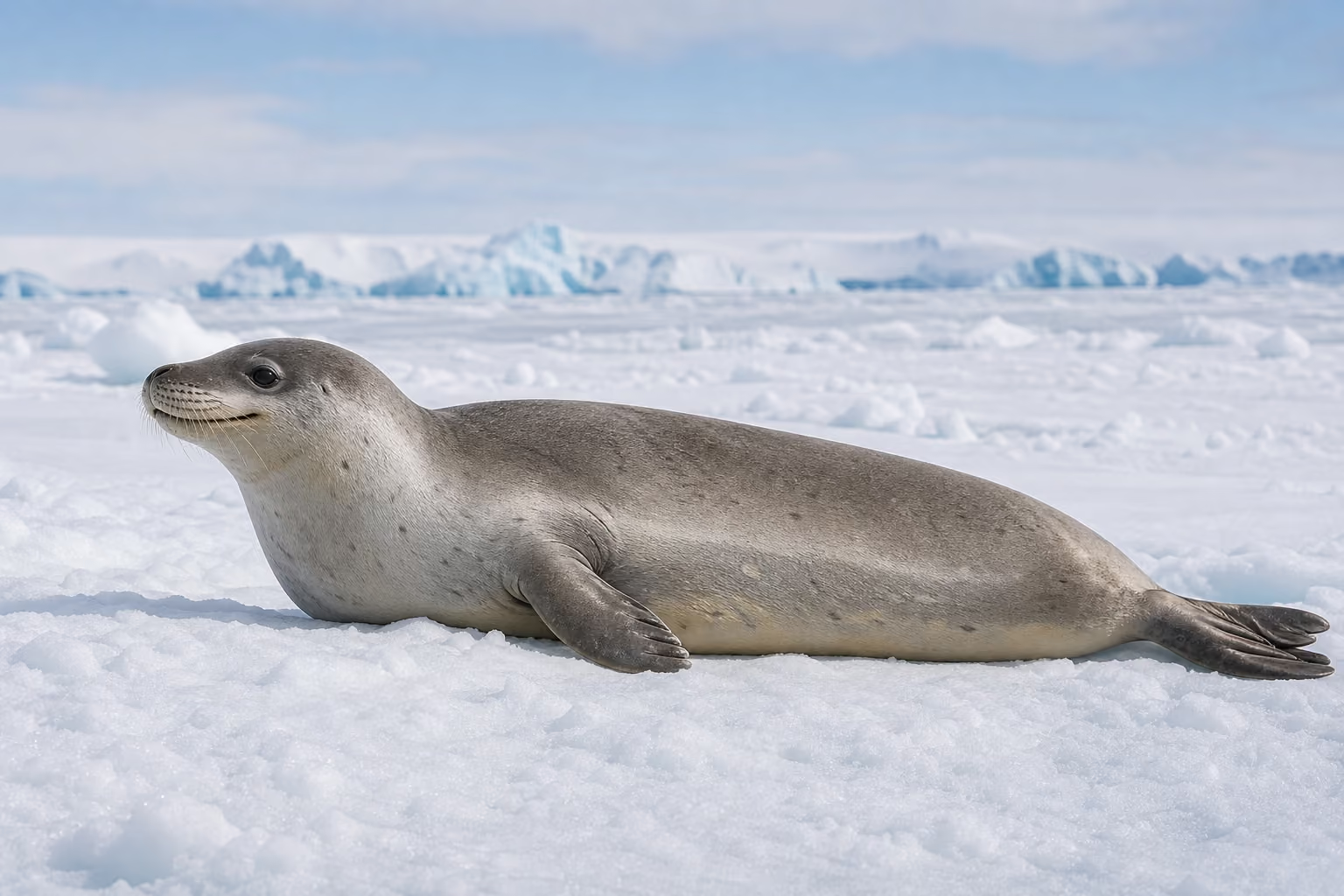
One of the most abundant Antarctic seals, despite a name that suggests crabs. It feeds mainly on krill using specialized filtering teeth.

View in catalog
Key facts

  • Crabeater seal (Lobodon carcinophaga) is a carnivore animal classified as Mammal · Carnivora · Phocidae.
  • Primary habitats are polar · coast · open ocean, with a range across Antarctic · Southern Ocean.
  • Activity is cathemeral, sociality is loose group, and conservation status is LC (Least Concern).
  • One of the most abundant Antarctic seals, despite a name that suggests crabs.
  • Crabeater seals live around Antarctic pack ice, ice edges, and cold open water.

Range

Habitat range map
Native rangeOccasional / Transient
Southern OceanAntarcticAntarcticAntarcticAntarcticAntarcticAntarctic

Map: Ecoregions 2017 © RESOLVE (CC BY 4.0) · Natural Earth (PD)

Details

Habitat

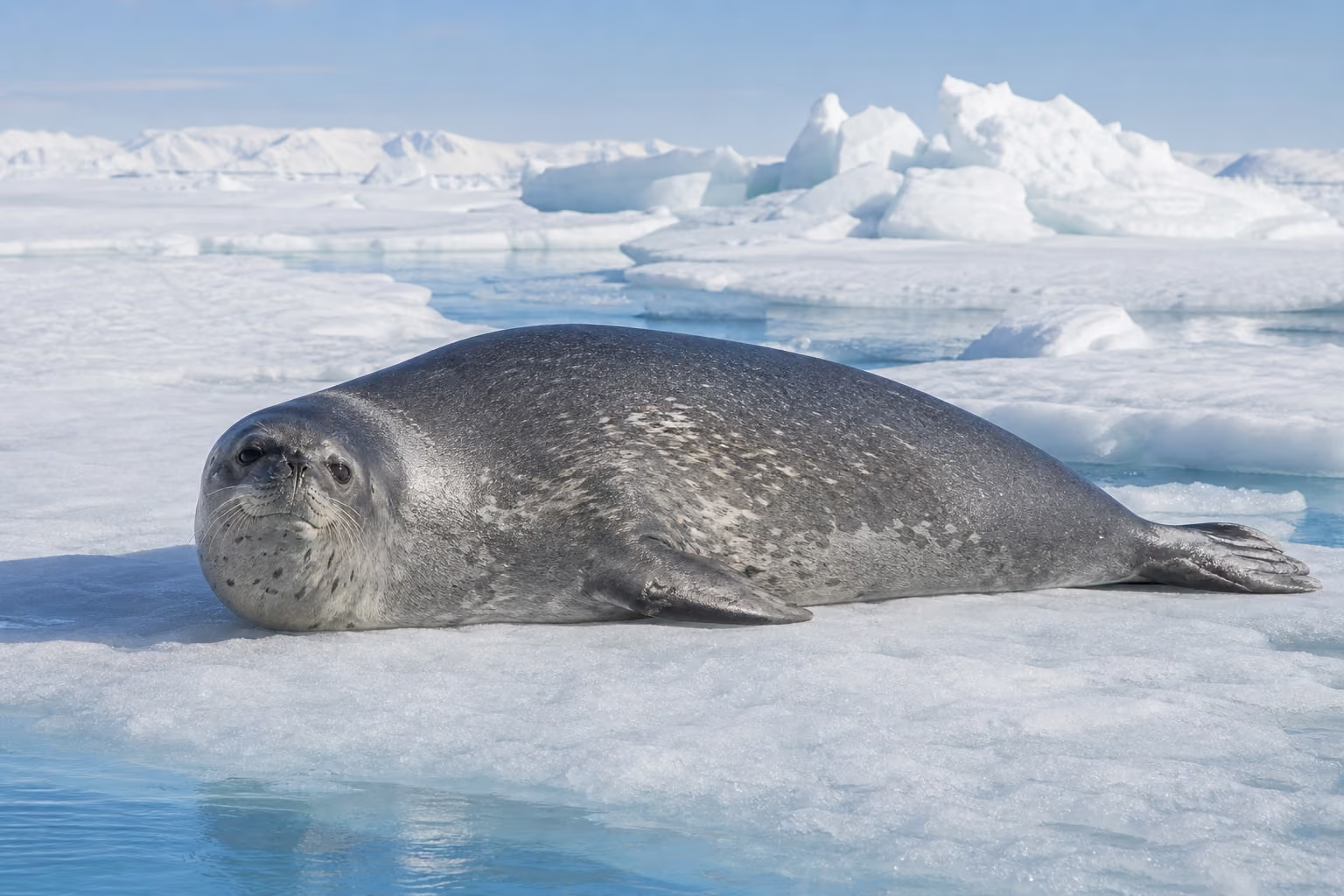
Crabeater seals live around Antarctic pack ice, ice edges, and cold open water. Sea ice is used for resting, breeding, and molting.

Appearance

They have a slender body and pale gray-brown coat, often marked by scars. The head is relatively narrow and the cheek teeth interlock like a sieve.

Behavior

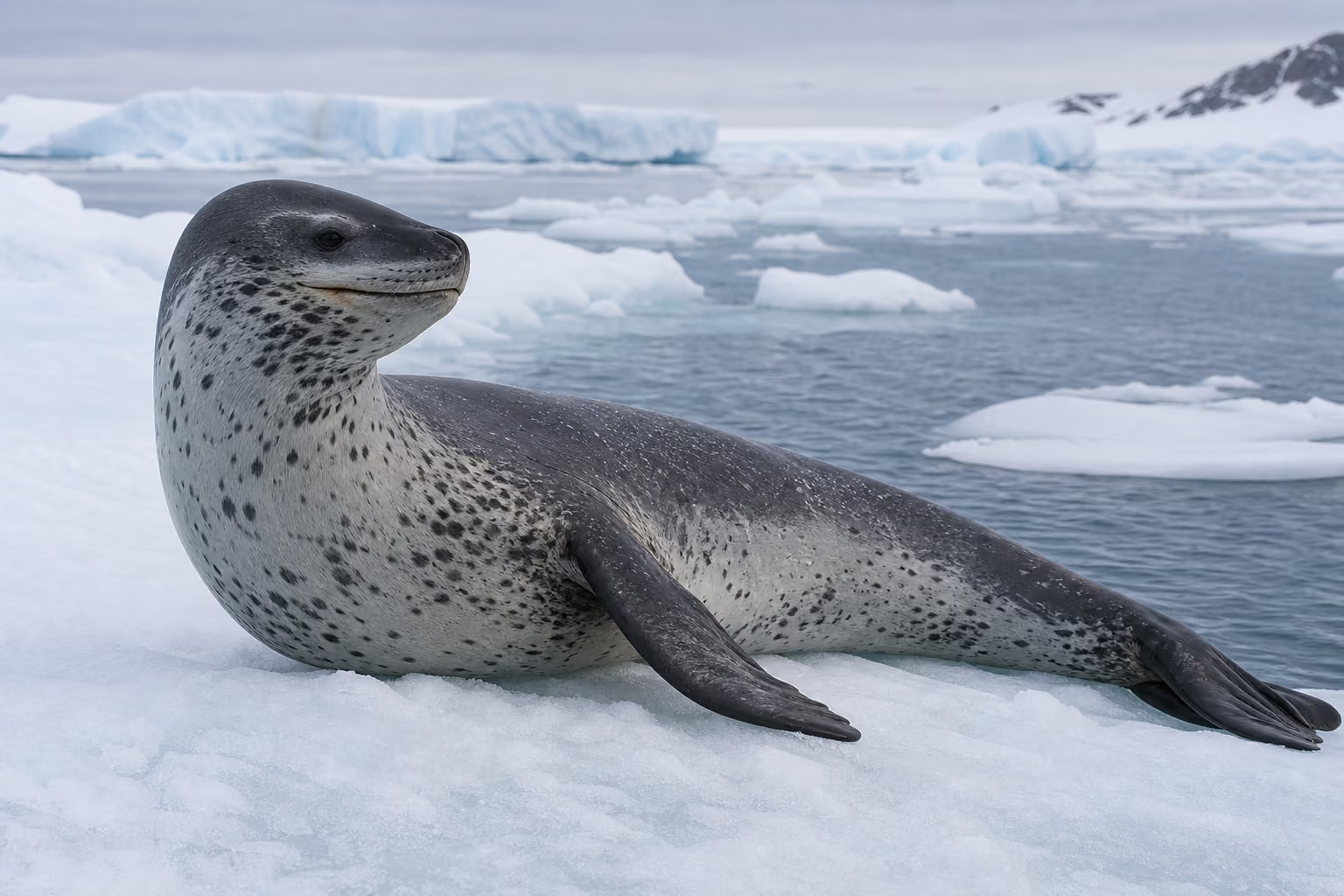
They rest alone or in small groups on ice and forage for krill underwater. Ice provides refuge from predators such as killer whales and leopard seals.

Feeding

Antarctic krill is the main prey. Cusped teeth trap krill while water is expelled, allowing efficient filter feeding.

Reproduction

Females give birth to one pup on ice in spring. Nursing is brief, and males may remain nearby while the female feeds the pup.

Notes

The species is thought to be numerous, but its dependence on sea ice and krill makes Southern Ocean change an important monitoring issue.