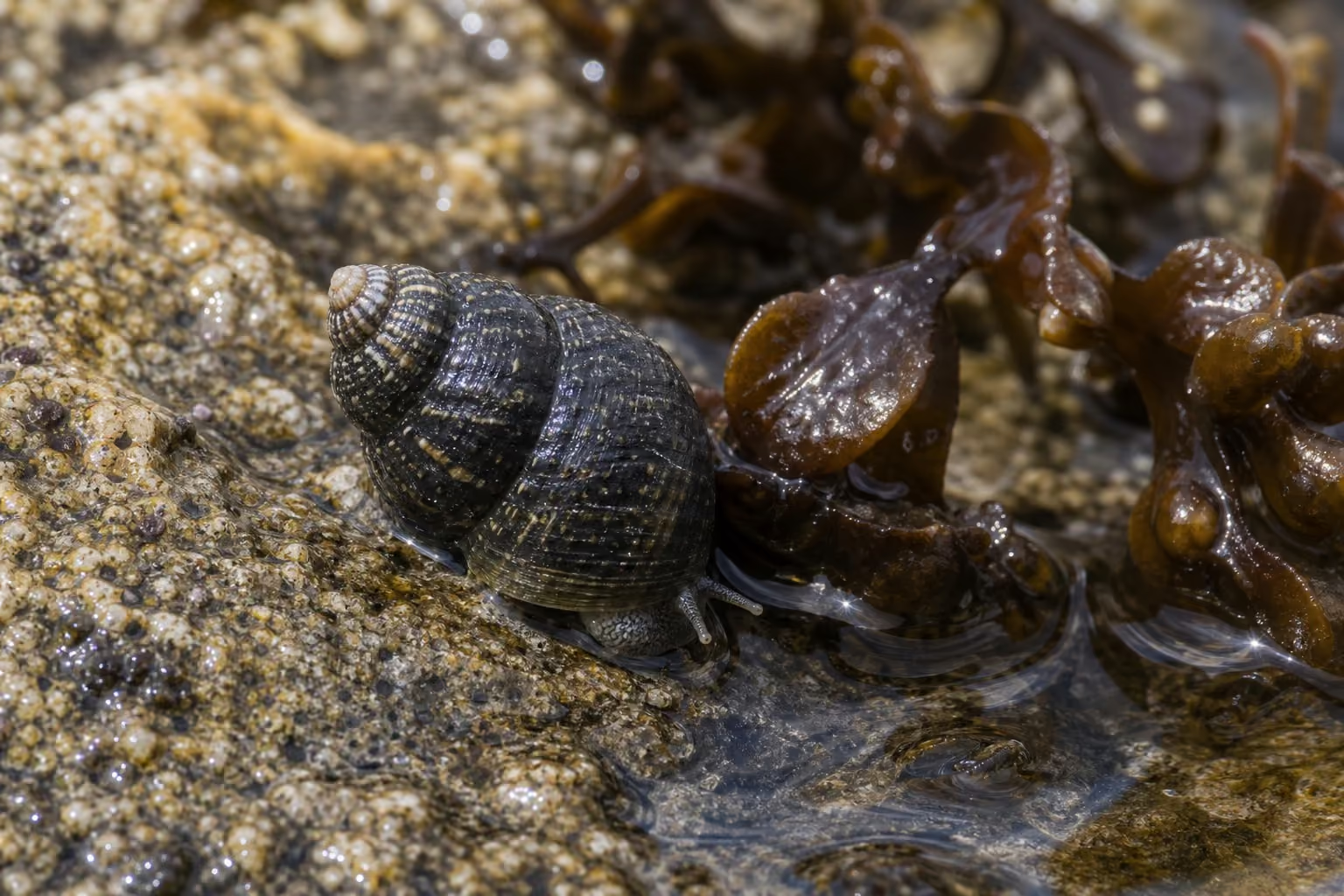
Common periwinkle

Details

Common periwinkle

Littorina littorea

Size
1–3 cm · 1–5 g
Diet
Herbivore
Activity
Cathemeral
Sociality
Loose group
Lifespan

Common periwinkle is a small North Atlantic intertidal snail that clings to rocks through waves and drying air. It is a familiar grazer in intertidal food webs and helps shape algal films.

View in catalog
Key facts

  • Common periwinkle (Littorina littorea) is a herbivore animal classified as Invertebrate · Littorinimorpha · Littorinidae.
  • Primary habitats are coast · coral reef, with a range across Atlantic Ocean · Palearctic.
  • Activity is cathemeral, sociality is loose group, and conservation status is LC (Least Concern).
  • Common periwinkle is a small North Atlantic intertidal snail that clings to rocks through waves and drying air.
  • It lives on rocky shores, tide pools, breakwaters, and seaweed-rich intertidal zones of the North Atlantic.

Range

Habitat range map
Native rangeOccasional / Transient
Atlantic OceanAtlantic OceanAtlantic OceanAtlantic OceanAtlantic OceanPalearcticPalearcticPalearcticPalearcticPalearcticPalearcticPalearcticPalearcticPalearcticPalearcticPalearcticPalearcticPalearcticPalearcticPalearcticPalearcticPalearcticPalearcticPalearcticPalearcticPalearcticPalearcticPalearcticPalearctic

Map: Ecoregions 2017 © RESOLVE (CC BY 4.0) · Natural Earth (PD)

Details

Habitat

It lives on rocky shores, tide pools, breakwaters, and seaweed-rich intertidal zones of the North Atlantic. Main habitat types in this guide are coast, reef.

Appearance

Typical length 1-3 cm, weight 1 g-5 g. A dark conical shell and a closing operculum help it resist drying.

Behavior

It is active in repeated bouts across day and night and often found in loose groups. It crawls over rock and seaweed when covered by tide and closes up when exposed.

Feeding

It is herbivorous. Microalgae are scraped from rock and seaweed surfaces with the radula.

Reproduction

Eggs enter the sea, and larvae drift as plankton before settling.

Notes

Although still widespread in places, it remains sensitive to habitat change. It is a familiar grazer in intertidal food webs and helps shape algal films.