Details
Common moorhen
Gallinula chloropus
- Size
- 30–38 cm · 192–493 g
- Diet
- Omnivore
- Activity
- Diurnal
- Sociality
- Pair
- Lifespan
- —
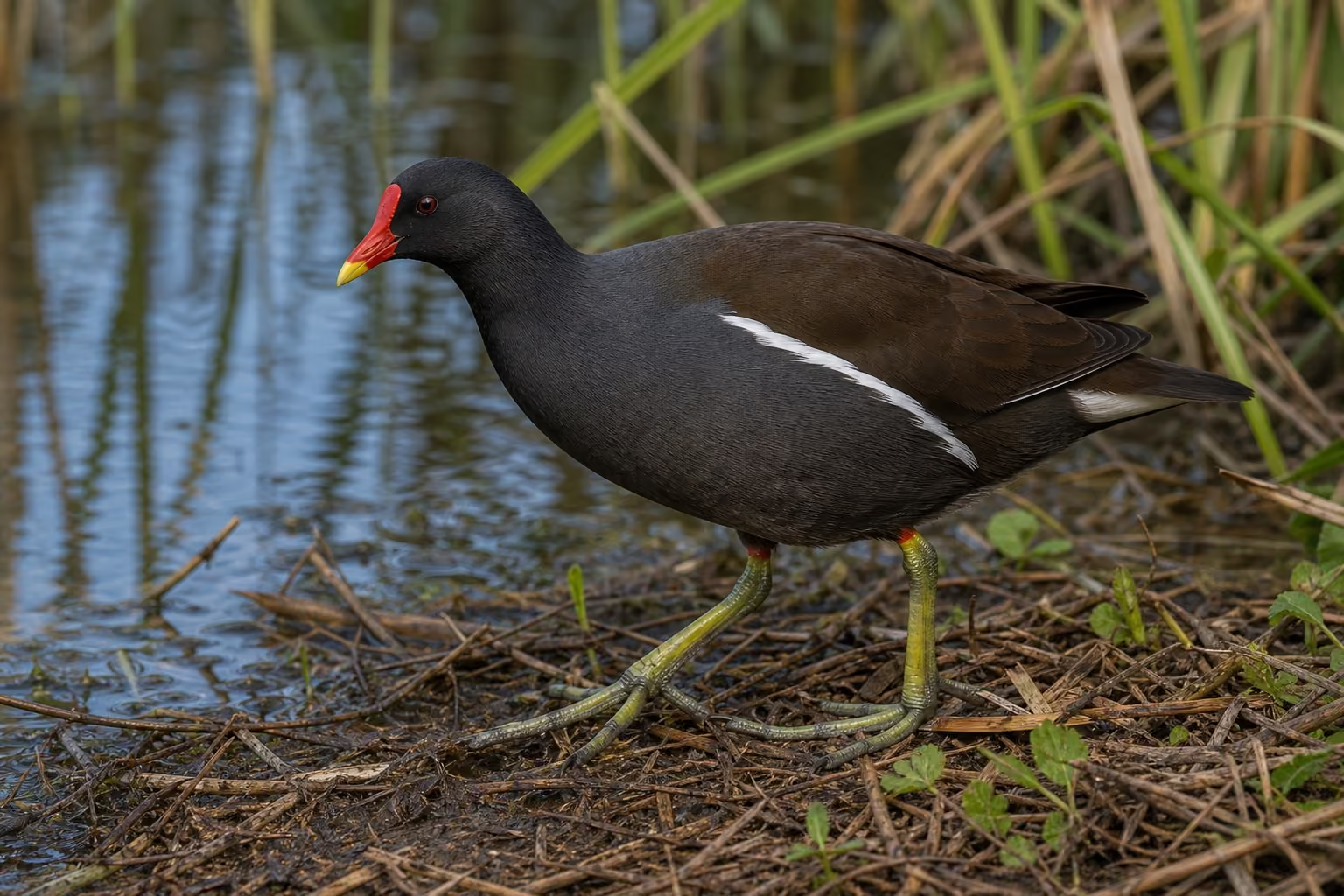
A rail with a red frontal shield and yellow-tipped bill, moving in and out of dense waterside vegetation.
View in catalogDetails
Gallinula chloropus
A rail with a red frontal shield and yellow-tipped bill, moving in and out of dense waterside vegetation.
View in catalogMap: Ecoregions 2017 © RESOLVE (CC BY 4.0) · Natural Earth (PD)
Lives on ponds, marshes, rivers, canals, reedbeds, and urban park waters with thick bank vegetation.
The body is dark brown-black with white flank lines. The frontal shield is red and the bill tip is yellow.
It swims, walks along banks, and flicks the tail to show white undertail coverts, retreating into cover when alarmed.
Aquatic plants, seeds, fruit, insects, earthworms, mollusks, and small animals are eaten.
Shallow nests are built in waterside plants. Older young from previous broods may help care for chicks.
It uses small urban waters, but loses shelter when bankside vegetation is cleared.