Common kestrel

Details

Common kestrel

Falco tinnunculus

Size
32–39 cm · 136–252 g
Diet
Carnivore
Activity
Diurnal
Sociality
Solitary
Lifespan

A small falcon widespread from Eurasia to Africa, known for hovering in place while scanning the ground for prey.

View in catalog
Key facts

  • Common kestrel (Falco tinnunculus) is a carnivore animal classified as Bird · Falconiformes · Falconidae.
  • Primary habitats are grassland · urban · mountains, with a range across Palearctic · Afrotropical · Indomalayan.
  • Activity is diurnal, sociality is solitary, and conservation status is LC (Least Concern).
  • A small falcon widespread from Eurasia to Africa, known for hovering in place while scanning the ground for prey.
  • Uses grassland, farmland, rough ground, mountains, and towns, favoring open areas with good visibility.

Range

Habitat range map
Native rangeOccasional / Transient
PalearcticPalearcticPalearcticPalearcticPalearcticPalearcticPalearcticPalearcticPalearcticPalearcticPalearcticPalearcticPalearcticPalearcticPalearcticPalearcticPalearcticPalearcticPalearcticPalearcticPalearcticPalearcticPalearcticPalearcticAfrotropicalAfrotropicalAfrotropicalAfrotropicalIndomalayanIndomalayanIndomalayanIndomalayanIndomalayanIndomalayanIndomalayanIndomalayanIndomalayanIndomalayanIndomalayanIndomalayanIndomalayanIndomalayanIndomalayan

Map: Ecoregions 2017 © RESOLVE (CC BY 4.0) · Natural Earth (PD)

Details

Habitat

Uses grassland, farmland, rough ground, mountains, and towns, favoring open areas with good visibility.

Appearance

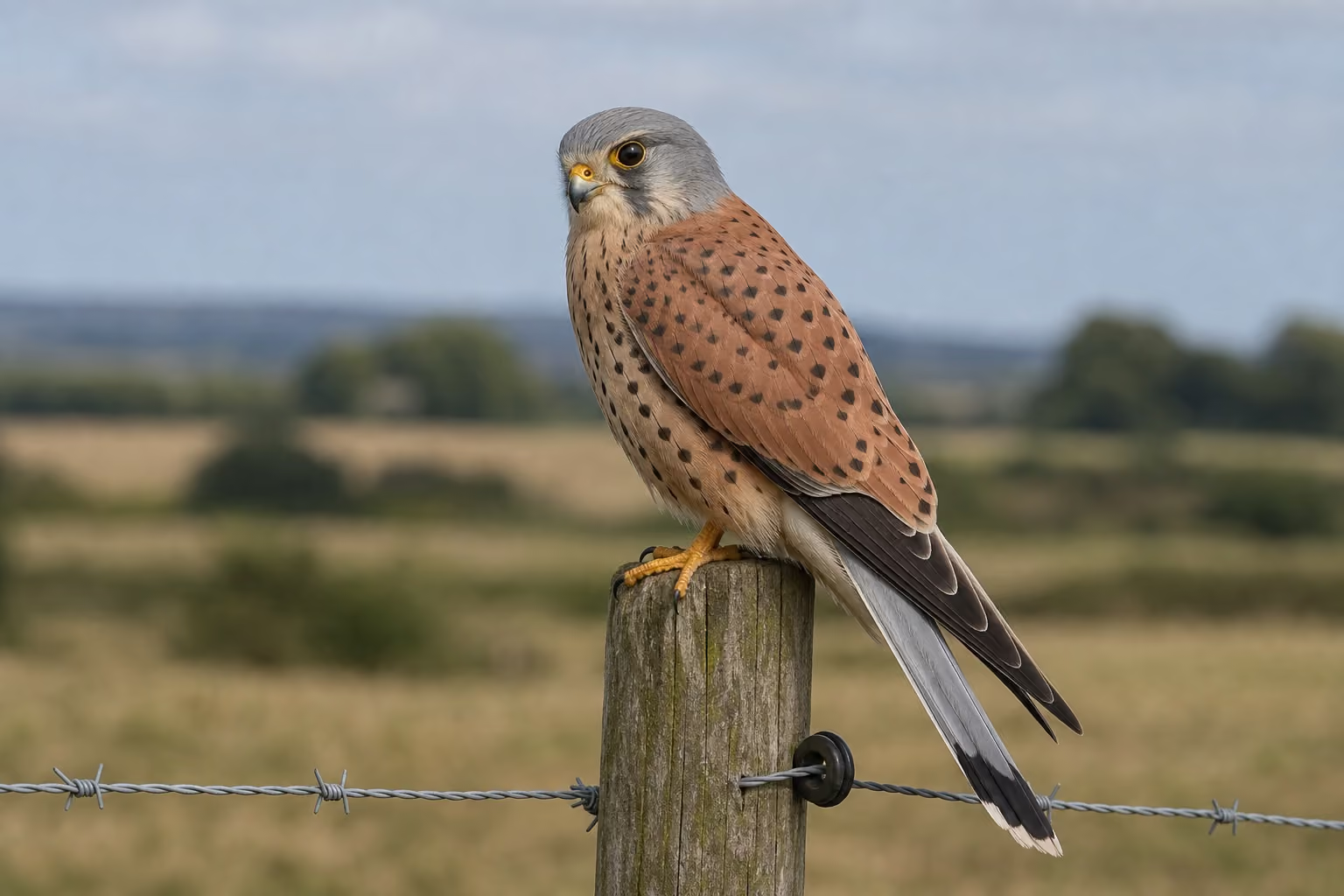
It has narrow wings and a long tail. Males show a gray head and tail with a rufous back, while females are browner and barred.

Behavior

It holds position in the wind, then drops quickly onto prey. Perches include poles, cliffs, and buildings.

Feeding

Rodents, small birds, large insects, and lizards are caught, with insects becoming important in some seasons and regions.

Reproduction

Cliffs, buildings, old nests, and nest boxes are used, with eggs laid in cavities or ledges rather than a built nest.

Notes

A familiar farmland raptor, it can also breed on tall urban buildings.