Collared peccary

Details

Collared peccary

Pecari tajacu

Size
0.8–1 m · 15–30 kg
Diet
Omnivore
Activity
Cathemeral
Sociality
Herd
Lifespan

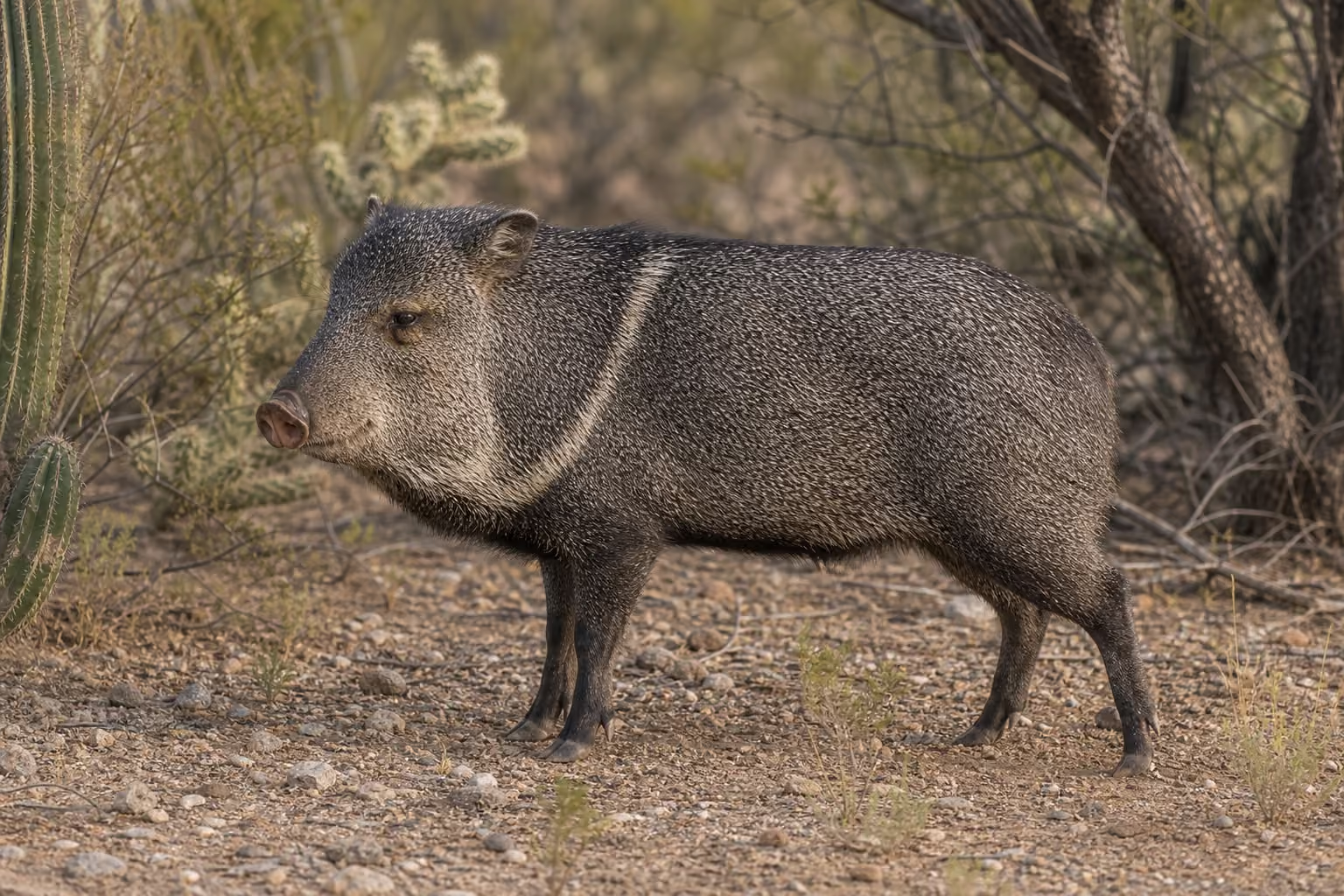
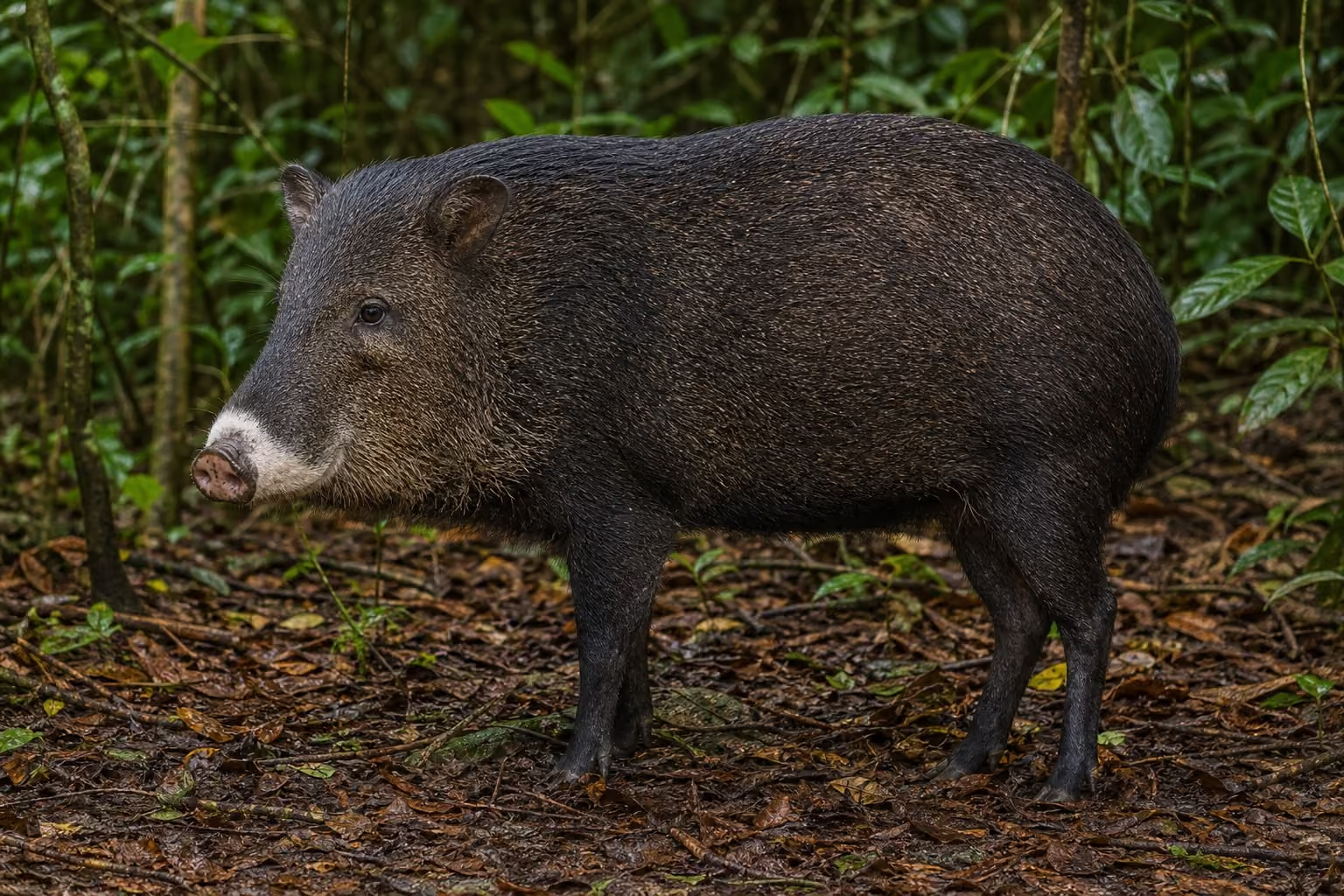
A widespread peccary from the southwestern United States through much of tropical America. A pale collar, coarse coat, and short tail identify it.

View in catalog
Key facts

  • Collared peccary (Pecari tajacu) is an omnivore animal classified as Mammal · Cetartiodactyla · Tayassuidae.
  • Primary habitats are desert · forest · savanna, with a range across Nearctic · Neotropical.
  • Activity is cathemeral, sociality is herd, and conservation status is LC (Least Concern).
  • A widespread peccary from the southwestern United States through much of tropical America.
  • Collared peccaries use desert scrub, savanna, dry forest, tropical forest, and riparian woodland.

Range

Habitat range map
Native rangeOccasional / Transient
NearcticNearcticNearcticNearcticNearcticNearcticNearcticNearcticNearcticNearcticNearcticNearcticNearcticNearcticNearcticNearcticNearcticNearcticNearcticNearcticNearcticNearcticNearcticNearcticNearcticNearcticNearcticNearcticNearcticNearcticNearcticNearcticNearcticNearcticNearcticNearcticNearcticNearcticNearcticNearcticNearcticNeotropicalNeotropicalNeotropicalNeotropicalNeotropicalNeotropicalNeotropicalNeotropical

Map: Ecoregions 2017 © RESOLVE (CC BY 4.0) · Natural Earth (PD)

Details

Habitat

Collared peccaries use desert scrub, savanna, dry forest, tropical forest, and riparian woodland. Shade, thickets, and rocky cover are used for resting.

Appearance

They have coarse gray-brown fur, a pale collar across the shoulders, and a very short tail. They resemble pigs but belong to a separate peccary family.

Behavior

They live in herds and use scent glands to recognize group members and mark areas. In hot regions they rest by day and forage in cooler hours.

Feeding

They eat cactus pads, fruit, roots, bulbs, seeds, grasses, insects, and small animals. Succulent plants provide food and water in dry habitats.

Reproduction

Females usually bear one or two young. Young develop within cohesive herds that move together when alarmed.

Notes

In North America the species is often called javelina, though it is not a true pig.