White-nosed coati

Details

White-nosed coati

Nasua narica

Size
0.8–1.3 m · 2.5–12.2 kg
Diet
Omnivore
Activity
Diurnal
Sociality
Herd
Lifespan

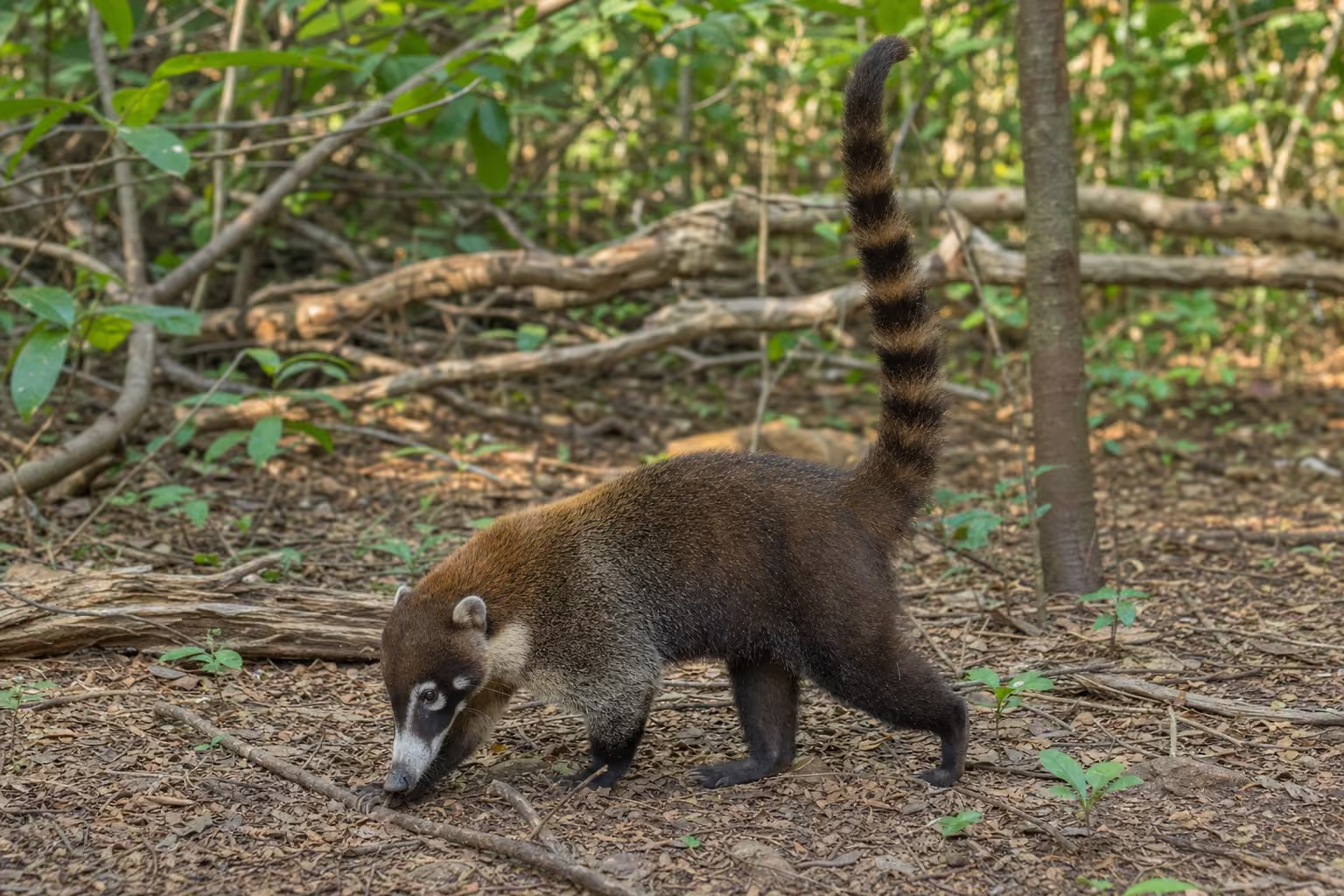
A long-tailed procyonid from the southwestern United States through Central America to northwestern South America. Its pale muzzle, dark facial mask, and upright ringed tail make it easy to recognize while it forages by day.

View in catalog
Key facts

  • White-nosed coati (Nasua narica) is an omnivore animal classified as Mammal · Carnivora · Procyonidae.
  • Primary habitats are forest · grassland, with a range across Nearctic · Neotropical.
  • Activity is diurnal, sociality is herd, and conservation status is LC (Least Concern).
  • A long-tailed procyonid from the southwestern United States through Central America to northwestern South America.
  • White-nosed coatis use dry forest, moist tropical forest, woodland edges, scrub, and nearby grassland.

Range

Habitat range map
Native rangeOccasional / Transient
NearcticNearcticNearcticNearcticNearcticNearcticNearcticNearcticNearcticNearcticNearcticNearcticNearcticNearcticNearcticNearcticNearcticNearcticNearcticNearcticNearcticNearcticNearcticNearcticNearcticNearcticNearcticNearcticNearcticNearcticNearcticNearcticNearcticNearcticNearcticNearcticNearcticNearcticNearcticNearcticNearcticNeotropicalNeotropicalNeotropicalNeotropicalNeotropicalNeotropicalNeotropicalNeotropical

Map: Ecoregions 2017 © RESOLVE (CC BY 4.0) · Natural Earth (PD)

Details

Habitat

White-nosed coatis use dry forest, moist tropical forest, woodland edges, scrub, and nearby grassland. They rest and escape in trees but spend much of their feeding time on the ground.

Appearance

Nose-to-tail length is about 80-130 cm, with weights from 2.5 kg to about 12.2 kg. The flexible white-tipped snout, dark mask, strong claws, and long banded tail give it a raccoon-like but more slender profile.

Behavior

Females and young travel in bands, while adult males are often solitary outside the breeding season. By day they probe leaf litter, soil, and rotting logs with the nose and foreclaws.

Feeding

It is omnivorous, eating fruit, insects, other invertebrates, eggs, lizards, small mammals, and occasional carrion. It climbs well, but much foraging happens on the forest floor.

Reproduction

Males join female bands during the breeding season. Gestation lasts about 10-11 weeks, and females give birth to roughly two to seven young in tree or vegetation nests.

Notes

Listed as Least Concern by the IUCN. Local pressures include habitat loss, hunting, roads, and food-conditioning around people.