Details
Black swan
Cygnus atratus
- Size
- 1.1–1.4 m · 3.7–9 kg
- Diet
- Herbivore
- Activity
- Diurnal
- Sociality
- Pair
- Lifespan
- —
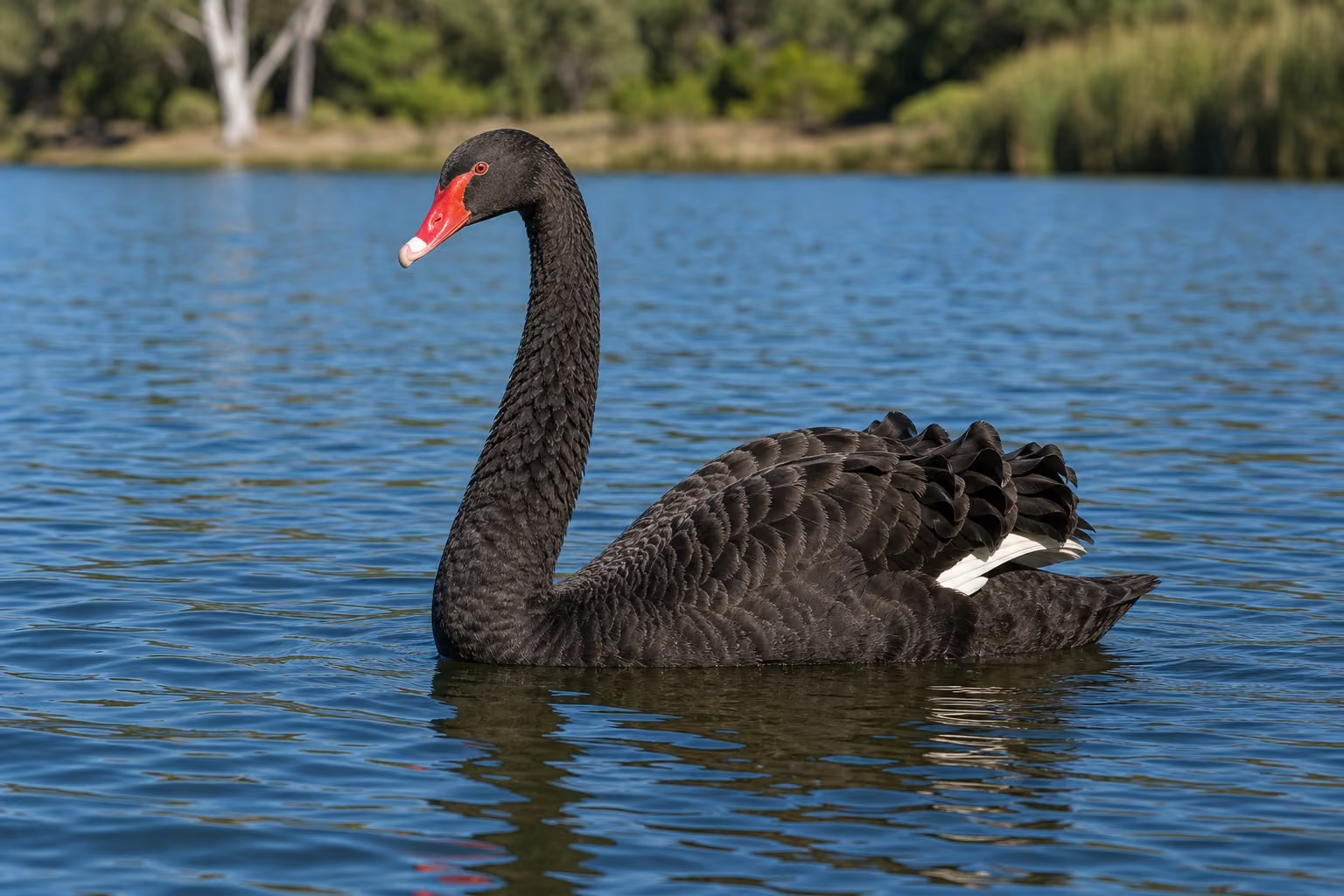
A large black swan of Australian waters, with a red bill and white flight feathers visible in flight.
View in catalogDetails
Cygnus atratus
A large black swan of Australian waters, with a red bill and white flight feathers visible in flight.
View in catalogMap: Ecoregions 2017 © RESOLVE (CC BY 4.0) · Natural Earth (PD)
Uses lakes, rivers, wetlands, coastal lagoons, and park ponds, especially shallow waters rich in vegetation.
The body is black, with white wing feathers showing in flight. The bill is red with a pale band near the tip.
Pairs and family groups swim slowly through vegetated water and may move widely in response to rain and water levels.
It eats aquatic plants, algae, and grasses, reaching underwater with its long neck to pull vegetation from the bottom.
Large nests are built from aquatic plants near water. Both adults defend the young, which swim close to their parents.
Often kept in parks, wild populations still depend on healthy wetlands and secure nesting sites.