Banded archerfish

Details

Banded archerfish

Toxotes jaculatrix

Size
15–30 cm · 100–400 g
Diet
Carnivore
Activity
Diurnal
Sociality
Loose group
Lifespan
5–8 years

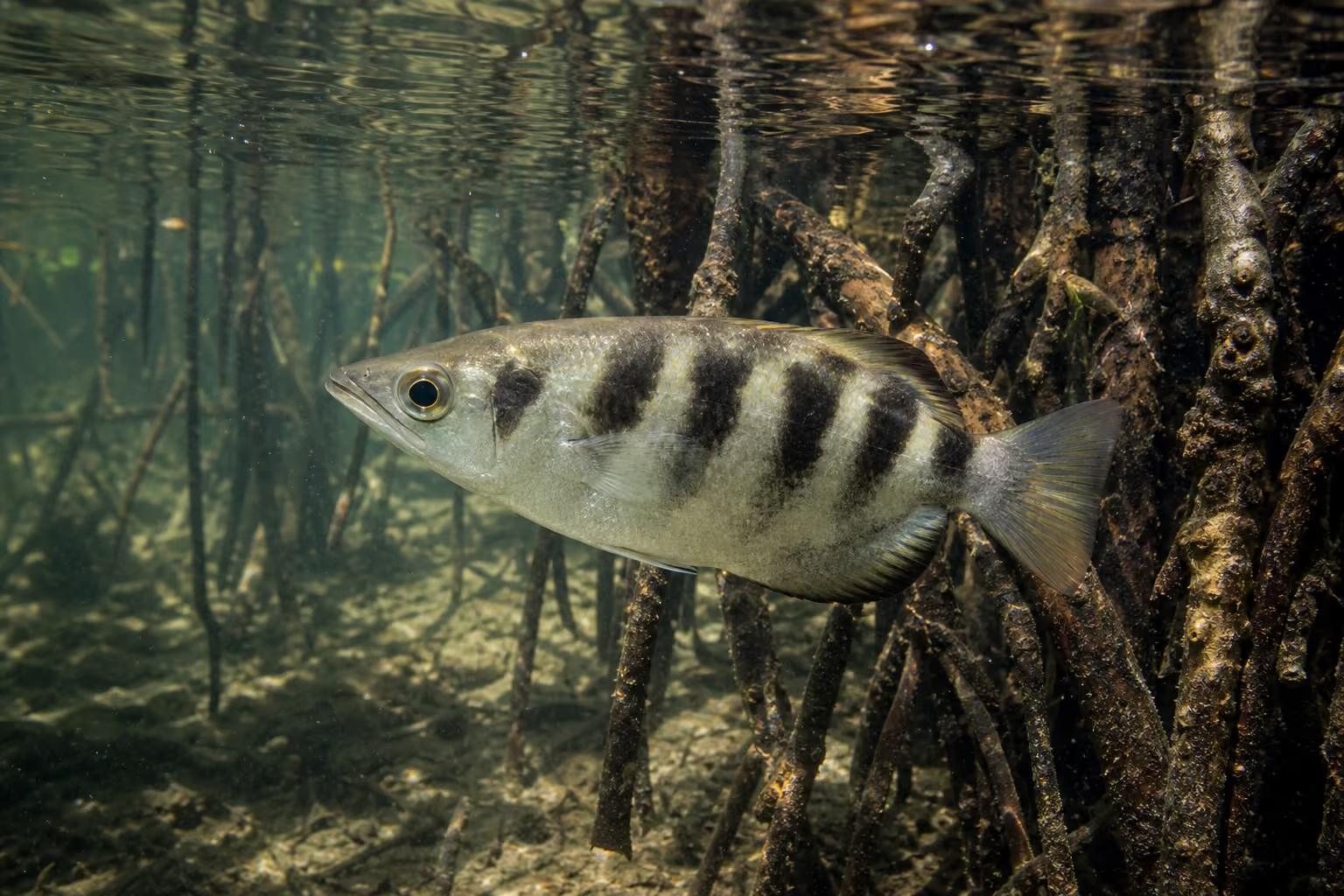
The banded archerfish shoots jets of water to knock insects from overhanging vegetation. It forms loose groups along brackish and freshwater edges.

View in catalog
Key facts

  • Banded archerfish (Toxotes jaculatrix) is a carnivore animal classified as Fish · Perciformes · Toxotidae.
  • Primary habitats are freshwater · coast, with a range across Indomalayan · Australasian.
  • Activity is diurnal, sociality is loose group, and conservation status is LC (Least Concern).
  • The banded archerfish shoots jets of water to knock insects from overhanging vegetation.
  • It inhabits mangroves, estuaries, and freshwater banks of the Indomalayan region, Australasia.
  • Typical lifespan: 5–8 years

Range

Habitat range map
Native rangeOccasional / Transient
IndomalayanIndomalayanIndomalayanIndomalayanIndomalayanIndomalayanIndomalayanIndomalayanIndomalayanIndomalayanIndomalayanIndomalayanIndomalayanIndomalayanIndomalayanAustralasianAustralasianAustralasianAustralasianAustralasianAustralasianAustralasianAustralasianAustralasianAustralasianAustralasianAustralasianAustralasianAustralasianAustralasianAustralasianAustralasian

Map: Ecoregions 2017 © RESOLVE (CC BY 4.0) · Natural Earth (PD)

Details

Habitat

It inhabits mangroves, estuaries, and freshwater banks of the Indomalayan region, Australasia. Branches and leaves over the surface create hunting sites.

Appearance

Length 15-30 cm; weight 100 g-400 g. A silvery body bears dark vertical bands, with an upturned mouth and large eyes. The head is built for watching prey above the waterline.

Behavior

Diurnal and loosely schooling, it cruises just below the surface. It fires accurate water jets and rushes to seize prey as it falls.

Feeding

A carnivore, it eats insects, spiders, small crustaceans, and small fishes. It uses both aerial and aquatic prey.

Reproduction

Adults release eggs into the water during spawning. Young develop in sheltered coastal or estuarine waters.

Notes

It is listed as Least Concern, though local populations can still be affected by habitat change, collection, or pollution.