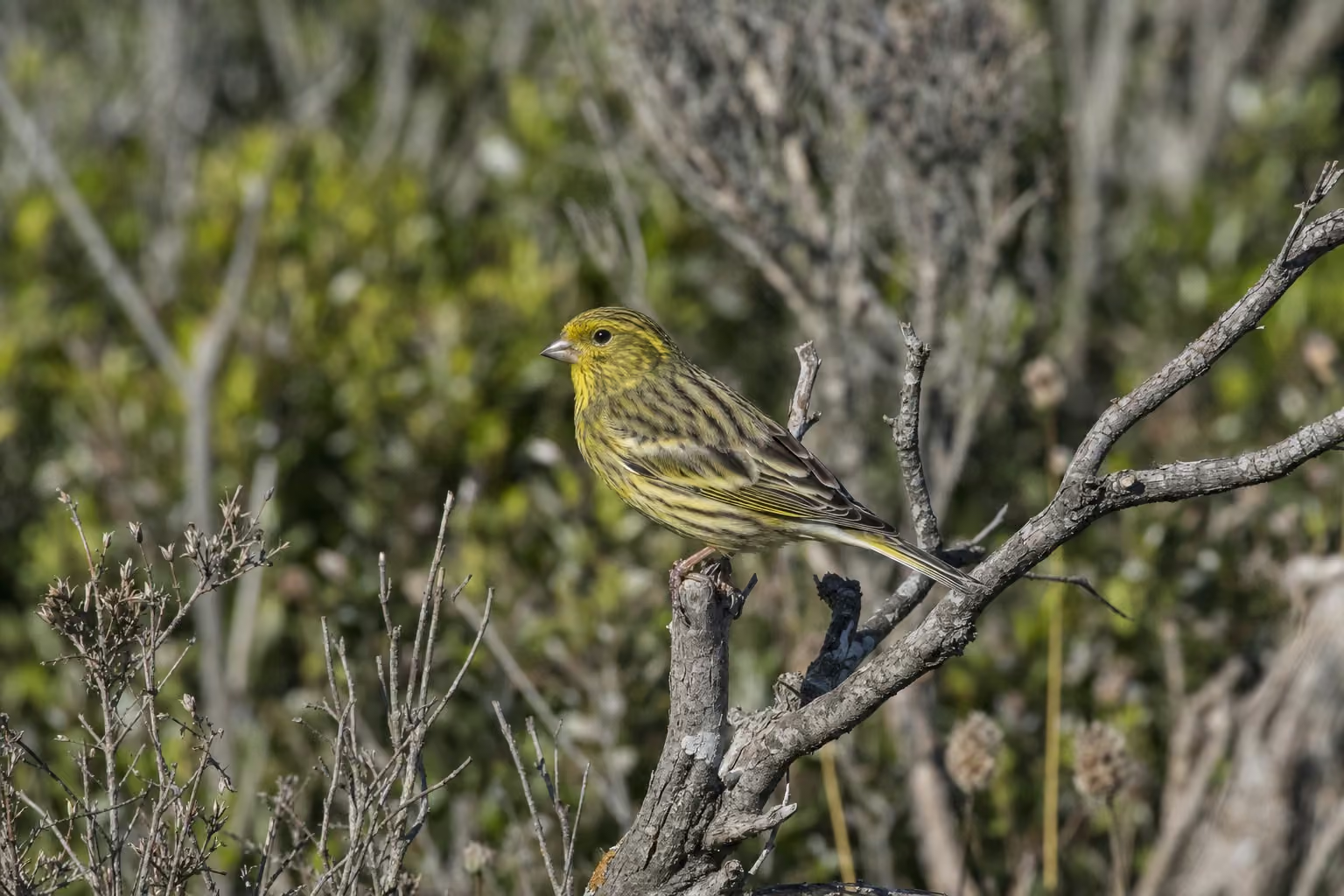
Atlantic canary

Details

Atlantic canary

Serinus canaria

Size
Wingspan 20–23 cm · 15–25 g
Diet
Herbivore
Activity
Diurnal
Sociality
Loose group
Lifespan
8-25 years

The Atlantic canary is a small diurnal finch native to Atlantic islands. It forms loose groups in forest edges and grasslands and feeds on plant material.

View in catalog
Key facts

  • Atlantic canary (Serinus canaria) is a herbivore animal classified as Bird · Passeriformes · Fringillidae.
  • Primary habitats are forest · grassland, with a range across Palearctic.
  • Activity is diurnal, sociality is loose group, and conservation status is LC (Least Concern).
  • The Atlantic canary is a small diurnal finch native to Atlantic islands.
  • It uses woodland edges, scrub, grassland, and farmland margins.
  • Typical lifespan: 8-25 years

Range

Habitat range map
Native rangeOccasional / Transient
PalearcticPalearcticPalearcticPalearcticPalearcticPalearcticPalearcticPalearcticPalearcticPalearcticPalearcticPalearcticPalearcticPalearcticPalearcticPalearcticPalearcticPalearcticPalearcticPalearcticPalearcticPalearcticPalearcticPalearctic

Map: Ecoregions 2017 © RESOLVE (CC BY 4.0) · Natural Earth (PD)

Details

Habitat

It uses woodland edges, scrub, grassland, and farmland margins. Trees and shrubs provide nesting and rest, while open areas provide food.

Appearance

Wingspan is about 20-23 cm and weight about 15-25 g. A small body, short conical bill, and yellow-green to brownish plumage are typical.

Behavior

Diurnal birds often move in loose groups outside breeding season. Song from perches helps signal territory and presence.

Feeding

It is herbivorous, eating grass seeds, buds, leaves, and fruit. The bill handles small seeds efficiently.

Reproduction

A small cup nest is built in shrubs or trees. Parents feed chicks softened seeds and other plant foods.

Notes

Its status is listed as Least Concern. It is the wild ancestor of the domestic canary and adapts well to open island habitats.